
Picture a barbershop in medieval Europe. A patient grips a plain wooden pole, squeezing it hard enough that the veins in his forearm bulge up under the skin. The barber steps in with a fresh-honed razor, opens a vein, and lets the blood run down the pole into a small brass basin. It isn’t an emergency. It’s a Tuesday. Bloodletting was standard medical care, and the man holding the razor wasn’t a doctor — he was your barber.
Table of Contents
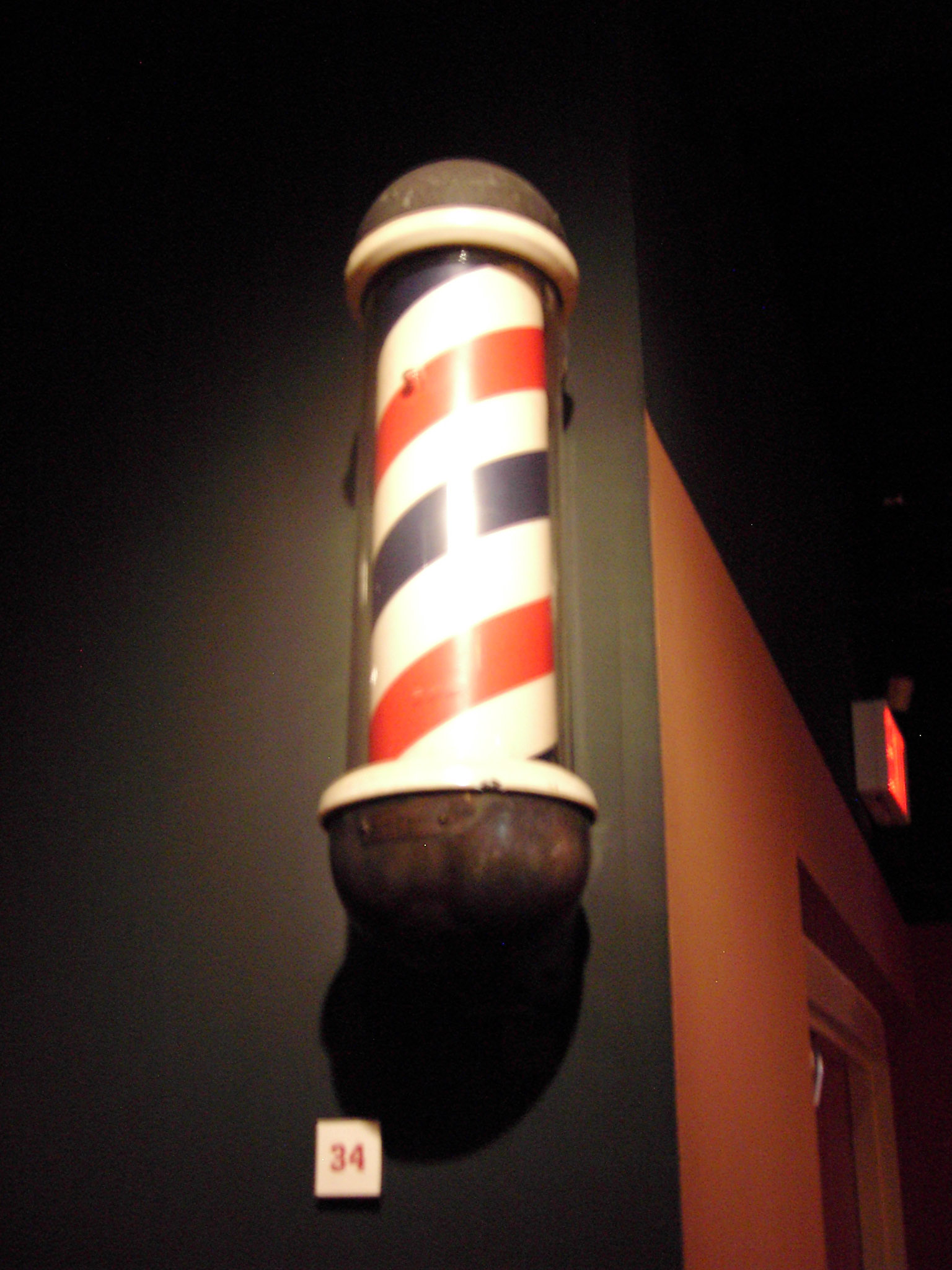
That grim little scene, repeated in thousands of shops for centuries, is the actual origin of the striped pole spinning outside barbershops today. The stripes aren’t decoration. They’re a leftover diagram of a medical procedure, and the story of how it got there involves a pope, a king, a surgeons’ guild breakup, and — improbably — a supply salesman in St. Paul, Minnesota.

Quick answer
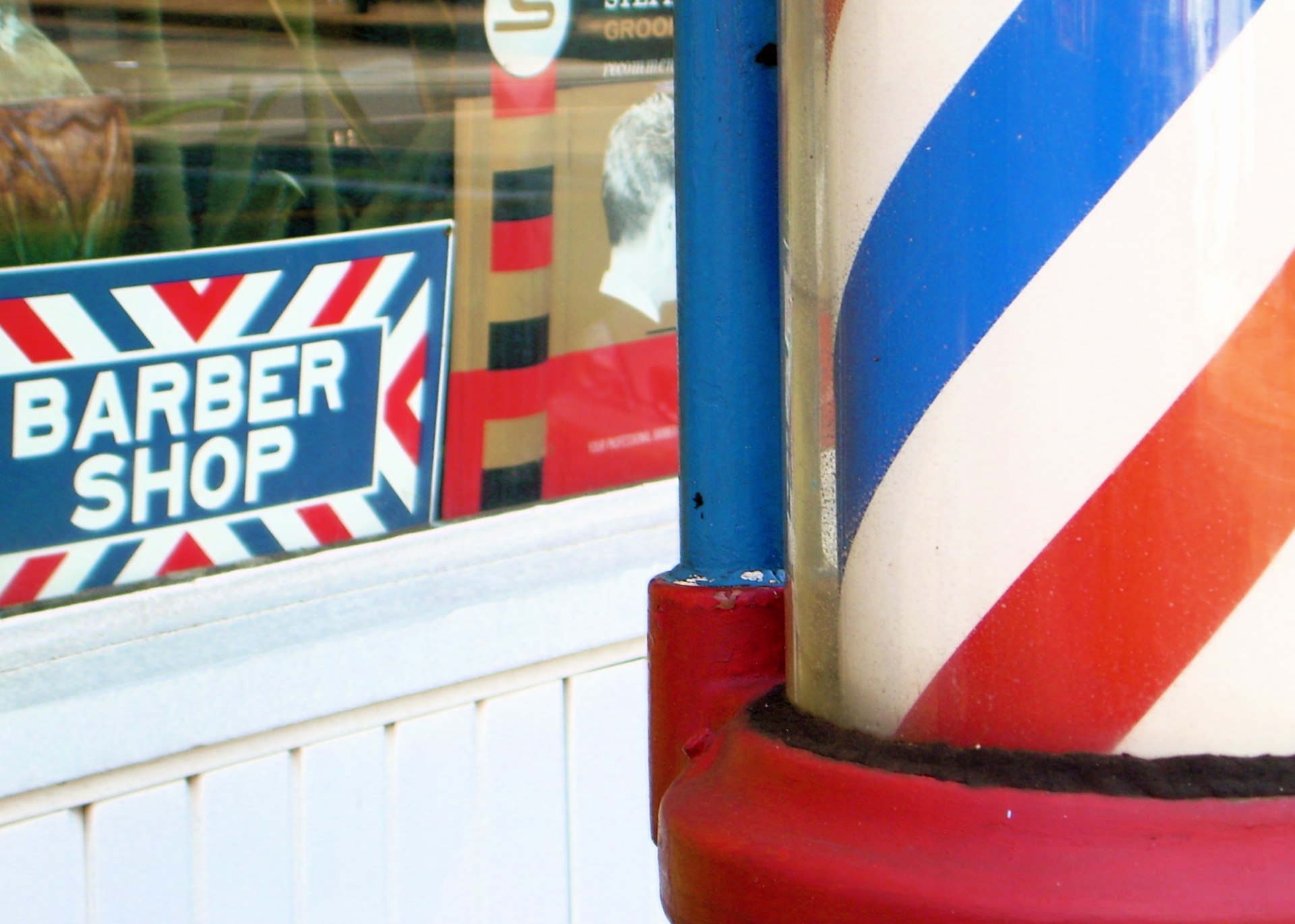
The red and white stripes on a barbershop pole come from bloodletting, a medical treatment performed by “barber-surgeons” in medieval and early modern Europe: white stood for bandages (or the rod patients gripped), and red stood for blood. American poles added a blue stripe later, likely for patriotic flair or, by another theory, to represent veins.
When your barber pulled teeth and opened veins
For much of the Middle Ages, monks handled most medical care in Europe, since they were among the few people who could read the surviving Greek and Roman medical texts. That changed in the 1160s, when a series of church councils — including the Council of Tours in 1163 — moved to restrict clergy from cutting into bodies. Someone still had to lance boils, pull rotten teeth, set broken bones, and let blood, which was believed to cure everything from fevers to melancholy. Barbers already owned the sharpest blades in town and the steadiest hands, so the job fell to them.
They became known as barber-surgeons, and the title wasn’t a joke — one of history’s most influential surgeons, France’s Ambroise Paré, started his career apprenticed to a barber-surgeon before going on to revolutionize battlefield medicine. For a few centuries, the person trimming your beard might also be the person setting your leg.
Henry VIII makes it official — then it falls apart
In 1540, King Henry VIII signed an Act of Parliament merging London’s barbers and surgeons into a single body: the Company of Barbers and Surgeons. The union was pushed largely by Thomas Vicary, the king’s own sergeant-surgeon, and the moment was significant enough that Hans Holbein painted it — the canvas still hangs in Barber-Surgeons’ Hall in London. The law tried to draw a line between the trades (surgeons weren’t to cut hair, barbers weren’t supposed to perform major surgery), though both sides kept the right to pull teeth.
The arrangement lasted just over two centuries. As surgery professionalized into something closer to modern medicine, surgeons pushed to separate from the barbers entirely, and in 1745 they split off to form what eventually became the Royal College of Surgeons. Barbers were left with the razors, the trade — and the pole, which stuck around as a shop sign long after anyone using it had actually drawn blood.
The part most people miss
Two things rarely make it into the retelling. First, the tidy version of the church-ban story — that Pope Alexander III declared “the church abhors blood” and banned clergy from surgery in one clean stroke — is murkier than the legend suggests. Historians who’ve gone back to the actual council records find the prohibition was narrower and less dramatically worded than the popular quote implies; the ban-on-blood phrase is likely a later gloss added to a real but more limited restriction. Second, and more surprising: the object you actually picture — a poles-length cylinder spinning smoothly outside a barbershop — is not a medieval antique at all. It’s a 20th-century Minnesota invention. Bill Marvy, who’d been selling barber supplies on the road since he was a teenager, grew tired of the flimsy poles he was hawking and built his own: rust-proof, made of stainless steel, aluminum, and glass. His sons switched it on for the first time on New Year’s Day, 1950, and the Wall Street Journal called it the first real improvement to the barber pole in twenty-five years. The William Marvy Company, still based in St. Paul, went on to become the last manufacturer of barber poles left in North America, with two of its poles now sitting in the Smithsonian. The icon feels ancient because its meaning is — but the spinning cylinder you actually see on the sidewalk is mid-century American manufacturing, not medieval surgical equipment.
Sources
The Worshipful Company of Barbers, official history of the 1540 Act of Union and the 1745 separation from surgeons.
History.com, on the red-white-blue color symbolism and its bloodletting origins.
The William Marvy Company scrapbook and company history, on Bill Marvy’s 1950 rotating pole and its place in the Smithsonian collection.
Explore more: more true stories behind everyday objects.
barber pole FAQs
Why are barber poles red, white, and blue?
Red and white trace back to bloodletting — red for blood, white for bandages or the gripping rod. The blue stripe is a mostly American addition, thought to be either patriotic flair or a nod to the veins that were being cut.
Did barbers really perform surgery?
Yes. From roughly the 12th century until 1745, English barber-surgeons handled bloodletting, tooth extraction, and minor surgery alongside haircuts, when surgeons formally split off into their own profession.
Why do barber poles spin?
The rotation creates an illusion of stripes flowing endlessly upward. Motorized versions became widespread in the 20th century, largely thanks to the William Marvy Company’s redesigned pole, introduced in 1950.
Tales You Can Hold
Fun-facts books for curious kids, personalized books that star your child, and more from the FYI Tales Bookstore. Visit the Bookstore.
Photo: User LegCircus on en.wikipedia / Public domain, via Wikimedia Commons.