
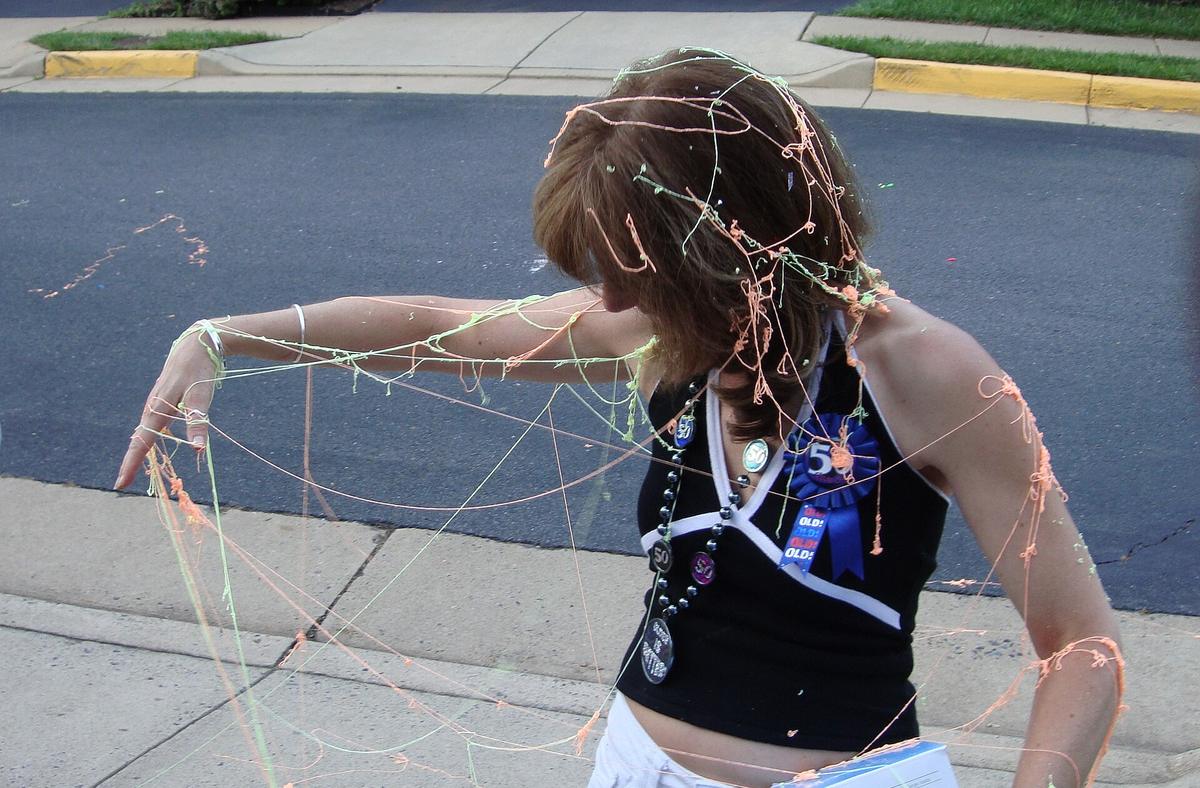
Every few Halloweens, someone retells the same trivia nugget: Silly String was invented as a spray-on cast for broken bones, and it only became a toy because a nozzle malfunctioned. It is a terrific story. It is also missing its receipts.
Table of Contents
We pulled the actual 1972 patent behind Silly String, the original 1969 trademark filing, and the sources historians usually point to. What is genuinely documented is a toy that hit shelves in 1969, a chemistry patent that never once mentions a human limb, and a second act, decades later, that is stranger and far better sourced than the origin story everyone keeps repeating.
Quick answer
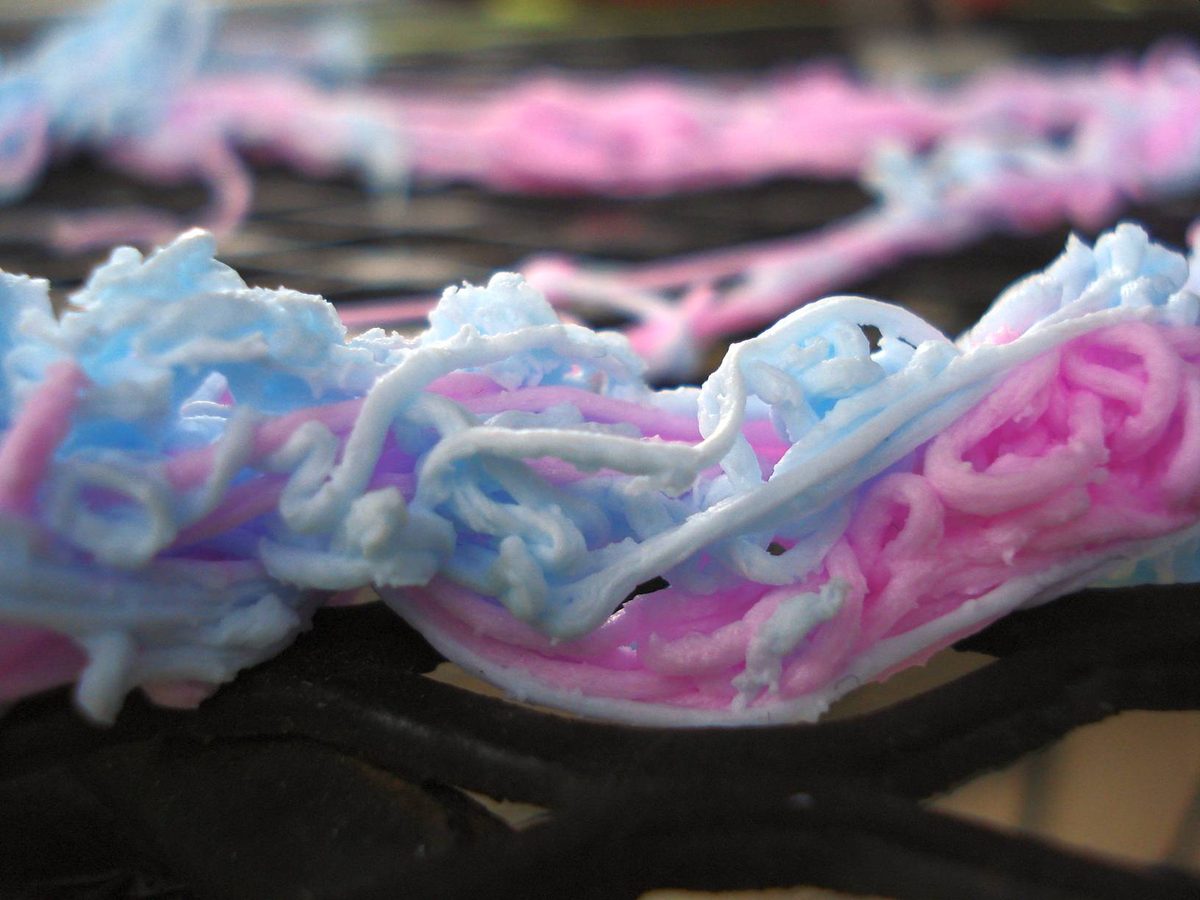
Silly String is usually said to have started as a failed spray-on cast for broken bones, dreamed up around 1969 by inventor Leonard A. Fish and chemist Robert P. Cox. That detail is folklore, not a documented fact: the patent the pair actually filed, granted in 1972, describes only a decorative aerosol novelty string and never mentions limbs, casts, or injuries anywhere in its text. What is documented is that Wham-O put the product on shelves in 1969, under a trademark still on file today, and that it later became an improvised way for soldiers to spot tripwires.
A can built for a different kind of emergency, supposedly
The legend, repeated across dozens of toy-trivia roundups and at least one unsourced paragraph on Wikipedia, goes like this: inventor Leonard A. Fish teamed up with chemist Robert P. Cox to build an aerosol can that could spray a flexible foam over a broken or sprained arm or leg, hardening into a cast you wouldn’t need plaster or a trip to the ER for. Getting a can to spray foam into a cast-like shape meant endless nozzle tinkering, and accounts put the number of nozzles tested at roughly 500.
Somewhere around nozzle 30 or 40, the story says, something went wrong in the right way: instead of foam, the can shot out a thin, continuous string that sailed some 30 feet across the room. Useless as a cast, but clearly fun, and Fish is said to have pivoted on the spot toward a toy he first called ‘Squibbly.’
What the actual paperwork says
Here is where the story runs into trouble. U.S. Patent 3,705,669, titled ‘Foamable Resinous Composition,’ names Robert P. Cox and Leonard A. Fish as inventors and Wham-O Manufacturing Company as assignee. It was filed on June 8, 1970 as a continuation-in-part of an earlier application, Ser. No. 860,854, filed September 24, 1969 and later abandoned, and it was granted on December 12, 1972. Reading the granted patent itself turns up no mention of broken bones, splints, or medical use at all. Its background section instead frames the invention as a toy from the first sentence, noting that children have considerable imagination and that a simple, reliable, and safe toy or play article is desirable. The abstract describes a tacky plastic-foam string meant to stick lightly to walls and windows, adding that the combination has substantial play and decorative utility.
In other words, the one piece of primary documentation anyone can actually check describes a toy, not a medical device, starting with its opening paragraph. The earlier, abandoned 1969 application it grew out of isn’t a public record anyone can simply pull up and read, so it can’t be used to prove or disprove the cast story either. Separately, the SILLY STRING trademark, registration no. 0906155, lists a first use in commerce of August 6, 1969, meaning Wham-O was already selling it as a toy before the patent on its chemistry was ever granted in 1972.
The part most people miss
The broken-bone cast story might still be true in some form; plenty of real product histories start with an abandoned idea that never makes it into the eventual patent filing. But there is no verified quote from Fish or Cox, and no contemporary news account from 1969 that ties their work to a medical cast. The patent does acknowledge one earlier filing, the abandoned September 1969 application mentioned above, but an abandoned application’s contents aren’t something a fact-checker can simply look up, so it settles nothing about the cast story one way or the other. The claim traces only to later retellings that cite each other rather than any primary record, and Wikipedia’s own version of the story carries no citation at all. Treat it as a well-worn legend, not a sourced fact, until someone turns up Fish and Cox’s own words on the matter. What is fully documented instead is Silly String’s second act: in 2006, Army Spc. Todd Shriver told his mother, Marcelle Shriver, in a phone call from Ramadi, Iraq, that his unit had learned from Marines to spray Silly String across rooms and doorways to spot trip-wired booby traps, since the light foam drapes over an otherwise invisible wire without the weight to trigger it. Marcelle Shriver started collecting cans to send overseas and ultimately gathered roughly 80,000 of them, a shipment complicated by the fact that Silly String, as an aerosol, is classified as hazardous cargo and could only move through companies equipped to handle it. A product with a possibly embellished medical origin ended up doing real safety work in a war zone, just not the kind the legend describes.
Sources
Google Patents’ listing for U.S. Patent 3,705,669, Foamable Resinous Composition, naming Robert P. Cox and Leonard A. Fish as inventors and Wham-O Manufacturing Company as assignee, including the full text identifying it as a continuation-in-part of an abandoned September 24, 1969 application and describing the invention as a toy.
Justia Trademarks’ record for the SILLY STRING mark, registration no. 0906155, listing a first-use-in-commerce date of August 6, 1969 and a filing date of August 11, 1969.
Wikipedia’s entry on Silly String, consulted for the commonly repeated origin narrative, and noted here for what it does not cite, since its cast-origin claim carries no footnote.
CBS News and Associated Press coverage of Marcelle Shriver’s campaign to ship Silly String to U.S. troops in Iraq after her son, Army Spc. Todd Shriver, described its use for tripwire detection.
Explore more: More Accidental Inventions.
Silly String FAQs
Was Silly String really invented as a cast for broken bones?
That is the popular legend, but it is not a documented fact. The 1972 patent Leonard A. Fish and Robert P. Cox actually had granted for Silly String’s chemistry describes it as a decorative toy from its opening lines and never mentions limbs, casts, or injuries. No verified quote from either man has turned up, and the one earlier filing on record, an abandoned 1969 application, isn’t public in enough detail to confirm or rule out the medical-cast version.
Who invented Silly String?
Inventor Leonard A. Fish and chemist Robert P. Cox, who developed the foam-string formula and licensed it to Wham-O, the California novelty company that put it on shelves in 1969.
When did Silly String come out?
The SILLY STRING trademark lists a first use in commerce of August 6, 1969, before the underlying patent on its chemistry was granted in December 1972.
Why do soldiers use Silly String?
A light mist of Silly String drapes over nearly invisible tripwires without enough weight to trigger them, revealing booby traps. U.S. troops in Iraq used this technique in the mid-2000s, and in 2006 Marcelle Shriver organized a drive that shipped roughly 80,000 cans overseas after her son described the method to her.
Tales You Can Hold
Fun-facts books for curious kids, personalized books that star your child, and more from the FYI Tales Bookstore. Visit the Bookstore.
Photo: Dion Hinchcliffe / CC BY-SA 2.0, via Wikimedia Commons.