
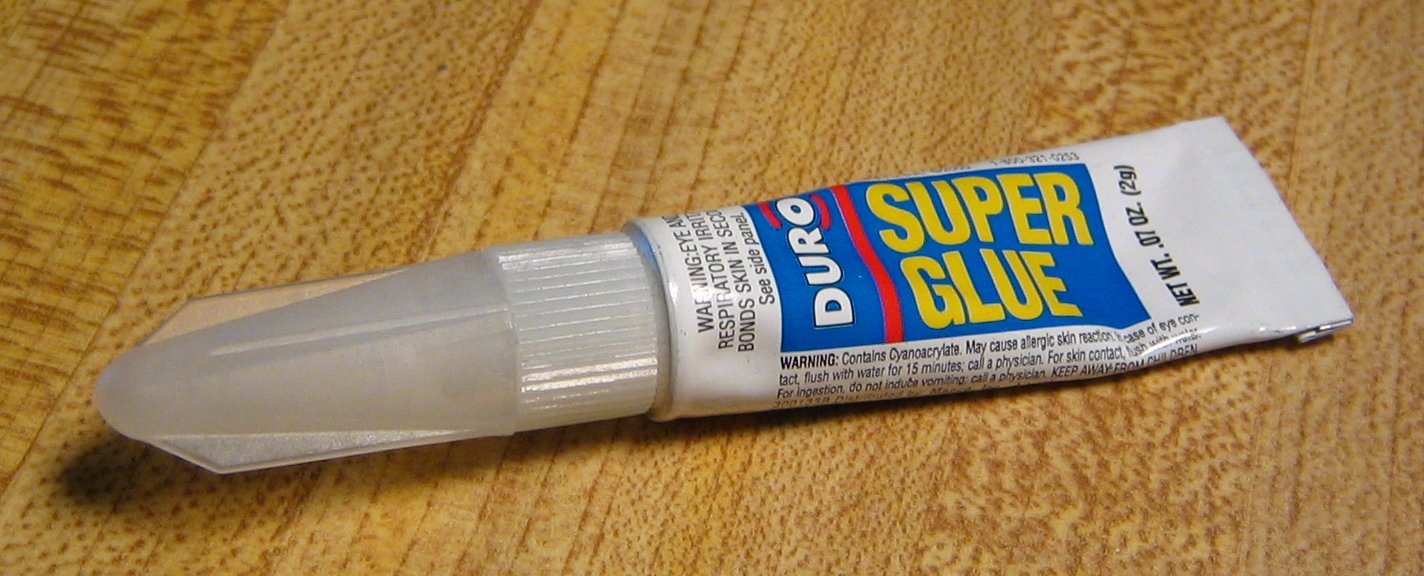
In 1942, a chemist got exactly the wrong result and threw it in the trash. In 1951, a different team got the same wrong result and almost threw it away again. Both times, the substance was cyanoacrylate — the compound that would eventually become Super Glue — and both times, the very thing that made it useless for the job at hand was the thing that made it revolutionary.
Table of Contents
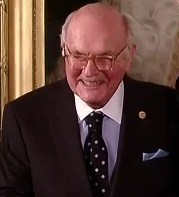
The man in the middle of both rejections was Dr. Harry Coover, a Kodak research chemist who spent nine years dismissing his own discovery before a shattered lab instrument finally made him look at it twice.
Quick answer
Harry Coover, a chemist at Eastman Kodak, first encountered cyanoacrylate in 1942 while trying to make clear plastic gunsights during WWII — the substance stuck to everything and was rejected as useless. In 1951, his team tested it again for heat-resistant jet canopies, and it was rejected a second time for the same reason, until a colleague accidentally glued an expensive refractometer together and Coover realized the ‘flaw’ was actually the invention. Kodak launched it commercially in 1958 as Eastman #910, later known worldwide as Super Glue.
A gunsight that wouldn’t behave
During World War II, Coover was part of a Kodak research team trying to develop optically clear plastic for precision gunsights for Allied soldiers. Among the compounds his group tested were cyanoacrylates — and they were a disaster for the job. The stuff bonded instantly to any surface it touched, including lab equipment, tools, and skin. For a project that needed a clean, moldable, opticalgrade plastic, a substance that welded itself to everything on contact wasn’t a discovery. It was a nuisance. The cyanoacrylate formulation was set aside and the war-era project moved on without it.
That could have been the end of it. Plenty of promising lab accidents die exactly this way: noted, filed, forgotten.
The refractometer that changed everything
Nearly a decade later, in 1951, Coover was supervising a different Kodak project, this one searching for heat-resistant acrylate polymers for jet aircraft canopies. Cyanoacrylates came up again as a candidate — and true to form, they failed the assignment for the same reason as before: far too sticky to be a useful polymer coating.
The second rejection almost buried it for good. But this time, a chemist in Coover’s group reported that he’d ruined an expensive refractometer — a precision instrument used to measure how light bends through a substance — by accidentally gluing its lens surfaces together with the compound. Instead of writing it off as a costly accident, Coover had the realization that had eluded him in 1942: a substance that could bond glass surfaces permanently, instantly, without heat or pressure, wasn’t a failed polymer. It was an entirely new kind of adhesive, and nothing else on the market worked like it.
The part most people miss
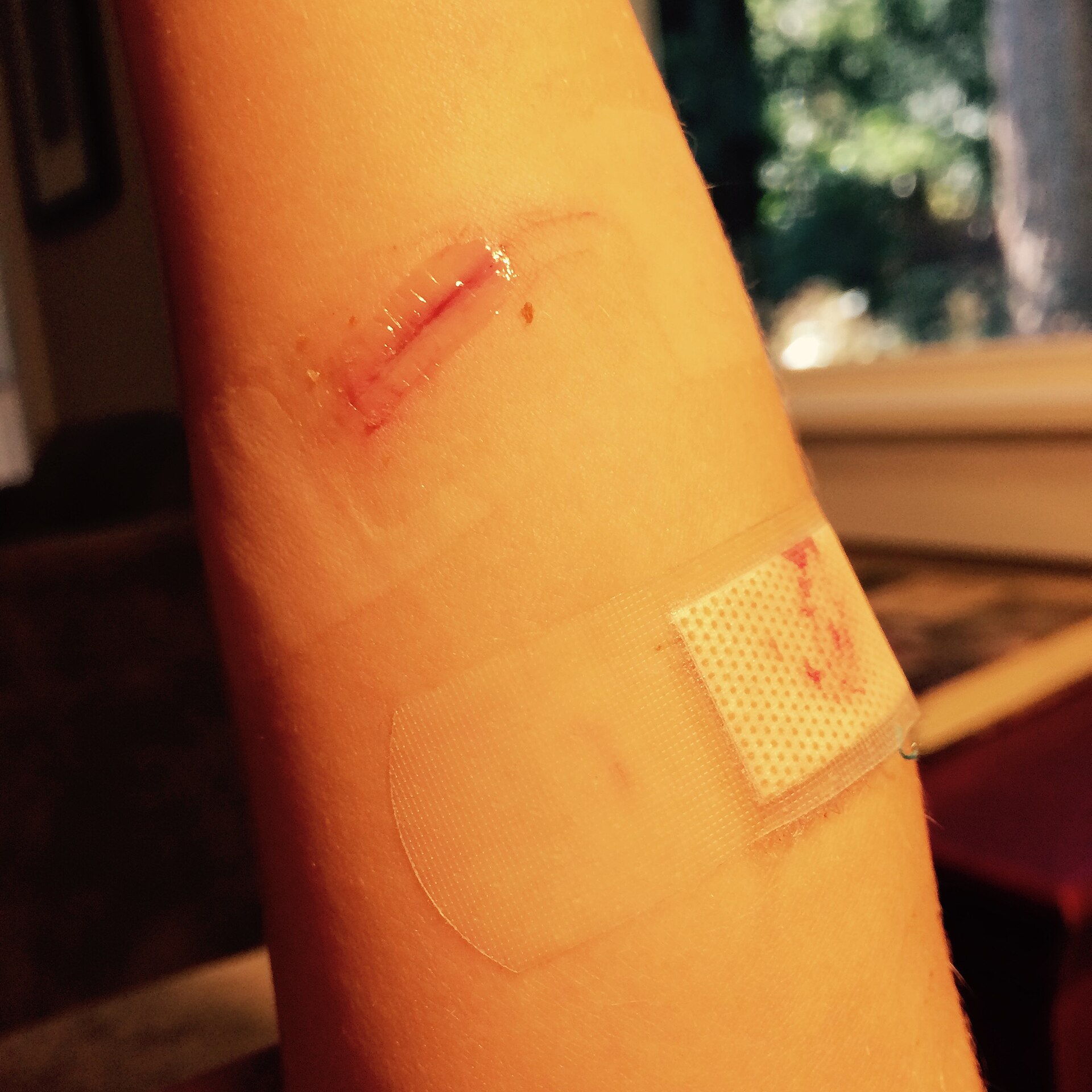
Coover still had to convince Kodak’s notoriously conservative executives to bet on it, and by most accounts he did it with a bit of showmanship: demonstrating the bond’s strength by gluing everyday objects together in front of the board. Kodak released the product commercially in 1958 as an industrial adhesive under the name Eastman #910, and Coover later took the pitch to television, appearing on the game show ‘I’ve Got a Secret,’ where host Garry Moore let himself be lifted off the ground suspended from a metal bar held together by a single drop of the glue. What almost nobody remembers, though, is where cyanoacrylate did its most serious work: in Vietnam, military field surgeons used a specially formulated cyanoacrylate spray to seal soldiers’ wounds and stop catastrophic bleeding on the spot, buying critically injured troops time to reach a hospital — even though the FDA had not yet formally approved the compound for medical use in the United States. The same molecule twice rejected as a laboratory nuisance ended up saving lives on a battlefield before it ever became a household name.
Sources
Wikipedia’s entries on Harry Coover and Cyanoacrylate, detailing the 1942 gunsight research, the 1951 refractometer incident, and the 1958 Eastman #910 launch.
The National Inventors Hall of Fame’s inductee profile of Harry W. Coover, covering his biography, WWII gunsight research, and U.S. Patent No. 2,768,109.
CBS News’ ‘Almanac: Super Glue,’ which recounts Coover’s ‘I’ve Got a Secret’ television demonstration with host Garry Moore and the compound’s Vietnam War medical use.
Explore more: more accidental inventions.
super glue FAQs
Who invented Super Glue?
Dr. Harry Coover, a research chemist at Eastman Kodak, first encountered the compound cyanoacrylate in 1942 and recognized its adhesive potential in 1951. Kodak patented and commercialized it.
Why was Super Glue rejected twice before it was recognized as useful?
Both times researchers tested cyanoacrylate — first for clear gunsight plastic in 1942, then for heat-resistant jet canopy coatings in 1951 — it bonded instantly to everything it touched, which made it a failure for those specific jobs, not a useful compound in itself.
When did Super Glue go on sale?
Eastman Kodak brought it to market in 1958 under the industrial name Eastman #910, before it became widely known by the consumer name Super Glue.
Is it true Super Glue was used on soldiers’ wounds in Vietnam?
Yes. Military field surgeons used a cyanoacrylate spray to stop severe bleeding in wounded soldiers during the Vietnam War, even before the compound had formal FDA approval for medical use.
Tales You Can Hold
Fun-facts books for curious kids, personalized books that star your child, and more from the FYI Tales Bookstore. Visit the Bookstore.
Photo: Unknown / CC BY-SA 3.0, via Wikimedia Commons.