
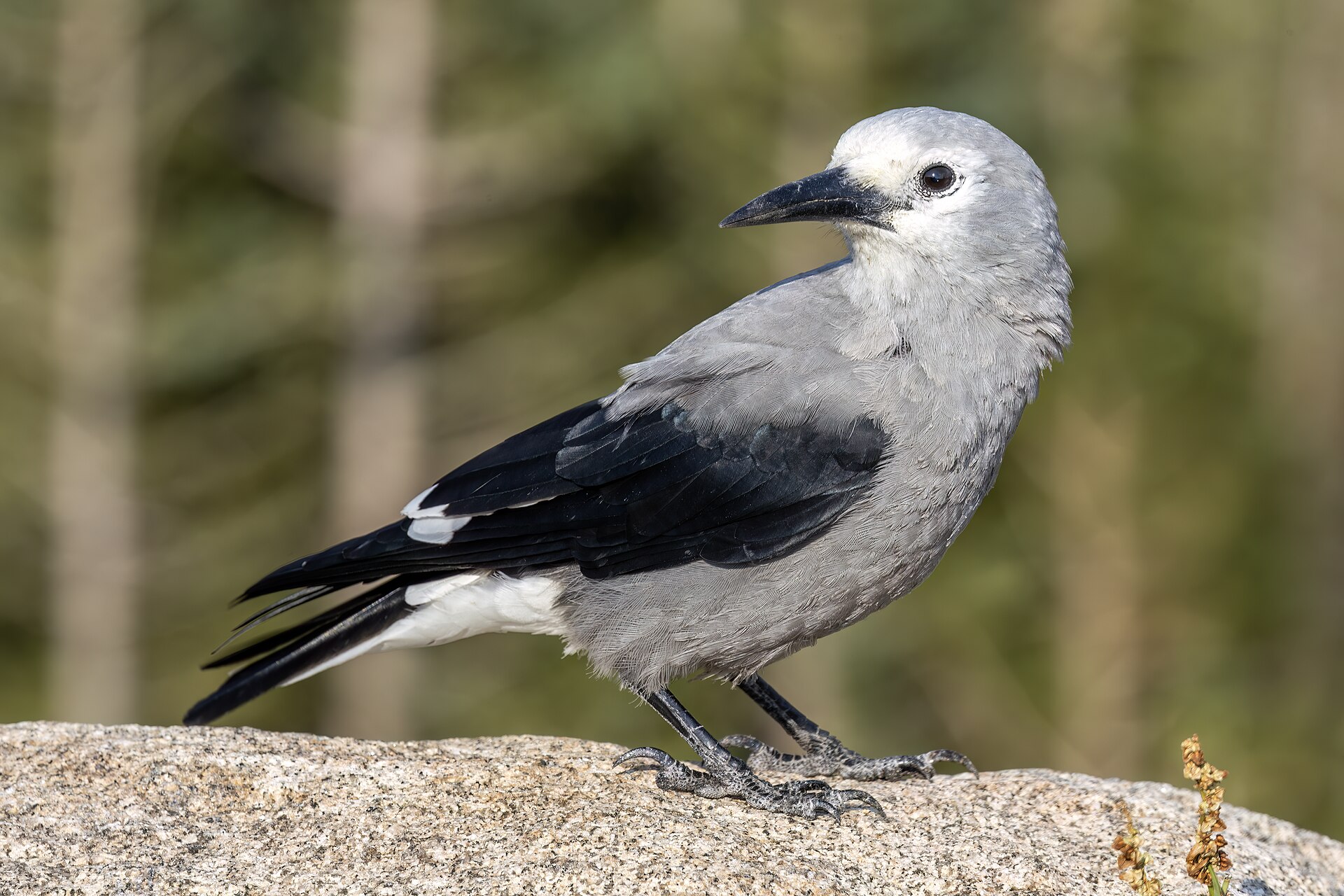
In late summer, a gray-and-black bird with a dagger of a beak starts flying laps over the high slopes of the Rocky Mountains, prying seeds out of pinecones and burying them, one tiny cache at a time, across dozens of square miles. By the time it’s done, it may have hidden tens of thousands of seeds in thousands of separate spots. Then winter buries the whole mountainside under snow — and the bird goes back and finds them anyway.
Table of Contents
This isn’t a folk tale about a bird with a magic nose. It’s the Clark’s nutcracker, and for decades scientists doubted a brain that small could actually be doing what it looked like it was doing. Then a couple of biologists moved some rocks around and proved it.
Quick answer
The Clark’s nutcracker (Nucifraga columbiana) buries tens of thousands of pine seeds every autumn in scattered underground caches, and studies show individual birds can accurately relocate roughly 10,000 of those hiding spots, months later, by remembering visual landmarks — not by smell, and not by chance.
A woodpecker that wasn’t
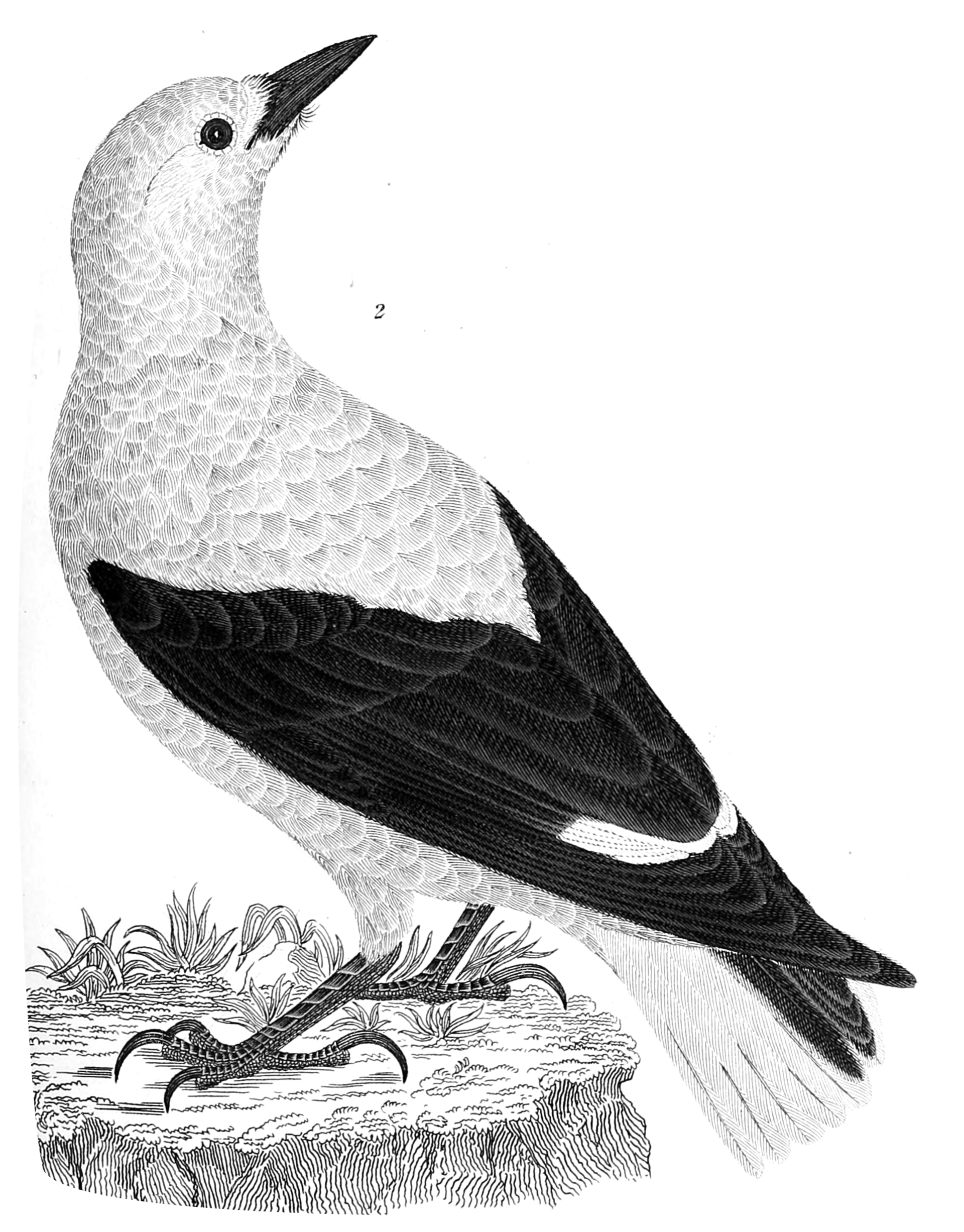
The bird gets its name from Captain William Clark, who spotted one along the Salmon River in 1805 during the Lewis and Clark Expedition and, understandably, got it wrong — he described it in his journal as a kind of woodpecker, going by its bill and behavior. It took the ornithologist Alexander Wilson, working from a specimen the expedition brought back, to sort the bird into its real family: the corvids, the same clan as crows, ravens, and jays. He named it after Clark, and the name stuck even after science figured out what it actually was.
What nobody appreciated for another century and a half was what was going on inside its head. Clark’s nutcrackers live at elevations where a hard winter can bury every ounce of food under feet of snow for months. Their entire survival strategy is a bet that they can find, later, what they buried now — while sober biologists suspected they were mostly just getting lucky or sniffing around.
Proving the bird wasn’t guessing
In the late 1970s and early 1980s, biologists Stephen Vander Wall and Russell Balda set out to settle it. In a landmark 1982 study published in Animal Behaviour, they let nutcrackers cache seeds in an enclosure, then — before the birds came back to dig them up — quietly shifted the rocks and sticks around each cache site. The birds didn’t dig in the actual spot. They dug near where the landmark now was, missing the real cache by roughly the same distance the landmark had moved. That was the tell: the birds were navigating by remembered visual reference points, the way you’d walk to a shed by lining it up with the oak tree and the fence corner, not by scent or blind chance.
Follow-up work pushed the numbers further. Individual birds have been tracked caching anywhere from about 5,000 up to nearly 100,000 seeds in a single autumn, spread across thousands of separate hiding spots, and relocating them with real accuracy as much as nine months later — deep into the following spring, feeding chicks with seeds they buried the previous fall. Researchers, including Diana Tomback at the University of Colorado Denver, who has spent a career on this bird, have called them, fondly, “cache-aholics.”
The part most people miss
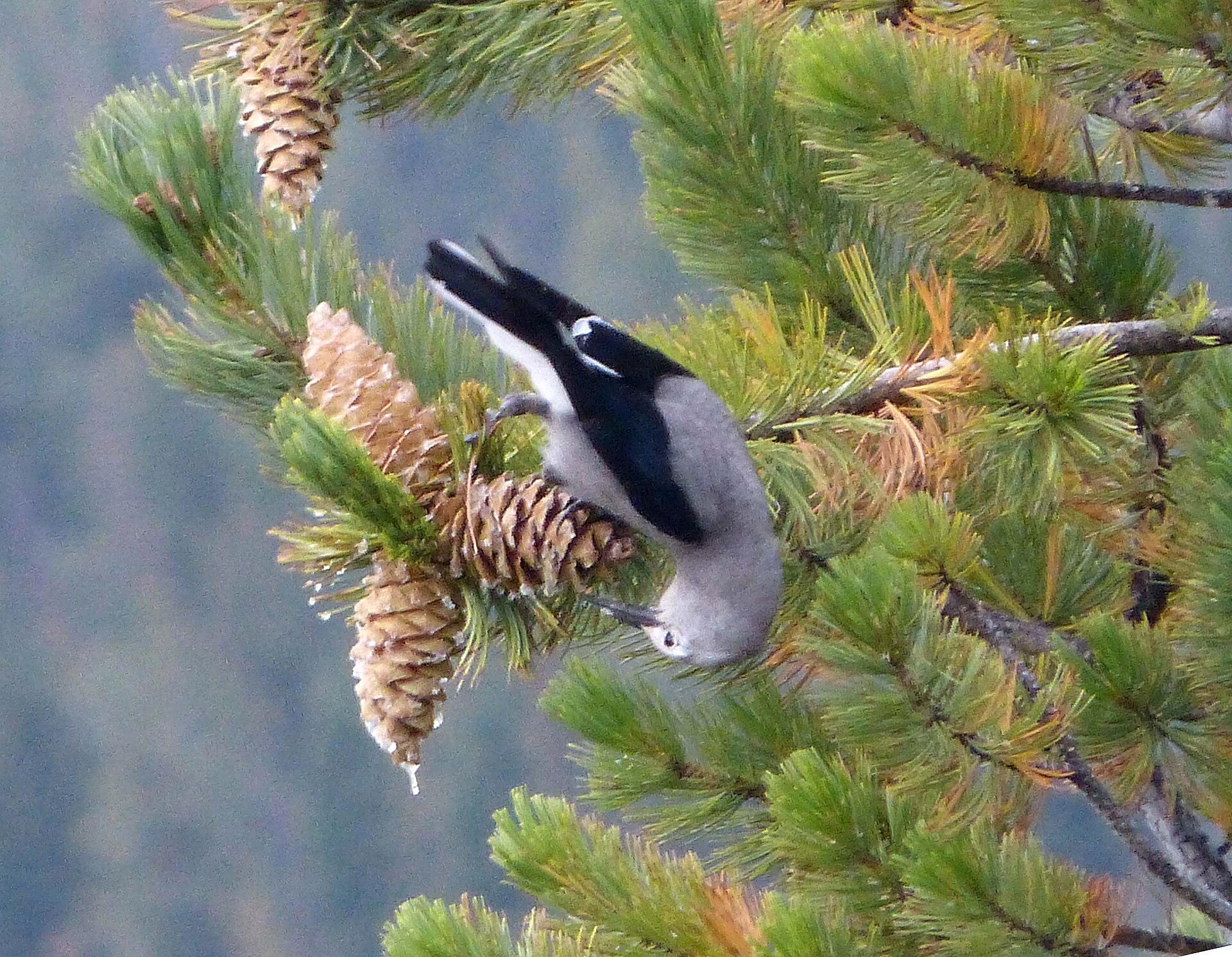
The nutcracker doesn’t do this for fun — an entire tree species is betting its future on the bird’s memory, including its lapses. Whitebark pine, the nutcracker’s main food source in the Rockies and Sierra Nevada, has cones that don’t open on their own and seeds with no wings, so they can’t blow away or roll downhill like a normal pine’s. The tree has no way to plant itself except by getting eaten, or more precisely, forgotten. Nutcrackers carry whitebark pine seeds up to several miles from the parent tree, bury them, and — because no memory is perfect — never come back for a meaningful fraction of them. Those forgotten caches are the whitebark pine’s only real path to becoming a forest. The relationship is close enough that biologists consider it a textbook case of two species that evolved to depend on each other, and it’s fraying: whitebark pine populations have been hit hard by an introduced fungus called white pine blister rust, along with mountain pine beetles and changed fire patterns, which puts long-term pressure on the very bird whose forgetfulness planted the forest in the first place.
Sources
National Geographic’s “How a 5-Ounce Bird Stores 10,000 Maps in Its Head” (Robert Krulwich, 2015), drawing on the research of biologists Stephen Vander Wall, Russell Balda, Diana Tomback, and psychologist Alan Kamil.
Audubon magazine’s “Better Know a Bird: The Clark’s Nutcracker and Its Obsessive Seed Hoarding,” including reporting on Diana Tomback’s whitebark pine research and seed-cache figures.
“An Experimental Analysis of Cache Recovery in Clark’s Nutcracker,” Vander Wall and Balda’s 1982 study in Animal Behaviour, the original landmark-manipulation experiment establishing spatial memory as the recovery mechanism.
Explore more: More wild animal tales.
Clark’s Nutcracker FAQs
How many hiding spots can a Clark’s nutcracker actually remember?
Estimates vary by study, but researchers generally put it around 10,000 cache locations an individual bird can track at once, out of tens of thousands of seeds it buries each fall.
How do scientists know it’s memory and not smell?
In experiments by Stephen Vander Wall and Russell Balda in the late 1970s and early 1980s, shifting the landmarks around a cache site caused nutcrackers to dig in the wrong spot nearby, in line with the moved landmark — proof they were navigating by remembered visual cues, not scent.
Why does this bird matter for forests?
Clark’s nutcrackers are essentially the only way whitebark pine gets planted, since the tree’s seeds are wingless and can’t disperse on their own. The caches the birds forget become new trees.
Tales You Can Hold
Fun-facts books for curious kids, personalized books that star your child, and more from the FYI Tales Bookstore. Visit the Bookstore.
Photo: Polinova / CC BY-SA 4.0, via Wikimedia Commons.