
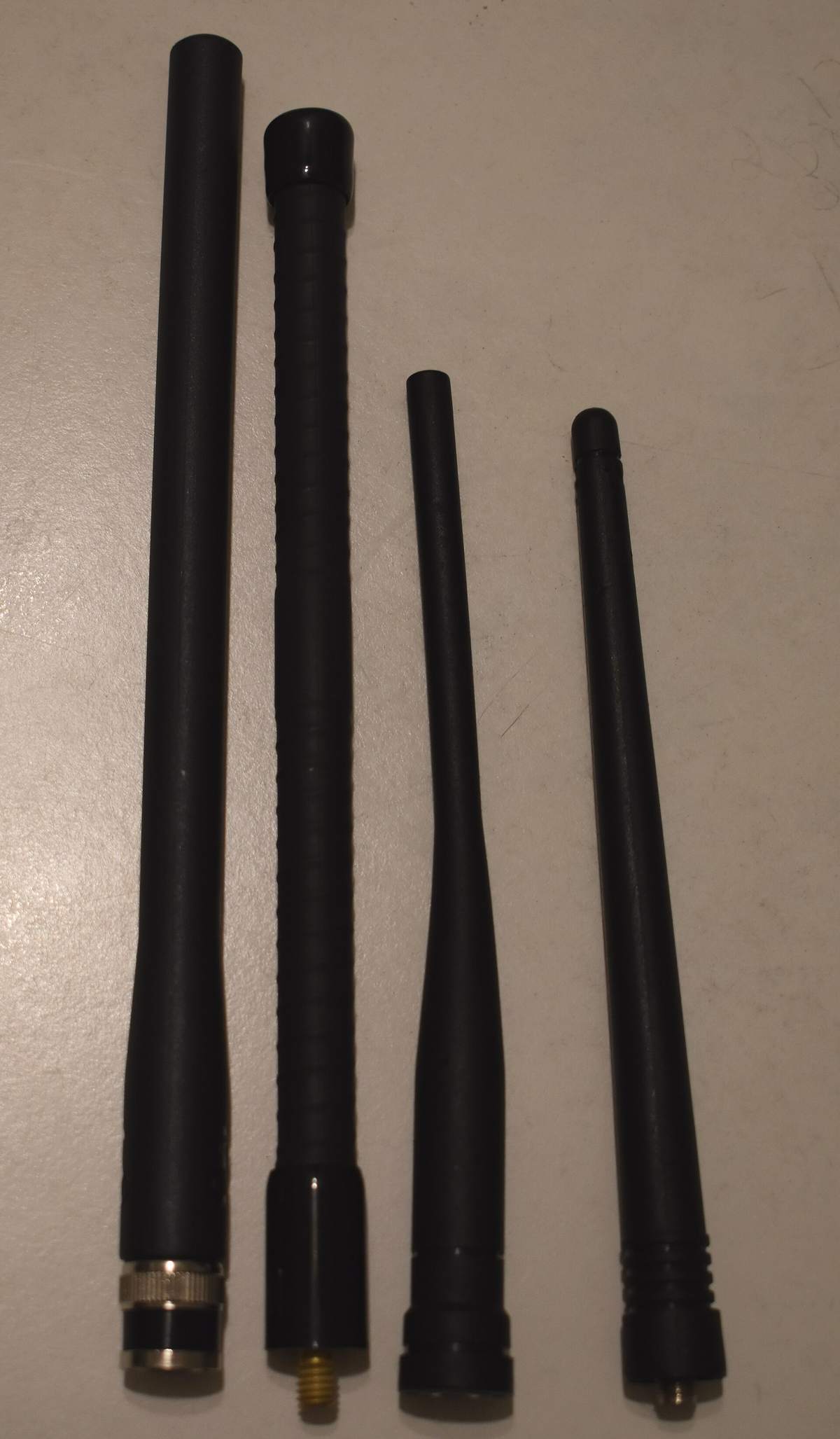
In 1980, the first home cordless phones hit American stores for about $400 — roughly $1,500 today — and they came with a two-foot telescoping antenna you had to crank up before every call, like a tiny TV aerial bolted to your telephone. Within a few years, that long whip had vanished, replaced by a short, springy rubber-coated coil that barely stuck above the handset.
Table of Contents
That switch wasn’t about looks, even though the squat little spiral became the defining look of 1980s and ’90s cordless phones. It happened because a federal agency quietly moved the entire product category to a new slice of the radio spectrum — and the antenna that could handle it had already been invented decades earlier, for a completely different gadget.
Quick answer
Old cordless phones switched from long telescoping whips to short coiled ‘spiral’ antennas because the FCC moved cordless phones to higher radio frequencies in the mid-1980s. At those frequencies, engineers could use a compact helical antenna design — essentially a tightly wound coil of wire acting as a radio inductor — that had already been perfected for walkie-talkies and two-way radios back in 1958.
A $400 phone with a two-foot antenna
The first commercial cordless phones went on sale around 1980, and U.S. sales jumped from about 50,000 units that year to roughly a million by 1982, according to the phones’ own trade history. They were a genuine novelty: walking around the yard while on a call felt like science fiction, and the long whip antenna sticking out of the handset was part of the appeal — it looked like you were holding a piece of serious equipment.
That antenna had to be long for a basic physics reason: these early phones ran on the 1.7 MHz band, an extremely low radio frequency. Low frequencies have long wavelengths, and an efficient antenna is generally sized relative to that wavelength. At 1.7 MHz, a ‘proper’ antenna would be absurdly long, so even those telescoping whips were already a compromise — and a fragile one. They snapped off in purses, car doors, and toddler hands with regularity.
The 1.7 MHz band also had another problem: it was crowded and leaky. Baby monitors, garage door openers, and nosy neighbors with the right receiver could sometimes pick up your calls, and interference from motors and fluorescent lights was common.
The FCC moves the goalposts
In December 1983, the FCC approved a new set of channels in the 46 MHz and 49 MHz bands for cordless phones, and mandated that every cordless phone manufactured after October 1, 1984 use them. The new frequencies were cleaner — less prone to interference from household appliances — and, because they were much higher than 1.7 MHz, they had much shorter wavelengths.
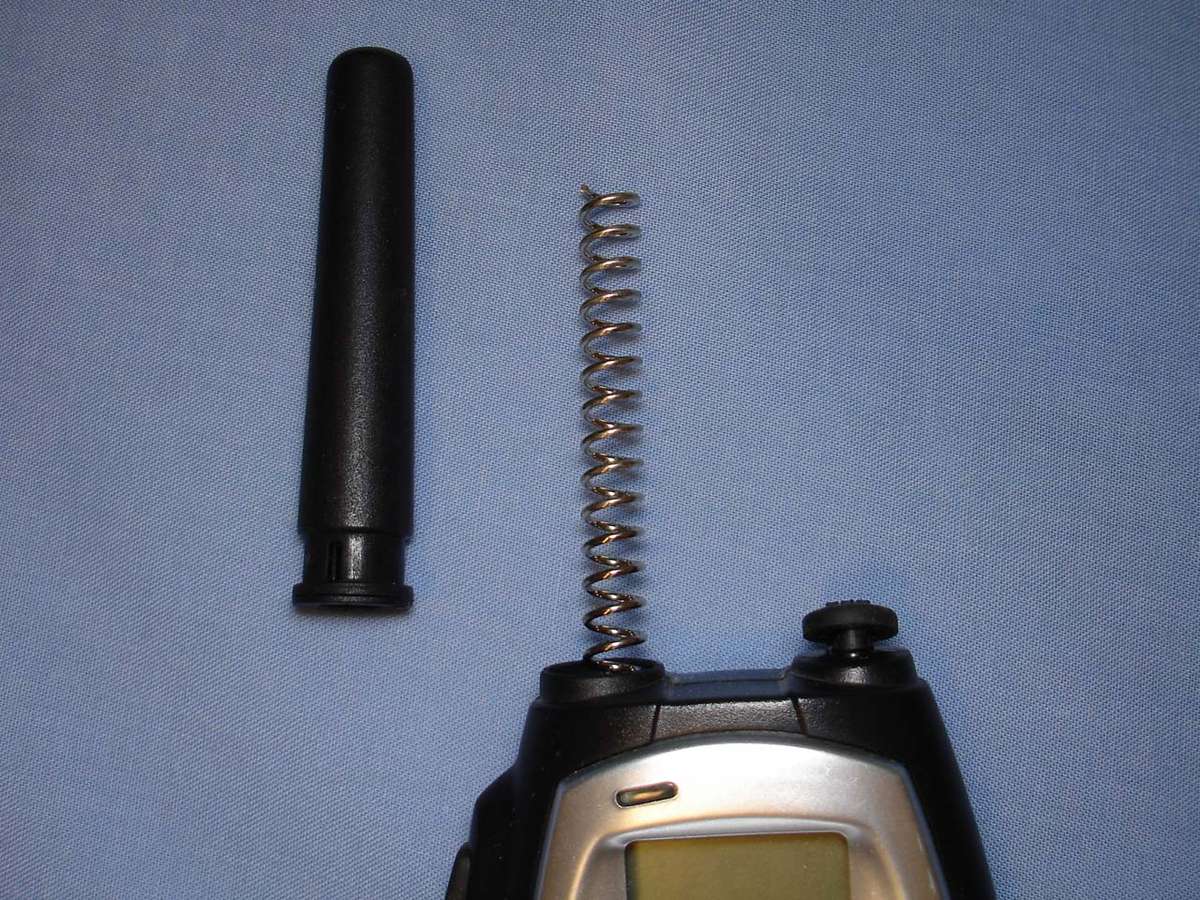
Shorter wavelength means a shorter antenna can do the job. But phone makers didn’t have to invent a new short antenna from scratch — they reached for one that already existed. In 1958, an engineer named Richard B. Johnson is credited with designing what’s technically called a ‘normal-mode helix’ antenna: a springy coil of wire, sealed in a rubber or plastic sleeve, nicknamed the ‘rubber ducky’ for its stubby, rubberized look. It had already become the standard antenna for walkie-talkies, police radios, and scanners precisely because it was short, tough, and good enough for short-range, low-power use.
The underlying trick — winding a wire into a coil so it behaves electrically like a much longer straight antenna — traces back further still, to antenna theory developed by Ohio State engineer John D. Kraus starting in 1946. Kraus’s helical antennas were built for an entirely different job (big, directional antennas for satellite and space communication), but the coil-as-inductor principle he worked out is the same physics packed into that tiny rubber nub on a 1980s phone.
The part most people miss
The part that surprises people is that the spiral look wasn’t designed for phones at all — it was decades-old surplus thinking from military and public-safety radios, repurposed because it solved exactly the problem cordless phone engineers suddenly had. A true quarter-wavelength antenna for these frequencies would still have been several feet of wire, which is useless on a handset you’re supposed to carry around the house. The coiled helix doesn’t avoid that physics; it cheats it, using the coil as a loading inductor so a few inches of wire can act electrically like a much longer one. The tradeoff is a modest loss of range and efficiency — an acceptable one, since a cordless phone only ever had to reach from the kitchen to the backyard, not across a city like a real walkie-talkie. People sometimes also mix this up with a later, more cynical gadget story: some 1990s–2000s flip cell phones had external whip antennas that were largely cosmetic, with the real working antenna coiled inside the case — a marketing move, not an engineering one. That’s a related but separate tale from a different decade and a different device; the cordless phone’s spiral antenna, by contrast, was doing real, necessary work the whole time.
Sources
Wikipedia’s entry on the ‘Rubber ducky antenna’ documents Richard B. Johnson’s 1958 design and its adoption across portable radio equipment.
Wikipedia’s ‘Cordless telephone’ article lays out the frequency history, including the FCC’s December 1983 approval of the 46/49 MHz bands and the October 1984 mandate for new phones.
ClickAmericana’s retrospective on 1987 cordless phone advertising describes the antenna and frequency shift directly, noting how the new 46-49 MHz channels allowed shorter, more flexible antennas and reduced interference from household electronics.
Explore more: more true stories behind everyday objects.
Frequently Asked Questions
Why did old cordless phones have coiled, spring-like antennas?
Because the FCC shifted cordless phones to higher radio frequencies (46-49 MHz) in the mid-1980s, which let manufacturers swap long, breakable telescoping whips for a short, rubber-coated helical coil — a design already used on walkie-talkies since 1958.
Does a spiral antenna work as well as a straight one?
Not quite — coiling the wire into a compact helix trades a bit of range and efficiency for durability and size. For a short-range household phone, that tradeoff was more than acceptable.
When did phones stop using spiral antennas?
As cordless phones moved to even higher frequencies in the 1990s and 2000s — 900 MHz, then 2.4 GHz, 5.8 GHz, and DECT 1.9 GHz — antennas could shrink further, and many disappeared inside the phone’s plastic casing entirely.
Tales You Can Hold
Fun-facts books for curious kids, personalized books that star your child, and more from the FYI Tales Bookstore. Visit the Bookstore.
Photo: Urban Versis 32 / CC BY-SA 4.0, via Wikimedia Commons.