
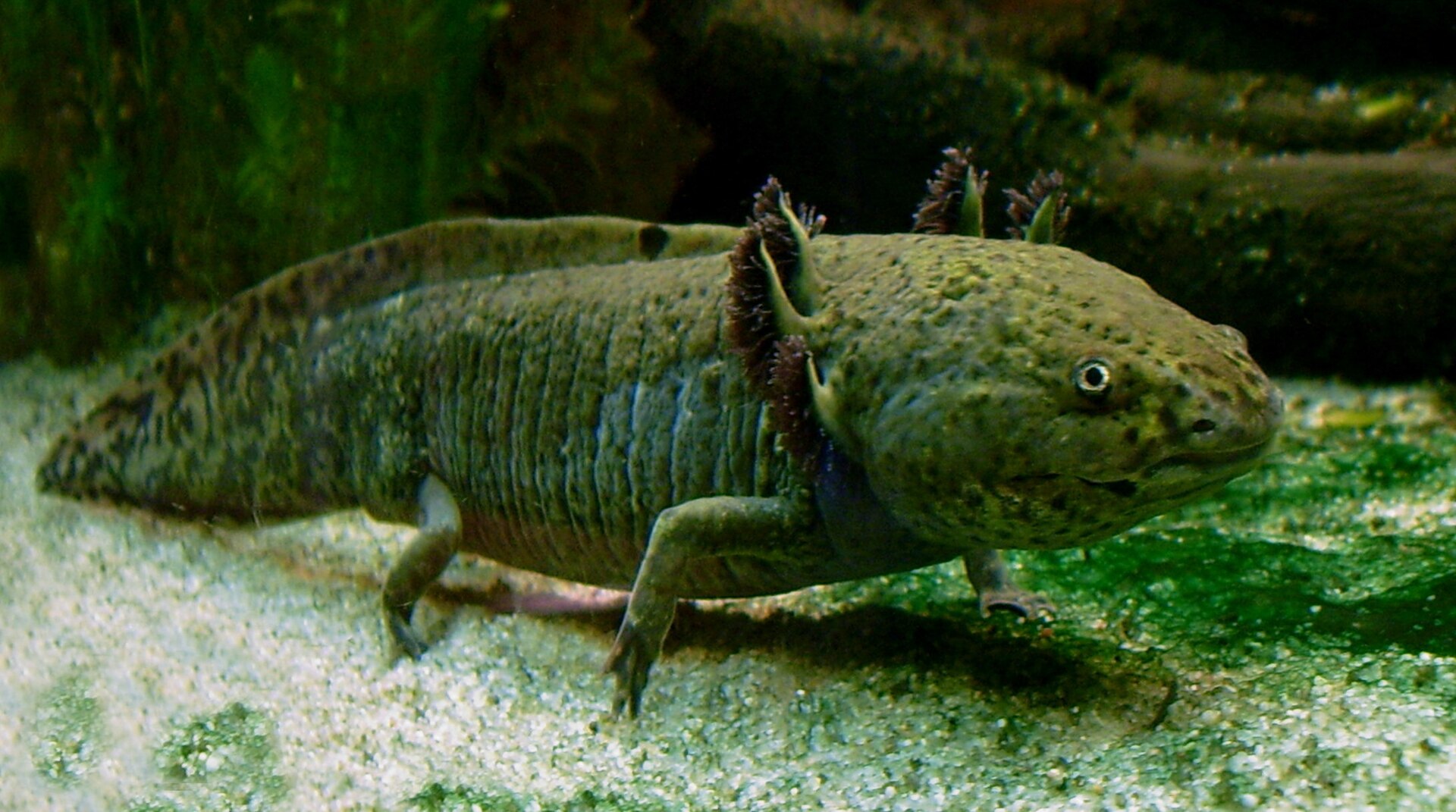
In Aztec legend, the god Xolotl was so afraid of being sacrificed to keep the sun moving across the sky that he fled through a series of disguises — a stalk of corn, a maguey plant — before diving into a lake and becoming a strange, gilled salamander. It didn’t save him; the other gods found him anyway. But the animal that supposedly carries his name, the axolotl, ended up with a far stranger inheritance: it can regrow a missing leg, rebuild a crushed spinal cord, patch damaged heart tissue, and regenerate parts of its own brain, over and over, without so much as a scar.
Table of Contents
That part isn’t folklore. It’s one of the best-documented phenomena in modern biology, and scientists have been formally studying it ever since a shipment of axolotls landed in Paris in 1864 and started doing something nobody expected.
Quick answer
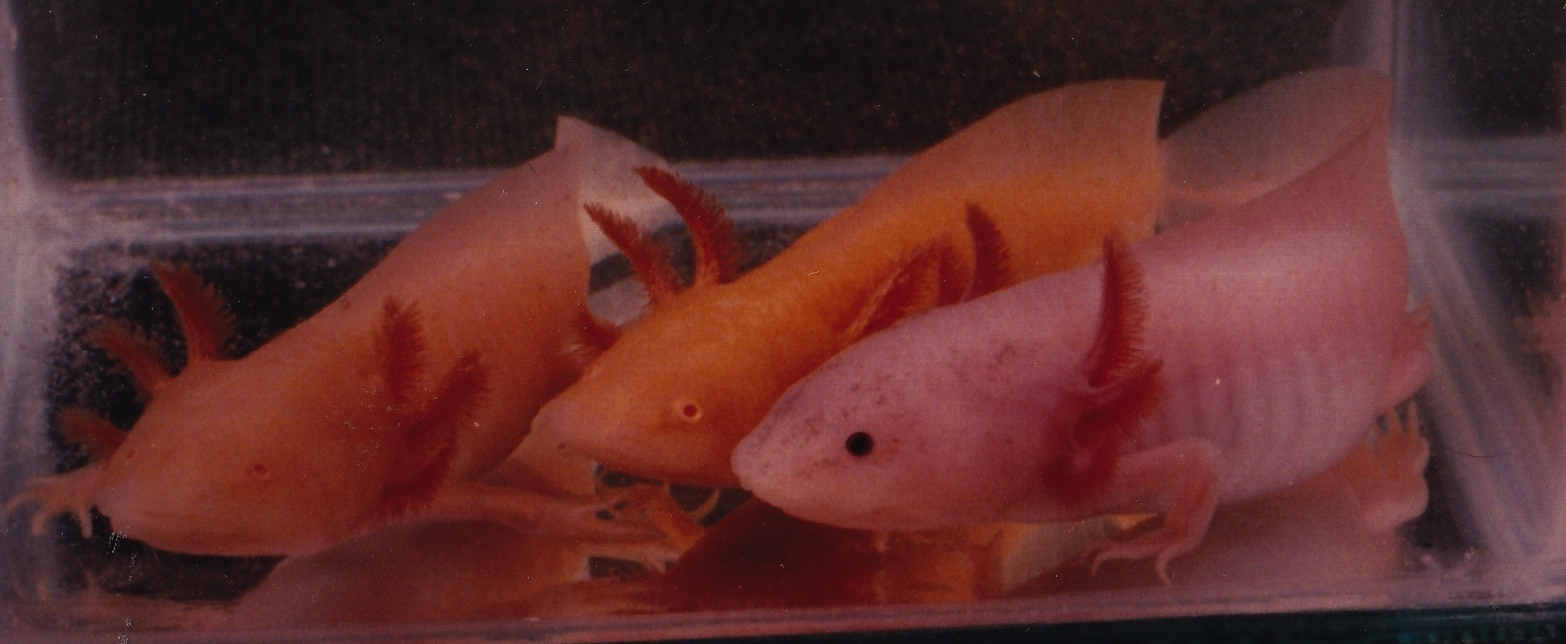
Axolotls (Ambystoma mexicanum) can regrow limbs, tails, jaws, skin, spinal cord, and portions of the heart, lungs, and brain — repeatedly, without scarring — because cells at the wound site revert to a stem-cell-like state and rebuild the missing structure from scratch, a process biologists call blastema formation.
A Parisian mistake that started it all
In 1864, a shipment of axolotls arrived at the Jardin des Plantes in Paris, joining a handful sent the year before, destined for the vivarium of French naturalist Auguste Duméril. Duméril was just trying to keep the strange Mexican salamanders alive in captivity. Instead, some of his animals did something no one had documented: rather than staying in their permanently larval, gilled state, a few individuals lost their gills, grew eyelids, and climbed out of the water as ordinary, land-walking salamanders.
Duméril had stumbled onto neoteny — the axolotl’s usual trick of reaching sexual maturity while still looking like a juvenile — and began breeding the colony to study it. That Parisian lab population is considered the ancestor of most axolotls now living in research labs and home tanks worldwide, including the federally funded colony at the University of Kentucky’s Ambystoma Genetic Stock Center, whose pedigree traces back to that same 1860s stock — reportedly the deepest lineage of any laboratory animal on record.
How to rebuild a leg without a scar
Cut off an axolotl’s leg, and within days skin cells migrate to seal the wound. Then mature cells nearby — muscle, cartilage, connective tissue — do something almost no adult vertebrate cell can: they forget what they are. They dial back their identity toward something closer to a stem cell, pile up into a mass called a blastema, and reread local genetic signals to rebuild bone, muscle, nerve, and skin in exactly the right place and proportion. No scar tissue forms in the process.
It isn’t limited to limbs. Researchers have documented axolotls regenerating tails, jaws, ovaries, sections of the spinal cord and brain, and portions of the heart and lungs — sometimes many times over an individual’s life. In 2018, an international team led by regeneration biologist Elly Tanaka, then at the Research Institute of Molecular Pathology in Vienna, finally sequenced the full axolotl genome. At roughly 32 billion base pairs — about ten times the size of the human genome — it was, at the time, the largest animal genome ever fully assembled. The goal wasn’t novelty; it was pinning down which genes actually run the regeneration program, in hopes of eventually nudging human cells toward doing something similar.
The part most people miss
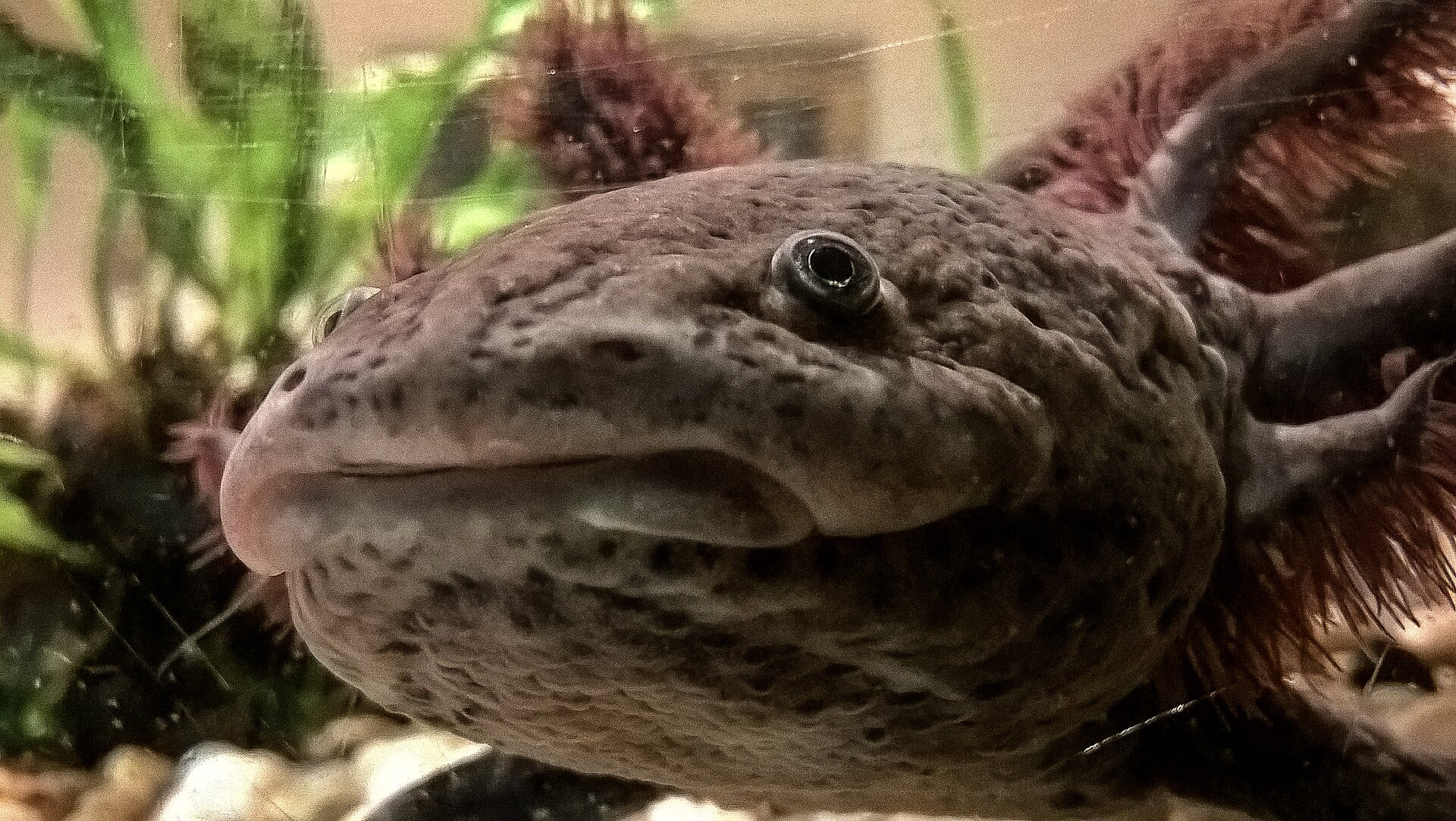
For all its regenerative superpowers, the axolotl cannot regrow the one thing it actually needs most: its habitat. The IUCN Red List now places the wild population at just three remaining sites in and around Mexico City — the canals of Lake Xochimilco, Lake Chalco, and Chapultepec Lake — spanning a combined extent of occurrence of roughly 467 square kilometers, a fraction of the vast lake network the Aztecs once knew. Confusingly, the site most associated with axolotls, Xochimilco, is also the one where monthly surveys have failed to detect a single wild individual since 2017; the more recent confirmed sightings have instead come from Chapultepec Lake, an artificial, cement-lined lake inside a city park. The population researchers do track has collapsed regardless — from roughly 6,000 axolotls per square kilometer in 1998 to just 36 by the last full census in 2014. There’s a hopeful coda: between 2017 and 2018, researchers released 18 captive-bred axolotls into a restored wetland refuge and an artificial pond near Xochimilco, and every one of them survived and gained weight, proof that reintroduction can work for an animal that can rebuild a heart but can’t rebuild a lake on its own.
Sources
Nature (2018), “The axolotl genome and the evolution of key tissue formation regulators,” the genome-sequencing study led by Elly Tanaka and collaborators at the Research Institute of Molecular Pathology, Vienna.
“Cut and Paste: The Mexican Axolotl, Experimental Practices and the Long History of Regeneration Research in Amphibians, 1864–Present,” a peer-reviewed history archived on PubMed Central, covering the 1864 Paris shipment and Auguste Duméril’s neoteny discovery.
The IUCN Red List of Threatened Species assessment for Ambystoma mexicanum, documenting the species’ three remaining wild sites (Xochimilco, Chalco, Chapultepec), extent of occurrence, and critically endangered status.
Mongabay’s 2025 report on the 2017–2018 captive-bred axolotl reintroduction study near Lake Xochimilco.
Explore more: More Wild Animal Tales.
axolotl FAQs
Can axolotls really regrow their brain?
Yes — axolotls can regenerate damaged portions of their brain and spinal cord, along with limbs, tails, jaws, and parts of the heart and lungs, without forming scar tissue.
Why don’t humans regenerate like axolotls?
Human cells generally respond to injury by forming scar tissue instead of reverting to a stem-cell-like state. Axolotl cells at a wound site “dedifferentiate” and form a blastema that rebuilds the exact missing structure, which is why scientists sequenced the axolotl genome to study genes relevant to human regenerative medicine.
Are axolotls extinct in the wild?
Not officially, but they’re critically endangered. The IUCN lists wild axolotls at just three sites near Mexico City — Xochimilco, Chalco, and Chapultepec — and surveys have found none in Xochimilco’s canals specifically since 2017, even as Chapultepec has produced more recent confirmed sightings.
Where does the name “axolotl” come from?
It comes from Nahuatl, the Aztec language, often translated as “water dog,” and is tied to a legend about the god Xolotl transforming into a salamander to try to escape being sacrificed.
Tales You Can Hold
Fun-facts books for curious kids, personalized books that star your child, and more from the FYI Tales Bookstore. Visit the Bookstore.
Photo: LoKiLeCh / CC BY-SA 3.0, via Wikimedia Commons.