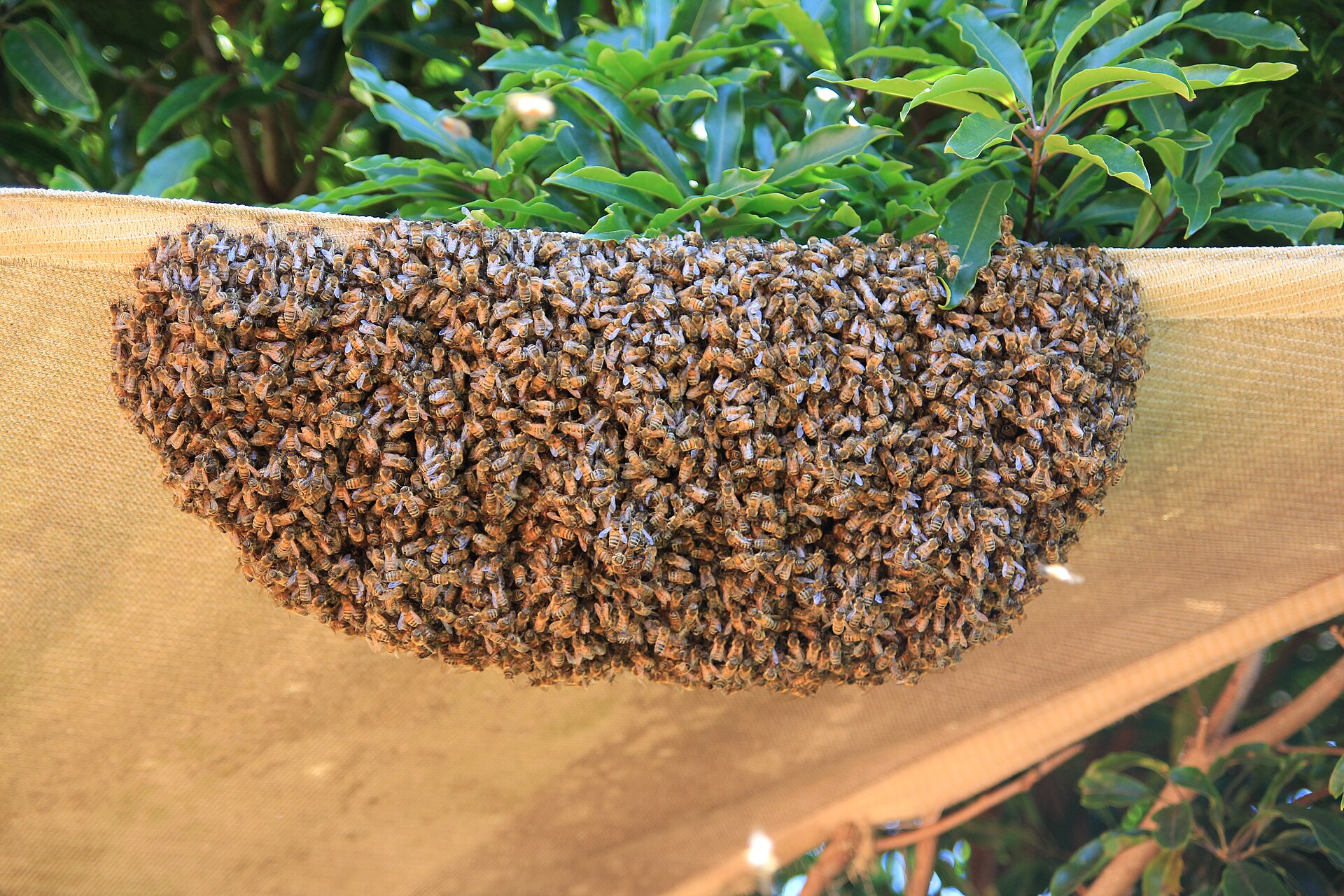
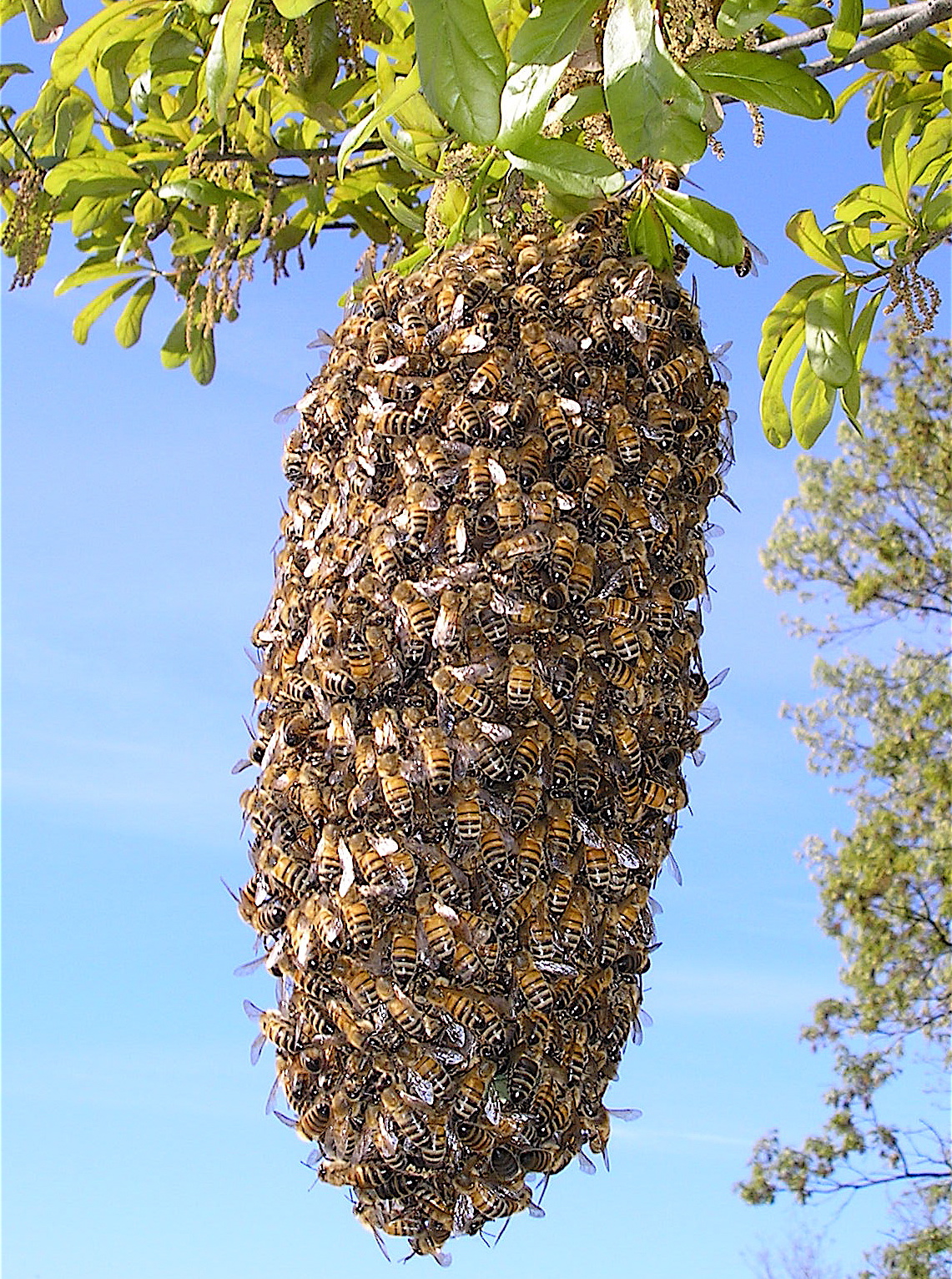
Once a year, a colony of honeybees does something no royal court would ever allow: the queen gets evicted by her own subjects, and roughly ten thousand of them go house-hunting as a mob. They cluster on a tree branch in the open — no walls, no defenses — and stay there for days while a handful of scouts go apartment-shopping on their behalf.
Table of Contents
What happens next looks less like an insect frenzy and more like a floor debate. Scouts return, argue their case through dance, get shouted down by rivals, and somehow, again and again, the swarm ends up in the best available home. Cornell biologist Thomas D. Seeley spent decades proving this wasn’t a metaphor — it’s an actual voting system, with a quorum, a campaign, and even a mechanism for silencing bad ideas.
Quick answer
When a honeybee colony outgrows its hive, it splits: the old queen leaves with a swarm that clusters nearby while scout bees search for a new nest cavity, ‘vote’ for their favorite by dancing, and only take off once enough scouts (roughly 10 to 20) converge on the same site — a quorum-based decision process first decoded by biologist Thomas D. Seeley.
A mob with no home
Swarming starts as a real-estate problem. When a hive gets crowded, the colony raises a new queen and the old one leaves with about two-thirds of the workers, settling in a clump on a nearby branch. This cluster is completely exposed — no comb, no walls, nothing but bee bodies wrapped around each other — and it typically has only a few days before it needs a permanent cavity, or the whole group dies from exposure or predation.
So a few hundred older, experienced foragers switch jobs and become scouts. They fan out for miles, inspecting hollow trees and any other cavity that might work, checking volume, entrance size, height off the ground, and draftiness — the honeybee equivalent of a walk-through.
The campaign, the dance, and the quorum
A scout who finds a promising site flies back to the cluster and performs a waggle dance — the same figure-eight movement that Austrian zoologist Karl von Frisch spent decades decoding, work that earned him a share of the 1973 Nobel Prize in Physiology or Medicine. The dance encodes direction and distance, but Seeley’s research showed it also encodes enthusiasm: the better the site, the longer and more vigorously a scout dances for it, which recruits more scouts to go check it out themselves.
Multiple sites get championed by different dancing factions at once — genuine competition, not consensus by default. Seeley and colleague P. Kirk Visscher found that scouts are tracking not the popularity of a site but the number of scouts physically present there at once. Once roughly 15 scouts are visiting the same cavity simultaneously, that site hits a quorum, and those scouts return to the cluster and start a ‘piping’ signal that tells the resting bees to warm up their flight muscles for departure.
Seeley and Susannah Buhrman tested how good this system actually is by running trials on Appledore Island, off the coast of Maine — a spot Seeley chose specifically because it has no natural tree cavities, so every option the bees could find was a nest box he’d placed himself. He offered swarms one excellent box and several mediocre ones, and stacked the deck by letting scouts discover the mediocre options hours before the good one. The swarms picked the excellent site in four out of five trials anyway.
The part most people miss
The dancing isn’t just persuasion — it’s also suppression. A 2012 study in Science, led by Seeley with Visscher, Thomas Schlegel, Patrick Hogan, Nigel Franks, and James Marshall, found that scouts deliver a ‘stop signal’ by literally headbutting a rival dancer and buzzing against her while she’s mid-performance. Scouts overwhelmingly target dancers advertising a site other than their own, and the more competition a site has, the more headbutts its dancers absorb. That cross-inhibition is what keeps two evenly matched sites from deadlocking the whole colony forever — mathematically, the researchers noted, it works the same way competing populations of neurons resolve a decision in a brain. Once the swarm is airborne, the story isn’t over either: informed scouts guide the traveling cluster by darting through it at high speed toward the chosen site, a behavior researchers call ‘streaking,’ since most of the ten thousand bees in the air have no idea where they’re going and are just following the locals who do.
Sources
The Nobel Prize organization’s official facts page on Karl von Frisch, covering his 1973 Nobel Prize in Physiology or Medicine for decoding the waggle dance.
Seeley, T.D., Visscher, P.K., Schlegel, T., Hogan, P.M., Franks, N.R., and Marshall, J.A.R., ‘Stop Signals Provide Cross Inhibition in Collective Decision-Making by Honeybee Swarms,’ Science, 2012.
Princeton University Press, publisher’s page for Thomas D. Seeley’s book ‘Honeybee Democracy,’ documenting his Appledore Island research and the quorum-sensing mechanism.
Explore more: more true tales from the wild animal kingdom.
honeybee swarms FAQs
How many scout bees does it take to reach a quorum?
Roughly 15 scouts need to be present at the same candidate site at the same time before that site triggers the swarm’s departure — researchers call this quorum sensing.
Do the bees ever pick the wrong home?
Rarely. In controlled trials on Appledore Island, swarms chose the best available nest site in four out of five tests, even when inferior sites were discovered first and had a head start in recruiting scouts.
What is the waggle dance actually communicating?
Direction and distance to a resource, decoded by Karl von Frisch, plus — as later research by Thomas Seeley showed — the dancer’s assessment of quality, since better sites get longer, more vigorous dances that recruit more scouts.
How do scouts shut down bad options?
By headbutting rival dancers and delivering a brief ‘stop signal’ buzz, a cross-inhibition mechanism documented in a 2012 Science study that keeps the swarm from deadlocking between two similar sites.
Tales You Can Hold
Fun-facts books for curious kids, personalized books that star your child, and more from the FYI Tales Bookstore. Visit the Bookstore.
Photo: Sichy007 / CC BY-SA 3.0, via Wikimedia Commons.