
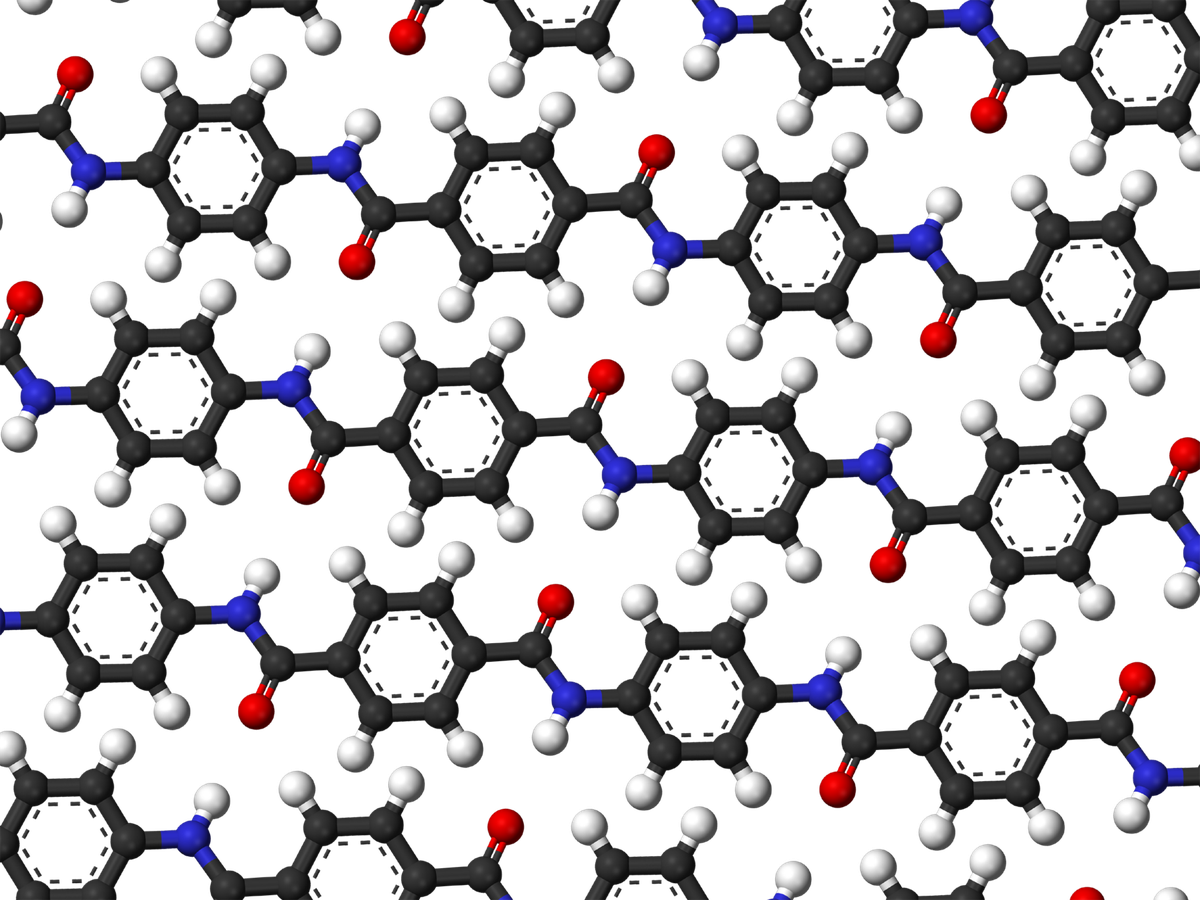
In 1965, a DuPont chemist named Stephanie Kwolek mixed up a batch of liquid polymer that looked wrong in every way a good batch shouldn’t. It was supposed to be thick and clear, like honey. Instead it came out thin, watery, and cloudy — opalescent, she called it, like something gone bad. Most chemists would have poured it down the drain and started over.
Table of Contents
Kwolek didn’t. She asked a technician to run it through the lab’s spinneret, the machine that pulls raw polymer into fiber, just to see what would happen. He said no — he was sure the cloudiness meant it was full of particles that would wreck the equipment. She kept asking. He eventually gave in. What came out of that machine was a fiber stronger, pound for pound, than steel. Nobody in the room could yet explain why. DuPont would spend the next six years figuring out what to do with it.
Quick answer
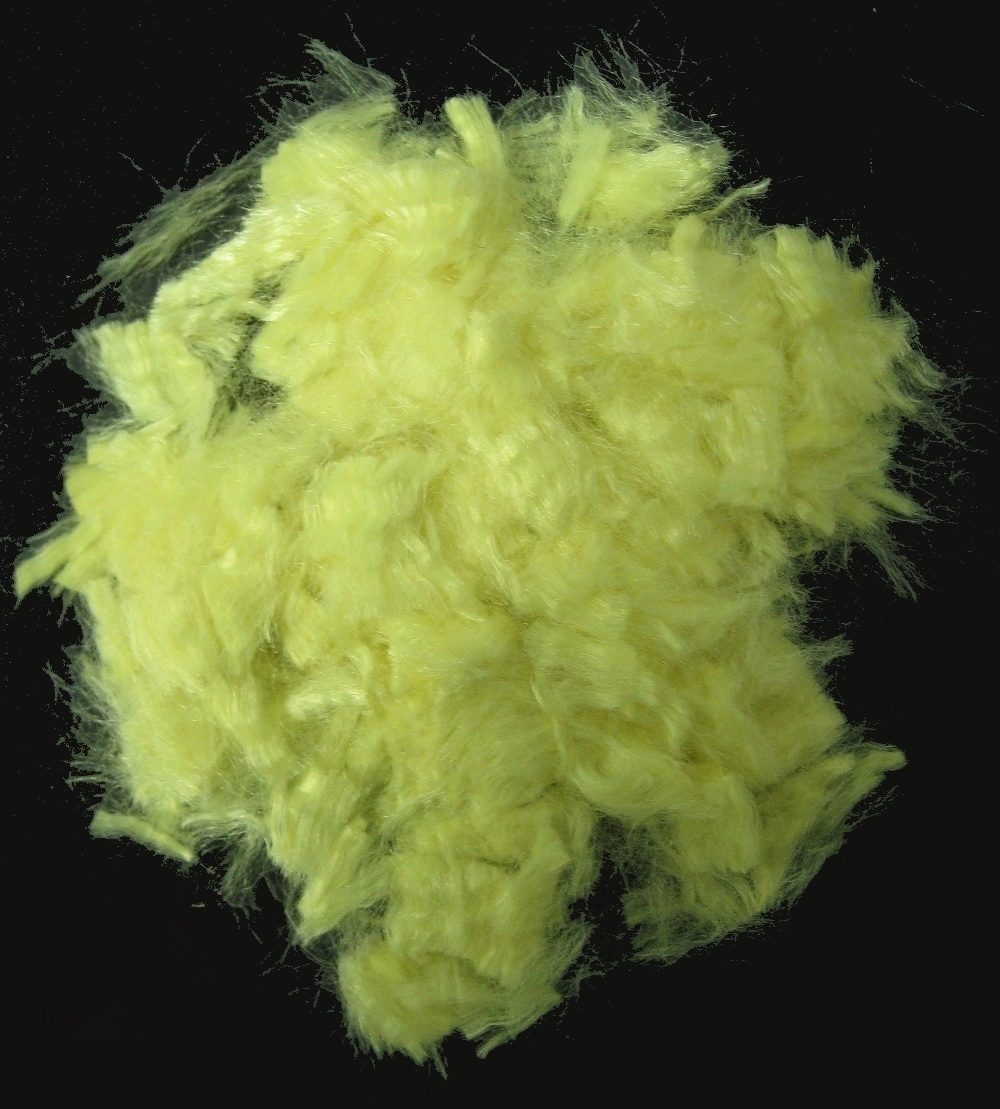
Kevlar was discovered in 1965 by DuPont chemist Stephanie Kwolek, who found that an unusually thin, cloudy polymer solution — one a technician initially refused to run through the spinning machine for fear it would clog it — produced an exceptionally strong, stiff fiber when spun. Weeks later, a newly hired colleague recognized the solution as something stranger still: a liquid crystal. DuPont brought the fiber to market as Kevlar in 1971.
The job that was only supposed to be temporary
Kwolek grew up in New Kensington, Pennsylvania, the daughter of Polish immigrants. Her father, an amateur naturalist who died when she was ten, used to study plants and insects with her in the woods; her mother was a seamstress. Kwolek wanted to go to medical school, but money was tight, so in 1946 she took a chemist job at DuPont’s Buffalo plant, planning to save up tuition and leave within a year or two.
She never left. By 1964 she was working at DuPont’s Pioneering Research Lab in Wilmington, Delaware, on a company-wide push to find a fiber that could replace steel in car tires. The motivation was blunt and practical: industry planners were worried about a looming gasoline shortage, and lighter, steel-free tires meant lighter cars and better mileage. Kwolek was assigned the problem nobody else wanted — dissolving a class of rigid, rod-shaped polymer molecules that nothing seemed to dissolve well.
The solution nobody wanted to spin
Most of Kwolek’s batches behaved the way chemistry textbooks said they should: thick, syrupy, and clear. Then, around the end of 1964, one batch came out thin as water and cloudy, almost milky, no matter how many times she filtered it. By every normal lab instinct, that meant failure — contamination, undissolved particles, a batch to toss. But when she put a drop on a spatula, it flowed in a smooth, cohesive sheet instead of dripping like water. Something about it felt different.
Kwolek asked the lab’s spinning technician, Charles Smullen, to run it through the spinneret anyway. He refused at first, convinced the cloudiness meant it was full of grit that would clog the machine’s tiny holes. She kept after him — by her own account, she ‘tormented him for a while’ — until he gave in, half-expecting it to fail. The fiber that came out didn’t snap the way nylon did when tugged. It spun beautifully, and lab tests soon showed it was roughly five times stronger than steel of the same weight. Nobody yet knew why.
The part most people miss
Here’s the detail that gets flattened in most retellings: Kwolek did not, in the moment, realize she’d made a liquid crystalline solution — a state of matter where rod-like molecules line up in parallel instead of tangling randomly, the trait that gave the fiber its strength. By her own account in a 1998 oral history, it wasn’t until she’d been puzzling over the solution for a few weeks that a newly hired chemist named Paul Antal, who’d been teaching at a university in Florida before joining DuPont, looked at it and said, ‘That’s a liquid crystalline solution.’ Only then did a colleague, John Shaefgen, remember that the Nobel laureate Paul Flory had written theoretical calculations about polymer liquid crystals years earlier. DuPont signed Flory to a secrecy contract and brought him in to confirm it — and by Kwolek’s telling, Flory was stunned, since his own theory had never been tied to a real polymer before. The science, in other words, caught up to the fiber after the fact.
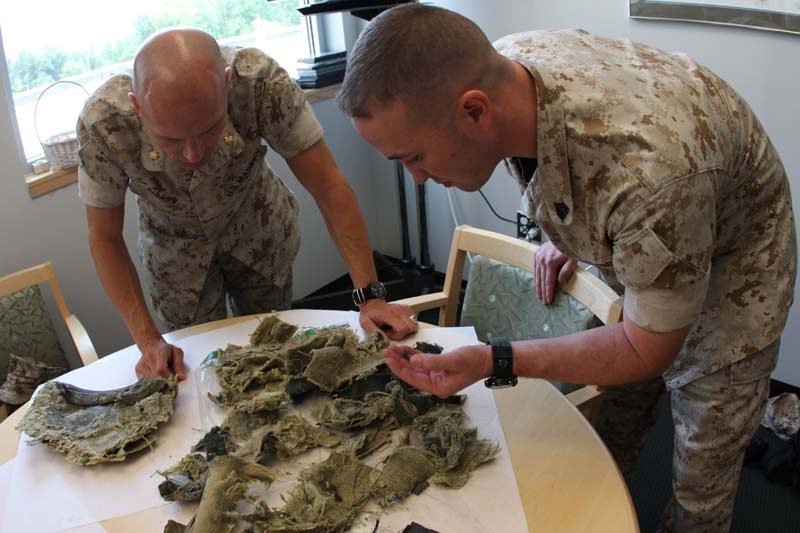
DuPont didn’t bring Kevlar to market until 1971 — six years of engineers figuring out how to manufacture it at scale. Kwolek held the key patent covering the discovery, granted in 1974, and authored or co-authored roughly two dozen more over her nearly 40-year DuPont career. She later said she was passed over for promotions that went to male colleagues with less to show for it, and made peace with it by building her reputation through publishing, speaking, and mentoring other scientists. Kevlar, meanwhile, went on to show up in protective vests, racing sails, bridge cables, phone cases, and spacecraft parts — one stubborn refusal to throw out a bad-looking batch turning into one of the most widely used synthetic fibers ever made.
Sources
Wikipedia’s entries on Stephanie Kwolek and on Kevlar, which document the 1965 discovery, the role of technician Charles Smullen, and the 1971 commercial launch.
Stephanie L. Kwolek, oral history interview by Bernadette Bensaude-Vincent, 21 March 1998, Science History Institute (formerly Chemical Heritage Foundation) Oral History Transcript #0168, in which Kwolek describes Paul Antal identifying the solution as liquid crystalline and the later involvement of Paul Flory.
The National Inventors Hall of Fame’s inductee page for Stephanie Kwolek, which lists her Kevlar-related U.S. patents, including Patent No. 3,819,587.
Explore more: More accidental inventions.
Frequently Asked Questions
Who invented Kevlar?
DuPont chemist Stephanie Kwolek discovered the fiber-forming polymer solution in 1965 while searching for a steel substitute for tires; DuPont introduced it commercially as Kevlar in 1971.
Why did Kwolek almost not get her discovery spun into fiber?
Her solution was unusually thin and cloudy instead of thick and clear, which the lab’s spinning technician, Charles Smullen, took as a sign it was contaminated and would damage the machine. He initially refused to test it until she convinced him to try.
Did Kwolek know right away that her solution was a liquid crystal?
No. She recognized the solution behaved strangely and was worth pursuing, but by her own account it was weeks later that a newly hired colleague, Paul Antal, identified it as liquid crystalline — a structure where the rod-shaped molecules align in parallel rather than tangling randomly.
Tales You Can Hold
Fun-facts books for curious kids, personalized books that star your child, and more from the FYI Tales Bookstore. Visit the Bookstore.
Photo: Ben Mills and Jynto / Public domain, via Wikimedia Commons.