
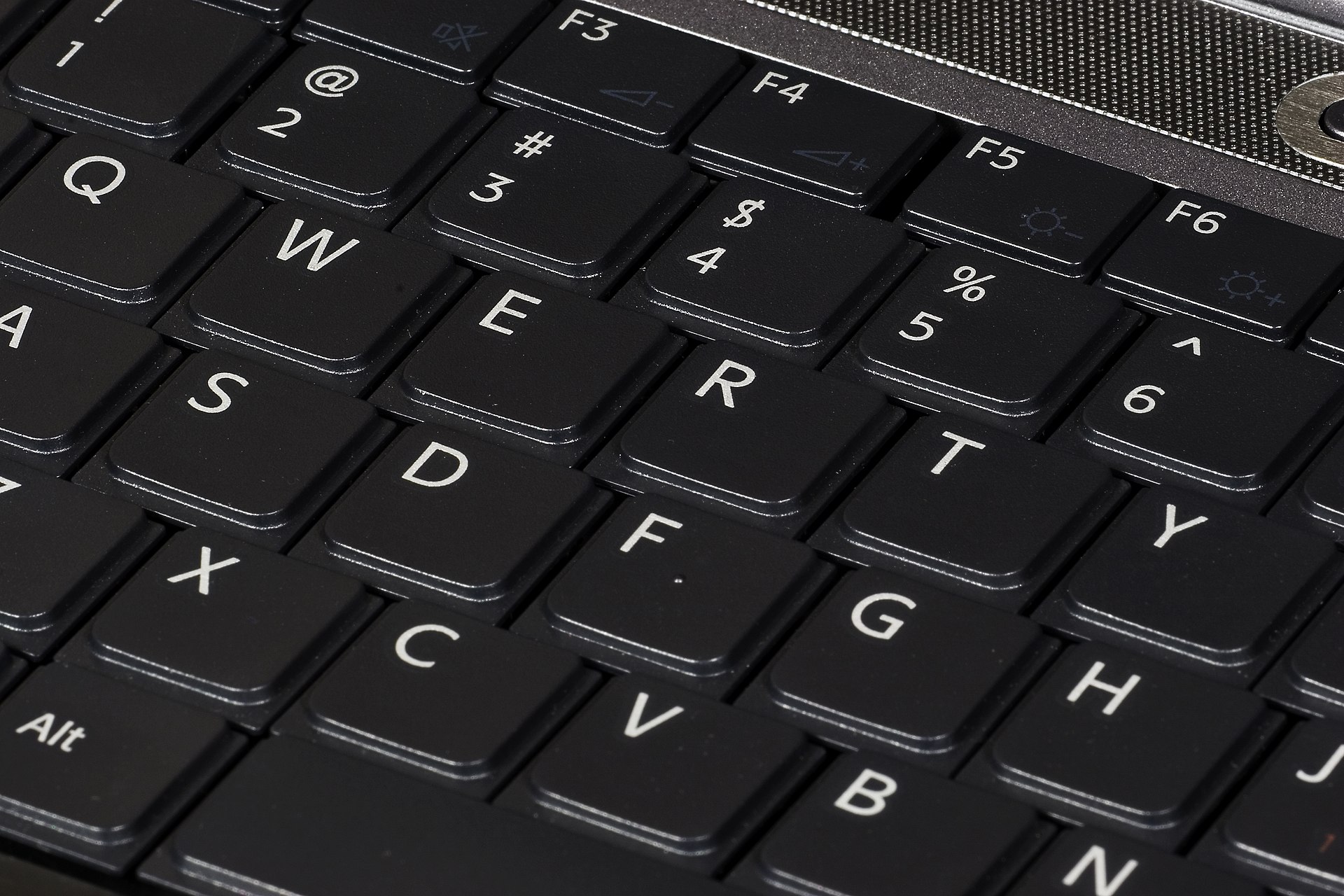
Somewhere in every office, someone will confidently explain that QWERTY was designed to slow typists down so the machine’s type bars wouldn’t jam. It’s one of the most repeated pieces of trivia in the English language — and it’s probably not true.
Table of Contents
What actually happened involves a struggling Milwaukee newspaperman, an oil-country lawyer who wouldn’t stop tinkering with his investment, a disputed legend about that lawyer’s brother supposedly counting letter pairs, and — according to the most rigorous modern investigation of the question — the frantic demands of transcribing Morse code, not typewriter mechanics at all.
Quick answer
QWERTY wasn’t engineered to prevent typewriter jams — that popular explanation has never held up to scrutiny. Christopher Latham Sholes and his backers arrived at the layout through years of trial and error between 1868 and 1878, and a 2011 Kyoto University study argues the arrangement actually owes more to how telegraph operators worked than to any typewriter mechanism.
A piano keyboard that kept jamming anyway
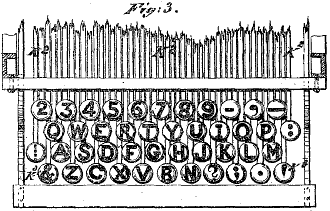
In 1867, Christopher Latham Sholes — a Milwaukee newspaper editor and part-time inventor — teamed up with Carlos Glidden and Samuel Soule to build a practical writing machine. Their design earned U.S. Patent No. 79,265, granted June 23, 1868, for an ‘Improvement in Type-Writing Machines.’ Its keyboard looked nothing like today’s: two rows of keys running roughly in alphabetical order, laid out like a toy piano.
That machine jammed constantly. With type bars swinging up to strike the same small spot on the page, typing common letter pairs in quick succession tangled the mechanism. Broke and discouraged, Sholes took a lifeline from James Densmore, a fellow newspaperman turned lawyer, who bought a stake in the invention, covered Sholes’s overdue bills, and committed to funding further development — then immediately started demanding changes.
The lawyer, his brother, and a disputed letter count
Densmore pushed Sholes through prototype after prototype over several years, refusing to let the design settle. The popular version of what happened next credits a breakthrough to Densmore’s brother Amos, often described as an educator who studied how often pairs of letters appeared together in English and fed that data into the keyboard’s final layout.
That detail doesn’t check out. Contemporary records — including Amos Densmore’s 1893 entry in The National Cyclopaedia of American Biography and his obituaries that same year — describe him not as an educator but as a Meadville, Pennsylvania oilman who ran Densmore Oil Company with James and co-patented an early oil tanker rail car. Historians who’ve traced the primary sources, including Kyoto University’s Koichi Yasuoka, say the letter-frequency-study story doesn’t survive close inspection, and that Amos’s documented contribution may have amounted to little more than suggesting a deluxe ‘literary machine’ model carry 44 keys. By the time Sholes patented the revised layout in 1878 (Patent No. 207,559), QWERTY was locked in regardless of exactly who deserves credit for it. Remington’s No. 2 model — the first typewriter to offer a shift key for both upper- and lowercase letters — carried it into offices nationwide, and by 1891 Remington claimed more than 100,000 of its QWERTY machines were already in use.
The part most people miss
The tidy ‘it stopped jamming’ explanation was never actually spelled out by Sholes or Densmore — it hardened into accepted trivia decades later. It doesn’t survive close inspection either: if the goal were really to separate frequent letter pairs, E and R, one of the most common two-letter combinations in English, should never have landed side by side. In 2011, Kyoto University researchers Koichi and Motoko Yasuoka dug through surviving prototypes, patents, and telegraph records and reached a different conclusion, arguing that typewriter mechanics ‘didn’t influence the keyboard design’ nearly as much as the people already using related equipment did. Sholes’s early machines were adapted from printing-telegraph technology, and some of the first customers were telegraph offices, where operators needed to transcribe American Morse code at speed — a code in which the signal for ‘Z’ could be easily confused with the pairing ‘SE.’ The Yasuokas argue key placements shifted to suit those already-skilled telegraphers, not to trip up typists. It’s the same pattern that produced the Amos-the-educator myth: a plausible-sounding detail repeated so often in typewriter histories that it outran the actual paper trail. Even Sholes seems to have had second thoughts about his own creation: in 1889, months before he died, he filed a patent for an entirely different keyboard layout he said was meant to increase efficiency. It went nowhere. QWERTY, flawed and already everywhere, won on inertia — the same inertia that would later keep the supposedly faster Dvorak layout from ever catching on.
Sources
Smithsonian Magazine, ‘The QWERTY Keyboard Will Never Die. Where Did the 150-Year-Old Design Come From?’ — overview of the jamming myth, the Densmore family’s role, and Sholes’s late-life doubts.
Koichi Yasuoka and Motoko Yasuoka (Kyoto University), ‘On the Prehistory of QWERTY’ — the 2011 research paper tracing the layout’s development from telegraph-era prototypes and challenging both the jamming explanation and embellished Densmore-family claims.
oz.Typewriter (Robert Messenger), ‘QWERTY and the Imaginary Son-in-Law’ — genealogical and biographical research establishing Amos Densmore’s actual career as an oilman rather than an educator, and debunking overstated claims about his role in the keyboard’s design.
Wikipedia, ‘QWERTY’ — cross-referenced patent numbers, dates, and the Remington production timeline.
Explore more: More true stories behind everyday objects.
QWERTY keyboard FAQs
Did QWERTY really stop typewriters from jamming?
There’s no solid evidence for it. The clearest counterexample is that E and R — a very common English letter pair — sit right next to each other on the keyboard, which undercuts the idea that keys were spaced out to prevent jams.
Who actually designed the QWERTY layout?
Christopher Latham Sholes holds the patents, and his financial backer James Densmore pushed him through years of redesigns. The widely repeated claim that Densmore’s brother Amos — often called an educator — supplied letter-frequency data is disputed: records show Amos was actually a Pennsylvania oil-company proprietor, and historians say his documented role in the layout was minor at most.
Is there a better keyboard layout than QWERTY?
The Dvorak Simplified Keyboard, patented in the 1930s, is the best-known alternative and groups common letters on the home row, but decades of studies show only modest speed gains — not enough to unseat a century of QWERTY habit.
Tales You Can Hold
Fun-facts books for curious kids, personalized books that star your child, and more from the FYI Tales Bookstore. Visit the Bookstore.
Photo: MichaelMaggs / CC BY-SA 3.0, via Wikimedia Commons.