
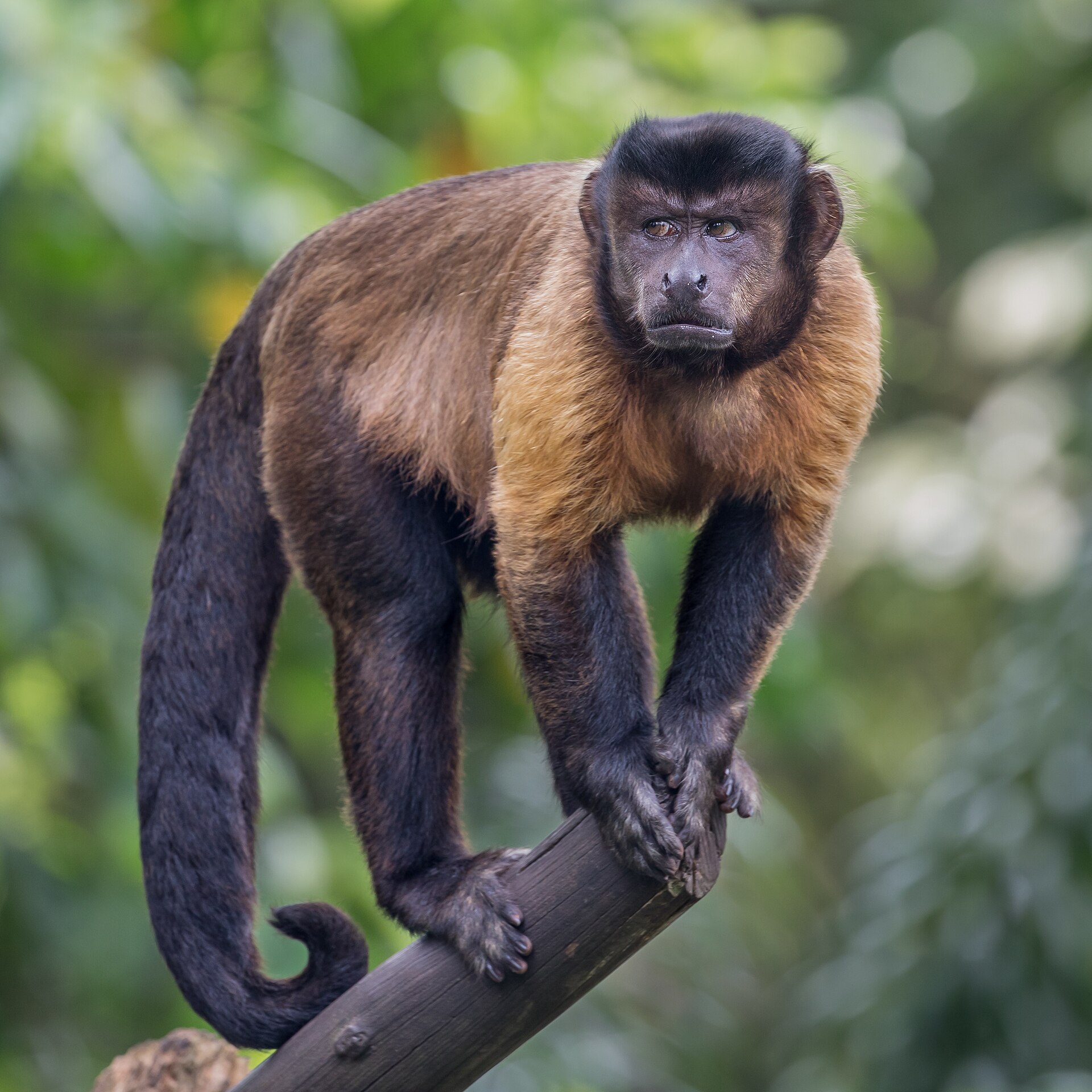
On video, it looks almost human: a capuchin monkey takes a perfectly edible slice of cucumber, stares at it, then whips it back through the bars of her enclosure like she’s just been insulted. The clip has racked up tens of millions of views since it first went viral. But the monkey isn’t spoiled, and she isn’t confused about what food is. She’s furious, because the monkey in the next cage just got a grape for doing the exact same job.
Table of Contents
The story behind that footage starts not in a lab with a hypothesis, but with a dominant male capuchin named Ozzie, a graduate student who noticed something odd about how he ate his peanuts, and a scientific paper that ended up on the desks of economists, primatologists, and eventually late-night TV producers.
Quick answer
In a 2003 experiment, capuchin monkeys who were paid a low-value cucumber slice for a task refused or threw back the food once they saw a neighboring monkey get a higher-value grape for the identical task — a reaction researchers Sarah Brosnan and Frans de Waal interpreted as a response to unequal treatment, though other scientists argue the monkeys were simply reacting to seeing better food nearby, not to unfairness itself.
A monkey named Ozzie starts a bidding war
In the late 1990s, Sarah Brosnan was a graduate student feeding capuchin monkeys at Emory University’s Yerkes National Primate Research Center in Atlanta. To keep the colony’s dominant male, Ozzie, from hogging all the peanuts, she tried distracting him with a lesser scrap while she handed peanuts to the others. Ozzie wasn’t having it. He started offering her better and better items from his own enclosure — first monkey chow, then orange peel, then a chunk of actual orange — clearly trying to trade up to a peanut, as if he understood exactly what everyone else was getting and wanted the same deal.
That small, unscripted haggling session stuck with Brosnan. She began to wonder whether Ozzie’s willingness to bargain depended entirely on what he saw his neighbors receiving. Working with her advisor, the primatologist Frans de Waal, she designed a formal test of the idea.
The experiment that made it official
Brosnan and de Waal trained brown capuchin monkeys — five females named Bias, Georgia, Nancy, Lulu, and Winnie — to hand a granite pebble to a researcher in exchange for food. When both monkeys in a pair received a cucumber slice for the trade, everyone cooperated without complaint. Capuchins like cucumber fine on its own.
The trouble started when the researchers gave one monkey a grape, which capuchins strongly prefer, while her partner kept getting cucumber for the same pebble-handoff. The shortchanged monkey would refuse the cucumber outright, fling it out of the enclosure, or rattle the cage in protest — rejecting the token exchange roughly one time in three, far more often than when both monkeys were paid equally. The results ran in Nature in 2003 under the blunt title ‘Monkeys reject unequal pay,’ and a decade later, a clip of the reaction included in de Waal’s TED talk turned two irritated monkeys into one of the most-watched science videos on the internet.
The part most people miss
The viral clip gets framed as definitive proof that monkeys have a sense of fairness — but that conclusion was disputed by other scientists almost immediately, and the dispute is arguably the more interesting part of the story. Shortly after the Nature paper appeared, researchers including Joe Henrich and Clive Wynne published formal critiques. Wynne proposed what’s known as a ‘contrast effect’: maybe the cucumber monkeys weren’t upset about their partner’s grape specifically, but simply reacting to any visible reminder that better food existed nearby — irritation, not injustice. Henrich pointed out the experiment only tested one side of the coin, reactions to getting less, without proving the monkeys would also object on their own behalf to getting more than they deserved. Brosnan and de Waal’s later research, including a 2014 review Brosnan wrote for Science surveying inequity studies across species, tried to tease the two explanations apart, and found evidence that social comparison plays a real role beyond simple contrast — but the debate over how much of the monkeys’ outrage is about fairness, versus just wanting the better snack, has never fully closed. That unresolved argument is exactly the kind of thing the original viral clip never mentions.
Sources
Sarah F. Brosnan and Frans B. M. de Waal, ‘Monkeys reject unequal pay,’ Nature 425 (2003), the original study published from Emory University’s Yerkes National Primate Research Center.
Wikipedia’s entry on ‘Inequity aversion in animals,’ which documents the experimental methodology and the subsequent scientific critiques of the fairness interpretation.
‘Revisiting Brosnan and de Waal 2003,’ Reflections on Papers Past (2020), which recounts the Ozzie anecdote in Brosnan’s own words and summarizes the published critiques by Joe Henrich and Clive Wynne.
Explore more: More Wild Animal Tales.
the monkey cucumber-grape fairness experiment FAQs
Why do monkeys throw cucumbers?
In lab tests, capuchin monkeys rejected or threw back cucumber slices after watching a neighboring monkey get a preferred grape for doing the same simple task — a reaction researchers linked to unequal treatment, first documented by Sarah Brosnan and Frans de Waal in 2003.
Is the monkey fairness experiment real?
Yes. The experiment was conducted at Emory University’s Yerkes National Primate Research Center and published in the journal Nature in 2003, and the viral video comes from Frans de Waal’s later TED talk showing the reaction.
Do scientists agree the monkeys understand fairness?
No, it’s genuinely disputed. Some researchers, including Clive Wynne, argue the monkeys were reacting to seeing better food nearby (a ‘contrast effect’) rather than to unfairness specifically, and the debate continues in primatology today.
Who was Ozzie the monkey?
Ozzie was a dominant male capuchin at Yerkes whose habit of trading up for better food, observed by graduate student Sarah Brosnan, inspired the design of the 2003 cucumber-and-grape experiment.
Tales You Can Hold
Fun-facts books for curious kids, personalized books that star your child, and more from the FYI Tales Bookstore. Visit the Bookstore.
Photo: Basile Morin / CC BY-SA 4.0, via Wikimedia Commons.