
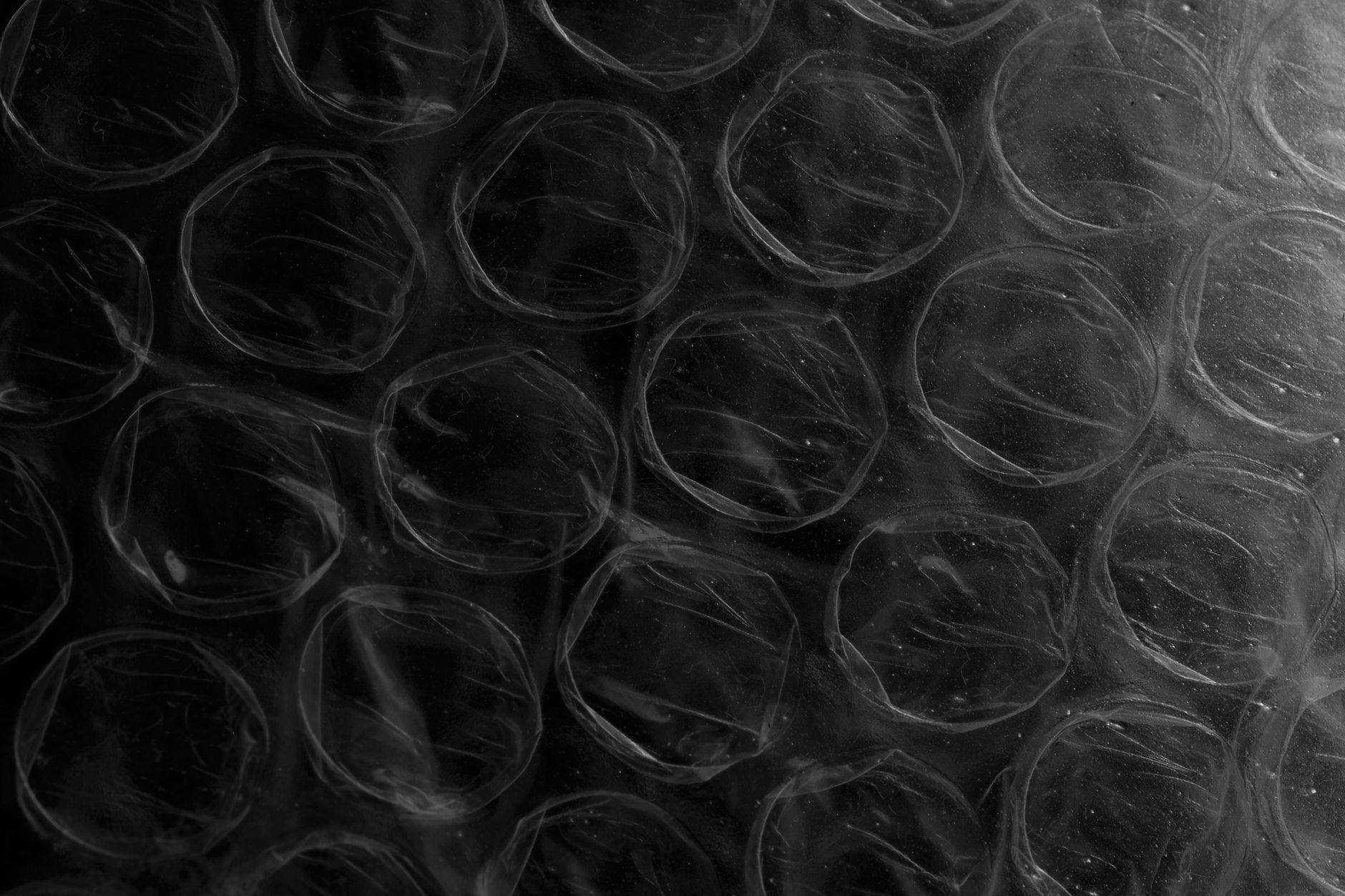
If you’ve ever wondered why bubble wrap was invented, the answer is stranger than the popping: it was supposed to be wallpaper. In 1957, in a garage in Hawthorne, New Jersey, engineers Alfred Fielding and Marc Chavannes sealed two plastic shower curtains together and admired the result — a sheet full of trapped air bubbles they hoped design-conscious homeowners would hang on their walls.
Table of Contents
Homeowners did not.
Flop number two: greenhouse insulation
Undeterred, Fielding and Chavannes pitched their bubbly plastic as greenhouse insulation. The logic wasn’t bad — trapped air is a decent insulator — but the market shrugged again. Two products, two failures, and a garage full of air-filled plastic nobody wanted.
What the pair did next is the real lesson. Instead of abandoning the material, they kept cataloguing what it was actually good at. By some accounts they worked through dozens of potential uses before landing on the one that mattered.
The IBM computer that saved the bubble
In 1959, IBM announced the 1401 — one of the first mass-produced business computers, delicate and expensive and about to be shipped all over the country in large numbers. Frederick W. Bowers, a marketer at the company Fielding and Chavannes had founded (Sealed Air Corporation, still a packaging giant today), pitched their cushioning material to IBM as the answer.
It worked. Fragile electronics rode safely inside sheets of air, and the failed wallpaper became the default language of “handle with care” for the entire planet. Sealed Air today generates billions in annual revenue, much of it descended from that single pivot.
The part most people miss
Bubble wrap wasn’t a lucky accident so much as a stubborn inventory of failure. The material never changed — the question did, from “is this beautiful?” to “is this useful?” The patents Fielding and Chavannes filed for making laminated air-cushioned material became the foundation of an industry precisely because they refused to let a good material die with its bad first idea.
And the popping? Pure bonus. Sealed Air has run studies on why people find it so satisfying, and “stress relief” now features in its own marketing — a use case exactly nobody predicted in that New Jersey garage.
Love accidental genius? Read how the Slinky invented itself by falling off a shelf.
Sources
- Sealed Air Corporation — official company history
- U.S. patent records: Fielding & Chavannes, laminated cushioning material patents (late 1950s–1960s)
- Bubble wrap — Wikipedia (with citations to primary coverage)

1 thought on “Why Bubble Wrap Was Invented (Hint: It Was Wallpaper)”