
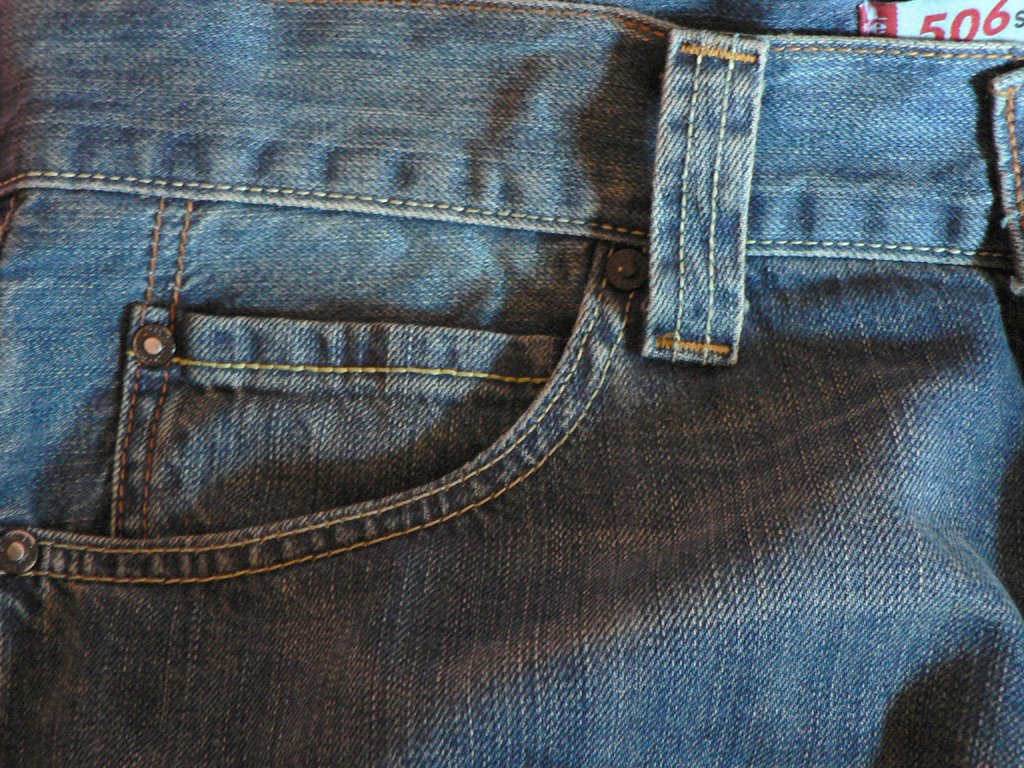
Run your thumb along the waistband of any pair of five-pocket jeans and you’ll find it: a pocket within a pocket, barely big enough for a stick of gum, stitched into the right front. Most people spend a lifetime assuming it’s a mystery, or a design accident, or a place to stash a spare button. It isn’t any of those things. It was built, on purpose, in 1873, to hold a pocket watch.
Table of Contents
That answer sounds almost too simple, but the paperwork backs it up — an actual U.S. patent, an actual tailor in Nevada, and an actual San Francisco dry-goods merchant named Levi Strauss. What’s more interesting than the pocket’s purpose is how close it came to disappearing twice, and how a 1990s ad campaign muddied its name for good.
Quick answer
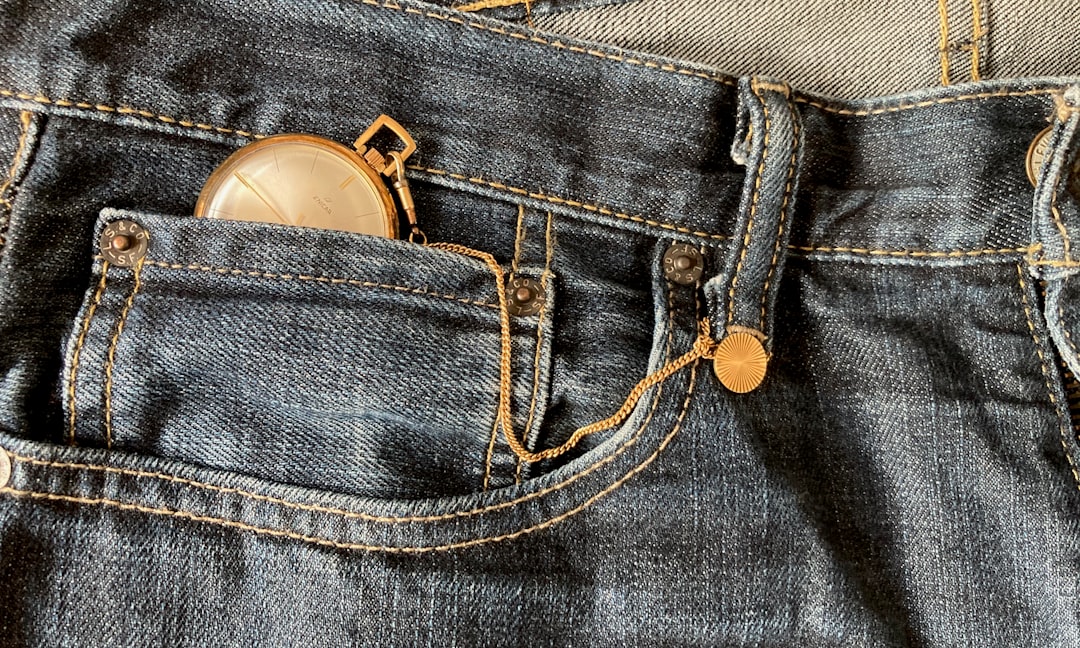
The tiny pocket on jeans is called the watch pocket. Levi Strauss & Co. and tailor Jacob Davis included it in their original 1873 riveted-pants patent as a snug, protected spot for a men’s pocket watch — the standard timepiece of the era, before wristwatches were common.
A tailor in Reno solves a woodcutter’s problem
The story starts with Jacob Davis, a Latvian-born tailor working out of a shop in Reno, Nevada. Around 1870, a customer came in asking for sturdy work pants for her husband, a woodcutter whose pockets kept tearing out from the strain of stuffed tools and constant bending. Davis’s fix was copper rivets, hammered into the stress points at the pocket corners and the base of the button fly, to keep the seams from blowing out.
The rivets worked well enough that Davis started fielding requests for more. But turning a good idea into a defensible business meant filing for a patent, and Davis — a tradesman, not a man with spare capital — couldn’t cover the fees himself. So in 1872 he wrote to Levi Strauss, the San Francisco wholesaler who supplied him with denim cloth, and offered him a deal: split the cost of the patent, and split the ownership.
The patent that built the fifth pocket
Strauss agreed. On May 20, 1873, the U.S. Patent Office granted Patent No. 139,121, titled ‘Improvement in Fastening Pocket-Openings,’ jointly to Levi Strauss & Co. and Jacob Davis. It’s the founding document of blue jeans as a manufactured product, and it specified four riveted pockets on the earliest ‘waist overalls’: two large ones on the front, one on the back — and a small one tucked inside the right front pocket, sized to fit a pocket watch, the essential everyday tool of a working man in the 1870s, decades before wristwatches caught on.
Davis moved his family to San Francisco after the patent came through and ran the Levi Strauss & Co. factory floor, eventually overseeing hundreds of workers, until his death in 1908. The watch pocket he sketched into that first design has appeared on nearly every pair of five-pocket jeans made since — including styles that have never used a rivet anywhere else.
The part most people miss
Two details rarely make it into the popular version of this story. First: the watch pocket almost vanished during World War II. The U.S. War Production Board classified denim work clothes as regulated goods and ordered manufacturers to cut back on metal use, so Levi Strauss & Co. pulled the rivets off the watch pocket and the crotch entirely for the duration of the war, restoring them only after 1947. Second: the watch pocket isn’t actually the ‘fifth pocket’ most people call it. That title belongs to the second back pocket, which Levi Strauss & Co. didn’t add until 1901 — nearly thirty years after the watch pocket already existed as part of the original four. A 1996 Levi’s ad campaign mislabeled the tiny front pocket as the fifth, and the mix-up stuck so well that the company later had to publish its own history to set the record straight.
Sources
Levi Strauss & Co.’s official company archive, in the posts ‘Pockets Full of History’ (2017) and ‘The Story Behind the Official Fifth Pocket’ (2021), and its account of wartime production changes in ‘How World War II Changed Levi’s’ (2020).
History.com’s ‘This Day in History’ entry on the May 20, 1873 patent granted to Levi Strauss and Jacob Davis.
Reno Historical, a project of the Historic Reno Preservation Society, on the site of Jacob Davis’s original Reno tailor shop.
Explore more: more true stories behind everyday objects.
watch pocket FAQs
What is the tiny pocket on jeans actually called?
It’s called the watch pocket. It’s sometimes mislabeled the ‘fifth pocket,’ but that name properly belongs to the second back pocket added in 1901.
Who invented the watch pocket on jeans?
It appeared in the original 1873 riveted-pants patent filed jointly by tailor Jacob Davis of Reno, Nevada, and San Francisco merchant Levi Strauss.
Why did jeans need a pocket for a watch?
In the 1870s, men carried pocket watches rather than wearing wristwatches, and a snug, reinforced pocket kept the watch from being crushed, scratched, or lost while working.
Did the watch pocket ever disappear from jeans?
Its rivets did, briefly. During World War II, the U.S. government restricted metal use in clothing, so Levi Strauss & Co. removed the rivets from the watch pocket until 1947.
Tales You Can Hold
Fun-facts books for curious kids, personalized books that star your child, and more from the FYI Tales Bookstore. Visit the Bookstore.
Photo: Vanroc / CC BY 4.0, via Wikimedia Commons.