
Pick up almost any bottle of wine and flip it over. There’s a dimple pushed up into the glass, deep enough to fit your thumb. Wine people call it a punt. Most drinkers assume it’s there to make the bottle look fancier, or to signal that the stuff inside is worth the extra glass. Neither is really true.
Table of Contents
The real story starts with molten glass, a metal rod, and a 17th-century English gentleman who may or may not have actually invented the thing he’s famous for inventing. Historians are still arguing about that last part — which, for a change, is exactly what makes it a good story.
Quick answer
The dent, called a punt or kick-up, began as a byproduct of hand glassblowing: workers pushed the hot base inward to remove a jagged glass scar and give the bottle a flat, stable foot. It stuck around because it also strengthens bottles against internal pressure (crucial for sparkling wine) and, later, because it became a habit nobody had a strong reason to break.
A rod, a scar, and a workaround
Before machines took over glass manufacturing in the early 1900s, every bottle was shaped by a glassblower working freehand. To finish the base and neck, the glassblower would stick a solid iron rod — called a pontil, or punty — onto the hot bottom of the bottle so they could keep turning and shaping it without holding the hot, half-formed piece by its open end.
When the pontil finally snapped off, it left behind a rough, sometimes razor-sharp scar on the bottom of the glass. A flat-bottomed bottle with a jagged nub sitting proud of the base doesn’t stand up straight, and it definitely doesn’t want to be handled bare-handed. So glassblowers started pushing that spot inward while the glass was still workable, tucking the scar up and out of the way and giving the bottle a flat ring to actually rest on. That dent is the ancestor of today’s punt — the Wikipedia entry on wine bottles calls it ‘a historical remnant from the era when wine bottles were free blown using a blowpipe and pontil,’ and glass historians generally agree this is the mechanical starting point, even if they don’t agree on much else about the story.
The knight, the bottle, and the dispute
The punt might have stayed a minor glassblowing quirk if not for a 17th-century Englishman named Sir Kenelm Digby — a privateer, diplomat, amateur scientist, and, depending on who you ask, the man who invented the modern wine bottle. In the 1630s, Digby ran a glassworks that used a coal-fired furnace, built hotter than usual with an added wind tunnel, and a glass mixture heavier on sand relative to potash and lime. The result was a darker, thicker, far sturdier bottle than the thin, pale ones English drinkers were used to — one that could survive rough handling, sit in a wine cellar for years, and, crucially, hold up under the pressure of a wine that had started refermenting in the bottle. In 1662, England’s Attorney General credited Digby with having invented the strong glass bottle three decades earlier, and he’s been called the father of it ever since.
Here’s the dispute: glass historian David Dungworth and others have pointed out that thick, long-necked bottle glass has turned up at English glassmaking sites like Kimmeridge in Dorset, dated to the 1618–1623 period — before Digby’s claimed breakthrough. It’s also unclear whether Digby’s real contribution was the furnace technique, the glass recipe, or something else entirely, and some historians argue cider makers in the West of England may have been experimenting with strong bottles right alongside him. So the tidy version — one clever knight solves glass in a single stroke — is likely a flattering compression of a messier, more collective English glassmaking push. What isn’t disputed is that bottles like Digby’s, sturdy enough to trap fizz, needed exactly the kind of reinforced, punted base that later became standard.
The part most people miss
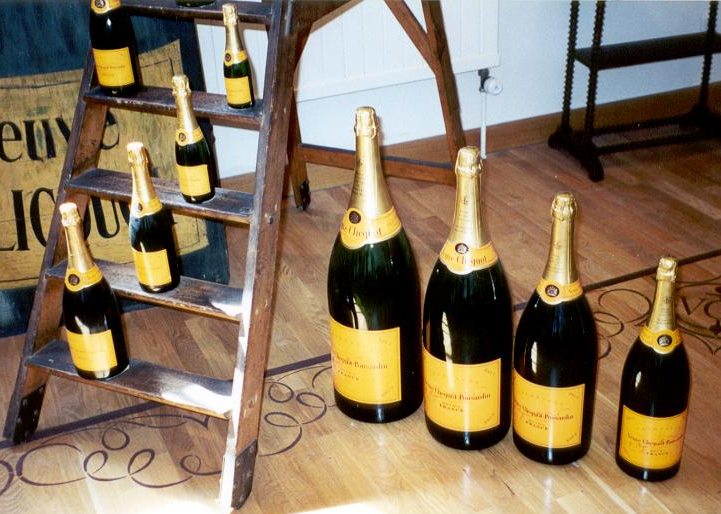
Here’s the twist: the punt’s most useful job today has nothing to do with looking fancy, and it isn’t really about wine quality at all — it’s physics. A bottle of Champagne holds gas at roughly five to six atmospheres of pressure, around 73 to 88 pounds per square inch, close to triple what’s in a car tire. A dome resists that kind of outward push far better than a flat disc does (it’s the same reason eggshells and skulls are curved, not flat), so the punt genuinely does help a sparkling wine bottle survive months of built-up carbonation. For still wine, though, there’s no pressure to fight, and the punt is mostly decorative tradition — Wine Spectator’s own house expert flatly states that punt size ‘doesn’t mean anything about the quality of the wine inside,’ despite the widespread belief that a deeper dent signals a better bottle. That belief has real consequences: heavier, deep-punted glass adds weight, and weight adds carbon emissions during shipping. Packaging is now often cited as wine’s single biggest carbon contributor, which is why a London-based coalition called the Sustainable Wine Roundtable has pushed member wineries to cut average bottle weight from around 550 grams down below 420 grams by the end of 2026 — quietly shrinking, or dropping, the very dent that started as a glassblower’s fix for a sharp edge.
Sources
Wikipedia’s entries on the wine bottle and the pontil mark lay out the glassblowing origin of the punt and note there’s ‘no consensus explanation’ for why it persists.
Wine Spectator’s Dr. Vinny column addresses the punt’s history and debunks the idea that its size reflects wine quality, while reporting on champagne’s internal pressure comes from the Physics Factbook and BBC Science Focus.
The disputed history of Sir Kenelm Digby’s strong-glass-bottle claim draws on glass historian David Dungworth’s research (‘Three and a half centuries of bottle manufacture,’ Industrial Archaeology Review) and accounts of the 1662 Attorney General ruling.
The industry shift toward lighter, smaller-punt bottles is documented in reporting from the Washington Post and SevenFifty Daily on the Sustainable Wine Roundtable’s bottle-weight targets.
Explore more: More everyday objects with surprising histories.
wine bottle punt FAQs
What is the dent in the bottom of a wine bottle called?
It’s called a punt, or sometimes a kick-up. The word describes the indentation itself, not any particular depth or shape.
Does a deeper punt mean better wine?
No. Wine industry sources, including Wine Spectator, are explicit that punt depth has no relationship to what’s in the bottle — it’s a holdover from glassmaking and, on modern bottles, largely a stylistic choice.
Why do champagne bottles have bigger punts than regular wine bottles?
Sparkling wine is under real pressure, roughly five to six atmospheres, and a domed base helps the glass withstand that pressure better than a flat one would, which is why sparkling wine punts tend to be more pronounced.
Did one person invent the wine bottle punt?
Not really. Sir Kenelm Digby is popularly credited with inventing the strong, punted 17th-century wine bottle, but archaeological evidence of similarly sturdy bottle glass predating his claim has led historians to treat that credit as disputed rather than settled.
Tales You Can Hold
Fun-facts books for curious kids, personalized books that star your child, and more from the FYI Tales Bookstore. Visit the Bookstore.
Photo: Cabe6403 at English Wikipedia / CC BY 2.5, via Wikimedia Commons.