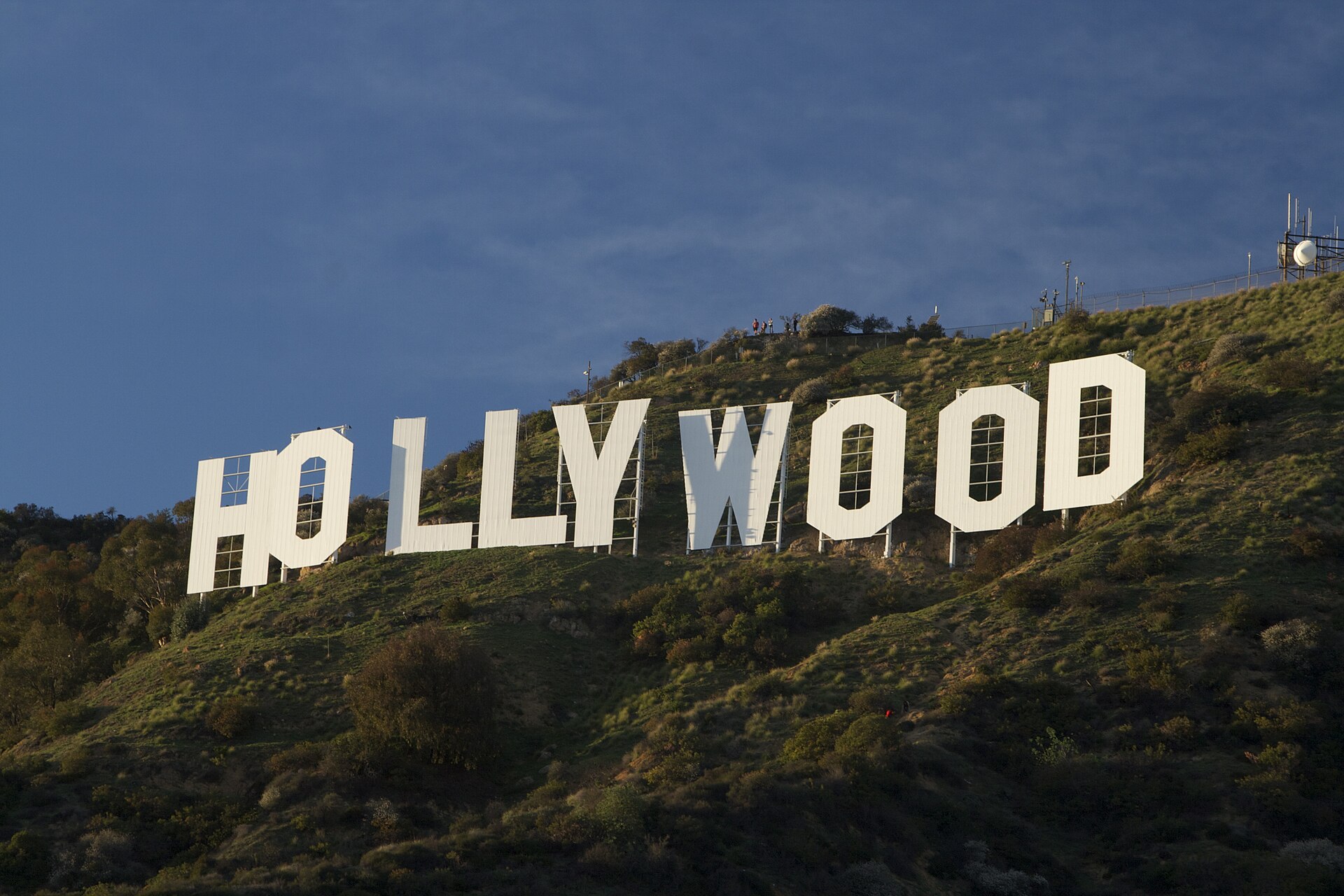
For eighteen months. That’s how long the most famous nine letters on Earth were supposed to stand on that hillside above Los Angeles. Not as a monument to the movies, not as a symbol of anything — just as a temporary billboard for a housing development that needed buyers.
Table of Contents
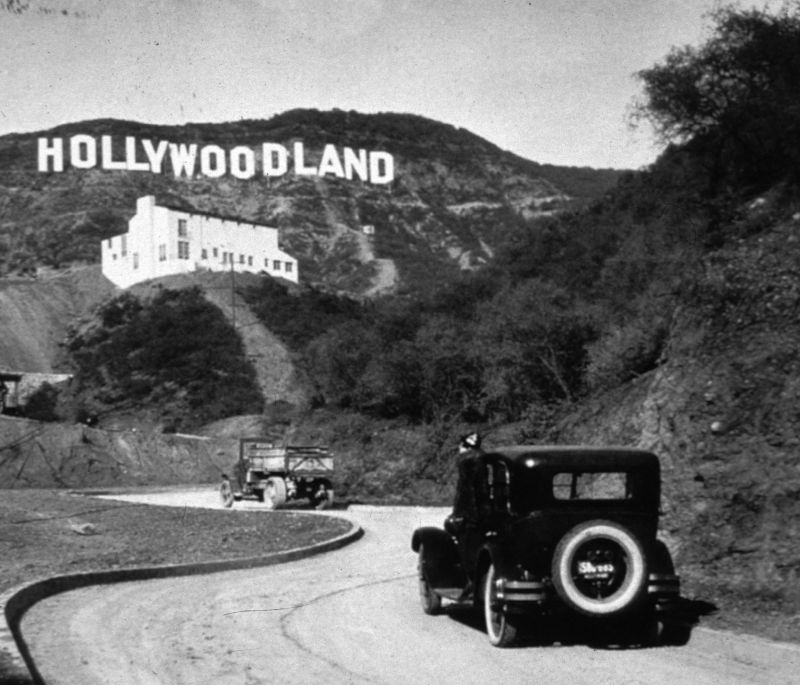
In 1923, it didn’t even say HOLLYWOOD. It said HOLLYWOODLAND, and it was lit up at night in flashing segments — HOLLY, then WOOD, then LAND — like a drive-in marquee, because that’s essentially what it was.
Quick answer
Yes — the Hollywood Sign began in 1923 as a $21,000 advertisement reading HOLLYWOODLAND, built to promote a hillside real estate subdivision selling home lots, not the movie industry. It was only meant to last about 18 months, but nobody took it down, and the city eventually inherited it and shortened it to HOLLYWOOD in 1949.
A billboard the size of a canyon
The sign was the brainchild of a development syndicate that included Los Angeles Times publisher Harry Chandler, along with partners Eli Clark, General Moses Sherman, Tracy Shoults, and S.H. Woodruff. They were selling steep hillside building lots in a new subdivision called Hollywoodland, tucked into the hills below Mount Lee at the end of Beachwood Canyon, with individual homesites priced anywhere from about $2,500 to $55,000. They wanted something buyers driving through the L.A. basin couldn’t miss.
They hired the Crescent Sign Company, run by Thomas Fisk Goff, who spent about 60 days that summer and fall of 1923 bolting together thirteen letters — each roughly 45 feet tall, made of sheet metal on a scaffolding frame, strung with around 4,000 light bulbs. At night the bulbs flashed HOLLY, then WOOD, then LAND, then the whole thing lit up together. It cost about $21,000, real estate-advertising money, not civic-monument money.
Nobody expected it to last. The contract called for roughly an 18-month lifespan, just long enough to move lots.
Nobody ever took it down
The sign just… stayed. The lots sold well enough throughout the 1920s that the developers had no urgent reason to spend money demolishing a landmark people had started using as a navigation point, and by the time anyone seriously reconsidered it, the sign had outlived its original purpose and become something else: shorthand for the movie industry itself, even though it was never built to represent movies at all.
It also got darker than its cheerful marquee bulbs suggested. In September 1932, a 24-year-old stage actress named Peg Entwistle, who’d recently moved to Hollywood chasing a film career, climbed a workman’s ladder to the top of the letter H and jumped to her death. A hiker found her shoes, jacket, and purse nearby, along with a suicide note. It remains one of the sign’s grimmest, best-documented true stories — no embellishment needed.
By the 1940s the sign was falling apart, and the original landowner transferred the sign and surrounding land to the City of Los Angeles in 1944. In 1949, the Hollywood Chamber of Commerce agreed to pay for repairs on one condition: tear down the last four letters, LAND, and leave just HOLLYWOOD. That’s the moment a real estate ad quietly became a city’s brand name.
The part most people miss
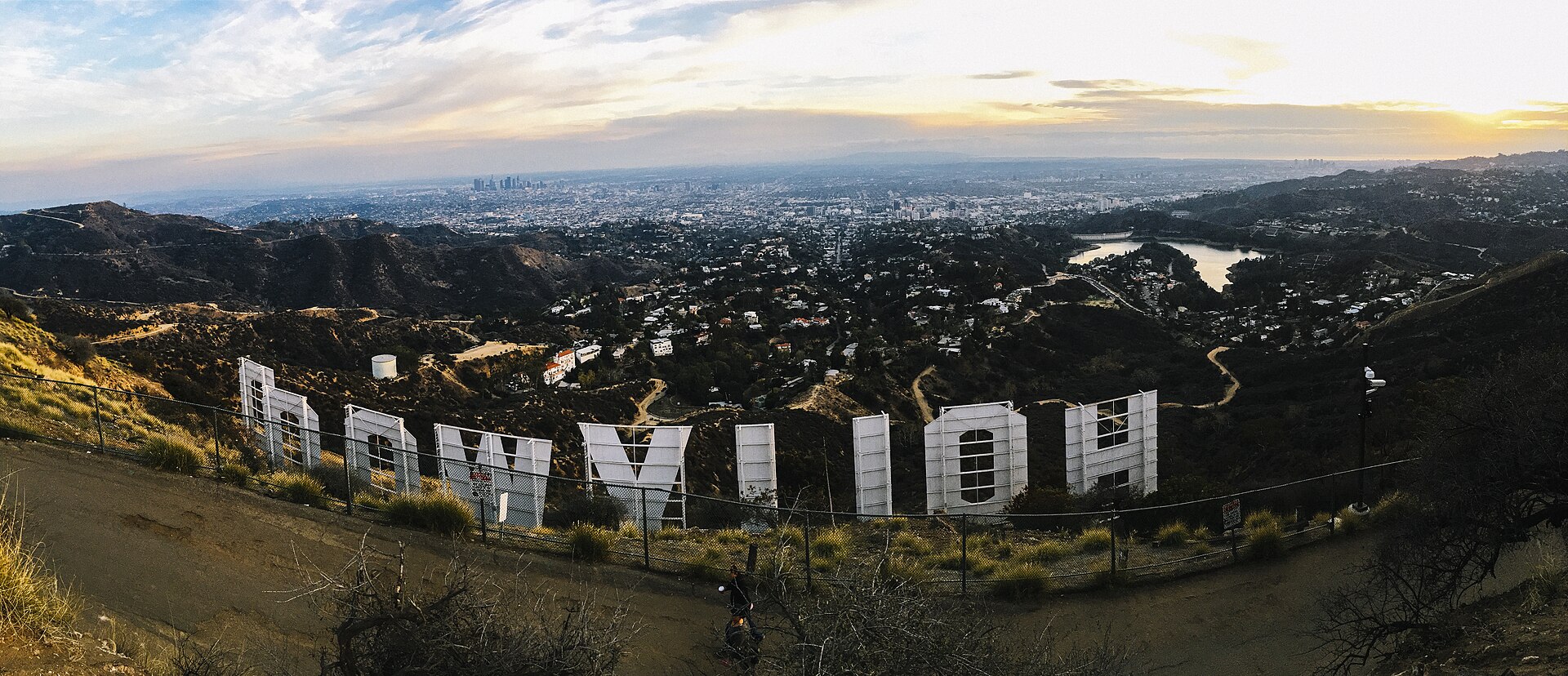
The sign nearly died a second time — and celebrities, not the city, saved it. By the 1970s it was rotting: the O had collapsed into a slash mark, vandals had altered letters for pranks, and the aging scaffolding was structurally unsafe. In 1978, the Hollywood Chamber of Commerce launched a campaign selling off each letter for $27,777 (nine letters, about $250,000 total, roughly the price of a new Rolls-Royce at the time — a detail organizers used deliberately for publicity). Rock star Alice Cooper bought a letter in memory of Groucho Marx. Playboy founder Hugh Hefner hosted the fundraiser at the Playboy Mansion and personally funded a letter. Singer Andy Williams, actor Gene Autry, and Warner Bros. Records chipped in too. The rebuilt sign, in sturdier steel, debuted that November — meaning the Hollywood Sign standing today isn’t the 1923 original at all. It’s a 1978 replacement, financed the same way the first one was: because someone with money wanted their name on that hill.
Sources
The Hollywood Sign’s official history pages (hollywoodsign.org), maintained by the nonprofit Hollywood Sign Trust, detail the 1923 construction, the Crescent Sign Company contract, and the 1949 and 1978 restorations.
The Los Angeles Conservancy’s historic-places entry on the Hollywood Sign covers the original Hollywoodland syndicate, Harry Chandler’s involvement, and the 1944 transfer to the City of Los Angeles.
The Homestead Museum’s blog history of the Hollywoodland subdivision documents the original lot pricing and marketing of the development as single-family hillside homesites, not condominiums. Smithsonian Magazine’s ‘The Hidden History of the Hollywood Sign’ corroborates the 1932 Peg Entwistle death and the 1978 celebrity-funded rebuild, including the Hugh Hefner fundraiser and per-letter donor amounts.
Explore more: More real stories behind everyday words and phrases.
Hollywood Sign FAQs
Did the Hollywood Sign originally say something else?
Yes — it originally read HOLLYWOODLAND. The last four letters were removed in 1949 after the city took over maintenance, leaving just HOLLYWOOD.
Was the Hollywood Sign really supposed to be temporary?
Yes. It was built in 1923 as an advertisement for the Hollywoodland real estate development and was intended to stand for about 18 months, not decades.
Did the Hollywood Sign advertise condos?
No. It advertised a hillside subdivision selling individual home lots and homesites, priced from about $2,500 to $55,000 — condominiums as a common housing type didn’t exist yet in the 1920s.
Tales You Can Hold
Fun-facts books for curious kids, personalized books that star your child, and more from the FYI Tales Bookstore. Visit the Bookstore.
Photo: Gnaphron / CC BY-SA 2.0, via Wikimedia Commons.