
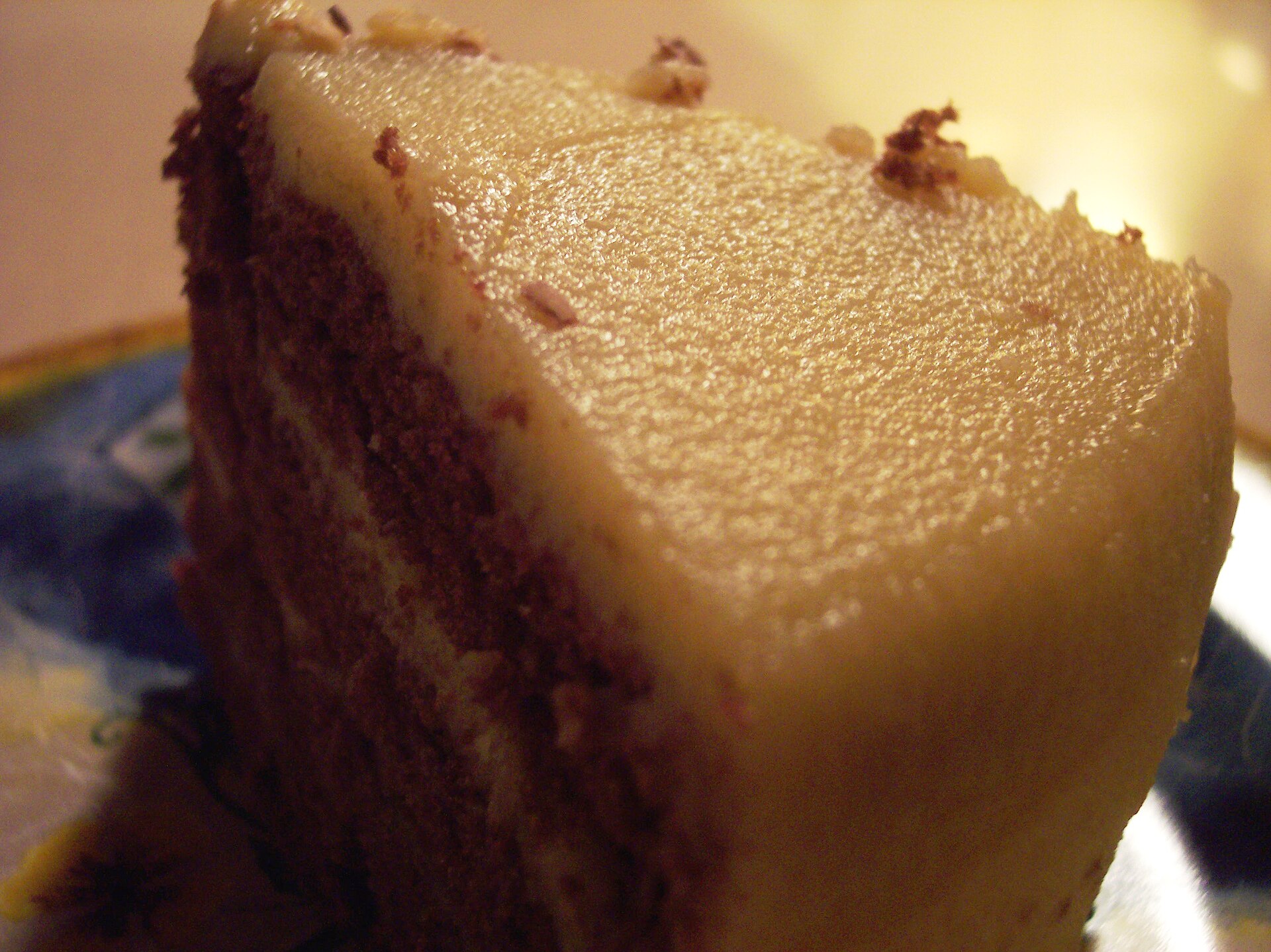
Look up flights to Munich for the birthplace of German chocolate cake and you’ll land nowhere useful, because the cake has never been within four thousand miles of Germany. No German bakery invented it. No German immigrant brought over grandma’s recipe. The frosting wasn’t dreamed up in a Bavarian kitchen.
Table of Contents
The cake is American, through and through — Texan, specifically, by way of a chocolate company in Massachusetts and a 19th-century employee named Sam German. The apostrophe did all the damage.
Quick answer
German chocolate cake is named after Samuel German, an American chocolate maker who developed a sweet baking chocolate for Baker’s Chocolate Company around 1852. It was originally called “German’s Chocolate Cake” — the possessive apostrophe got dropped over the years, which is why generations of people assumed it came from Germany. It didn’t.
A coachman, a chocolate mill, and $1,000
The story starts with Walter Baker & Company, one of the oldest chocolate makers in America, tracing back to a mill on the Neponset River in Dorchester, Massachusetts, that started grinding cocoa in 1764. By the mid-1800s it was the country’s dominant chocolate brand.
Around 1852, an employee named Samuel German — by some accounts a former coachman turned chocolate mill worker — developed a milder, sweeter baking chocolate with a higher sugar content than the company’s standard bars. Baker’s bought the formula from him, reportedly for around $1,000, and did what companies did back then: they put his name on it. The product launched as “Baker’s German’s Sweet Chocolate.” Not German as in the country. German as in Sam.
That distinction — the possessive ‘s — was the whole point. It was a chocolate named after a person, the same way a Ford is named after Henry, not after a place called Ford.
A Texas homemaker breaks the internet, 1950s style
The chocolate sat as a solid but unremarkable product for over a century. Then, in June 1957, a recipe attributed to a Dallas homemaker named Mrs. George Clay ran in The Dallas Morning News as its “Recipe of the Day.” She called it German’s Chocolate Cake — a rich cake made with the sweet baking chocolate, layered with a cooked frosting of egg yolks, evaporated milk, coconut, and pecans.
It caught fire. General Foods, which by then owned the Baker’s brand, seized the moment and helped syndicate the recipe to newspapers across the country. Home cooks everywhere started requesting it and asking grocers where to find the chocolate. Sales of Baker’s German’s Sweet Chocolate reportedly jumped 73 percent within a year, according to accounts of the period.
And somewhere in that avalanche of reprints, recipe cards, and word-of-mouth, the apostrophe-s quietly disappeared. “German’s Chocolate Cake” became “German Chocolate Cake.” Once that happened, the cake stopped sounding like it was named after a man and started sounding like it was named after a country — and the myth wrote itself.
The part most people miss
The really overlooked detail isn’t the missing apostrophe — it’s how fast and how thoroughly the mistaken origin took over. Within a generation, the idea that this was a European import had become so embedded that bakeries and cookbooks started leaning into it, adding “authentic German” flourishes that had nothing to do with the actual recipe’s Texas roots. Some food historians have even traced an earlier version of a similar recipe, credited to a woman named Daisy Pearce in a Texas newspaper the year before Mrs. Clay’s, suggesting the cake may have already been circulating informally before it went national — which makes it even more American in origin, not less. The lesson isn’t really about cake. It’s about how a single dropped punctuation mark, amplified by a corporate marketing push at just the right moment, can rewrite the assumed nationality of a dessert for seventy-plus years and counting.
Sources
Taste Cooking, “German in Name, American in Origins” — details on the June 1957 Dallas Morning News publication, Mrs. George Clay’s recipe, the earlier 1956 Irving News Record version credited to Daisy Pearce, and the 73 percent sales increase.
Bill St. John, “The Original German’s Sweet Chocolate Cake” — background on Samuel “Sammy” German’s role as a Baker’s Chocolate Company chocolatier and the 1957 newspaper recipe.
Wikipedia, “Walter Baker & Company” — corporate history of the chocolate maker, from its 1764 founding through its ownership by General Foods and eventual acquisition by Kraft.
Explore more: More Food Lore true tales.
German Chocolate Cake FAQs
Is German chocolate cake actually from Germany?
No. It’s an American cake, first popularized in Texas in 1957. It’s named after Samuel German, an American who developed the sweet baking chocolate used in the recipe.
Who was Sam German?
Samuel German was an employee of Baker’s Chocolate Company who developed a sweeter, milder baking chocolate around 1852. The company named the product “Baker’s German’s Sweet Chocolate” after him.
Why does the cake have coconut and pecans?
Those ingredients came from the frosting recipe credited to Dallas homemaker Mrs. George Clay, published in The Dallas Morning News in June 1957 — coconut-pecan frosting, not the chocolate itself, is what made the cake distinctive.
When did the apostrophe disappear from the name?
It happened gradually after the recipe’s 1957 newspaper syndication, as “German’s Chocolate Cake” got reprinted and shortened to “German Chocolate Cake,” erasing the possessive that pointed to a person rather than a country.
Tales You Can Hold
Fun-facts books for curious kids, personalized books that star your child, and more from the FYI Tales Bookstore. Visit the Bookstore.
Photo: Cuyler91093 / CC BY-SA 3.0, via Wikimedia Commons.