
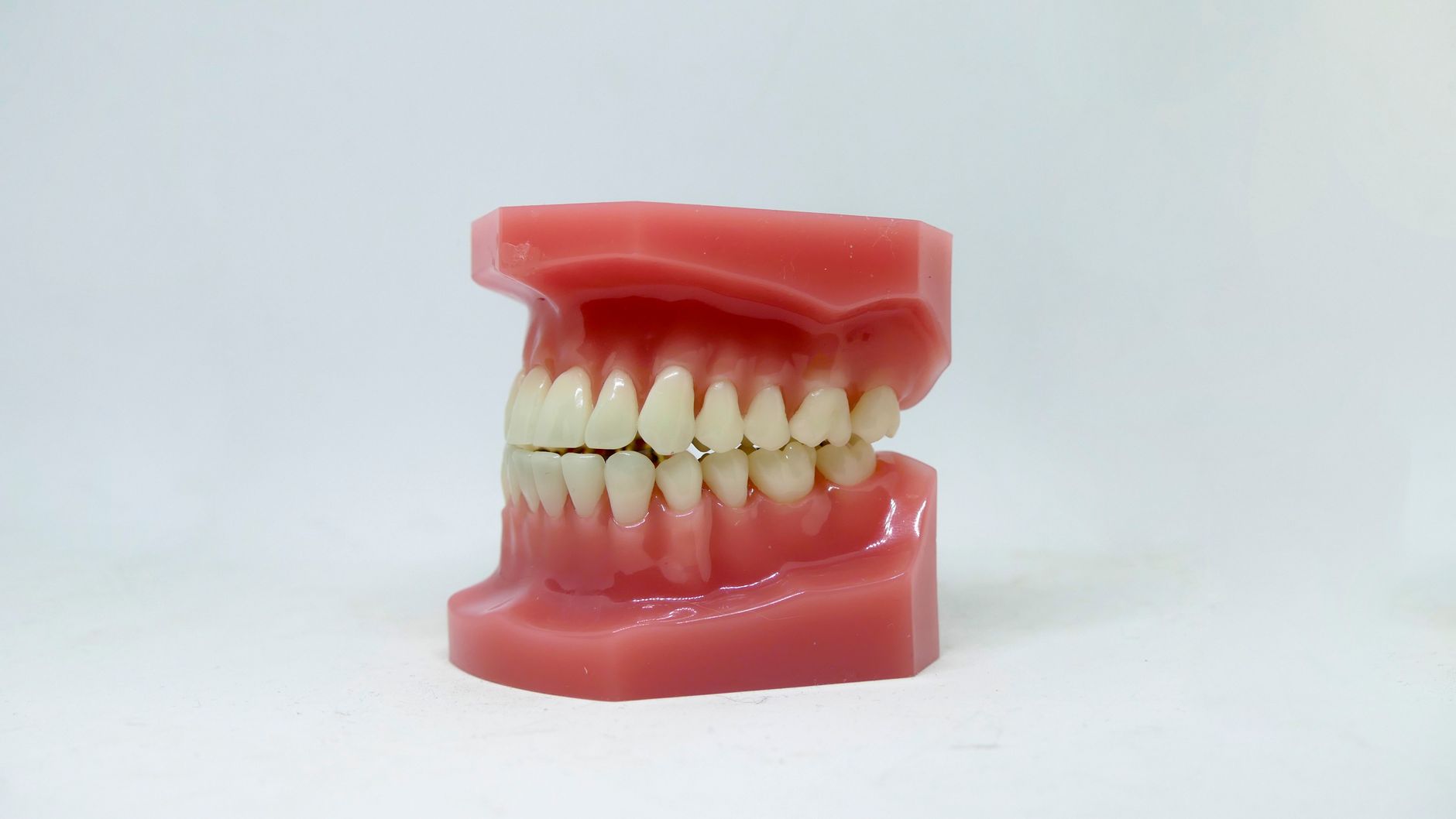
In August 1986, a man named Richard Hofmann walked into the College of Dentistry at the University of Florida, clamped his jaw around a metal sensor called a gnathodynamometer, and bit down. The machine read 442 kilograms — 975 pounds — of force, for about two seconds. It’s still recognized by Guinness World Records as the strongest bite ever measured from a human jaw, more than six times what an average person can manage.
Table of Contents
It sounds like the case is closed: strongest muscle, meet the jaw. But scientists who study this for a living will tell you the real answer is messier — and more interesting — than a single record on a machine. It depends entirely on what you mean by ‘strong.’
Quick answer
There isn’t one winner — it depends on how you measure. By force generated per square inch, the masseter (jaw muscle) takes the title. By sheer bulk and raw pulling power, it’s the gluteus maximus in your seat. By strength relative to its own weight, some researchers point to the uterus. And by pure endurance, nothing beats the heart, which never once stops working.
The jaw that broke the machine
The masseter — the thick muscle you can feel bulge at your jawline when you clench your teeth — isn’t the biggest muscle in the body by a long shot. It’s smaller than your bicep. What makes it a contender for ‘strongest’ is leverage, not size. Khalil Iskarous, a researcher at the University of Southern California who studies oral biomechanics, has explained that the jaw’s short lever arm lets the masseter convert a relatively modest amount of muscle contraction into an outsized amount of bite pressure — the same principle that lets a nutcracker crush a walnut with a small hand motion.
That’s why ‘strongest’ answers split depending on the yardstick. Pit the masseter against your quadriceps or glutes in a straight tug-of-war and the leg muscles win easily — they simply have more muscle fibers, and more fibers means more total pulling force. The jaw wins a narrower contest: the most pressure squeezed out of the smallest package.
The myth that ate itself
For decades, the go-to trivia answer to ‘what’s the strongest muscle’ wasn’t the jaw at all — it was the tongue. The claim shows up in classrooms and pub quizzes everywhere, and it’s wrong on more than one level. First, the tongue isn’t a single muscle; it’s a tightly woven bundle of about eight distinct muscles, more like an octopus arm than a bicep, a structure anatomists call a muscular hydrostat.
Maureen Stone, a researcher at the University of Maryland School of Dentistry who has spent years imaging the tongue in motion, has pointed out that the myth likely persists because the tongue almost never gets tired — it has so much redundant muscle architecture that it can work all day without fatigue. Speech scientist Stephen Tasko of Western Michigan University has made a similar point: the tongue’s constant, tireless dexterity gets mistaken for brute strength, when really it’s a completely different kind of muscular skill — endurance and control, not force.
The part most people miss
Here’s the twist: even scientists who study this don’t agree on a single ‘strongest muscle,’ because ‘strongest’ was never a rigorously defined term to begin with — it’s a folk question dressed up as a science one. Ask about raw force and the gluteus maximus, built from some of the largest muscle fibers in the body, is the one specialists most often name as the single strongest skeletal muscle a person has. Ask about strength relative to weight, and some researchers point instead to the uterus, whose muscular wall can generate serious contractile force during labor despite the organ itself typically weighing only a couple of ounces — roughly 28 to 80 grams, according to Cleveland Clinic — when not pregnant. Ask about which muscle works hardest over a lifetime without ever resting, and the honest answer is the heart, which beats roughly 100,000 times a day for as long as you’re alive. Nobody’s lying when they give you a different answer to this question — they’re just answering a different question.
Sources
Guinness World Records, entry for ‘Strongest human bite,’ documenting Richard Hofmann’s 1986 gnathodynamometer test at the University of Florida College of Dentistry.
Scientific American, ‘Fact or Fiction?: The Tongue Is the Strongest Muscle in the Body,’ featuring researchers Maureen Stone (University of Maryland School of Dentistry), Stephen Tasko (Western Michigan University), and Khalil Iskarous (University of Southern California).
Cleveland Clinic, patient-education references on the gluteal muscles and on the uterus, describing the gluteus maximus as the largest and one of the strongest muscles in the body, and the non-pregnant uterus as weighing around 1 ounce (28 grams).
Explore more: more true tales from inside the human body.
masseter muscle FAQs
So what is the actual strongest muscle in the human body?
There’s no single official answer. The masseter (jaw muscle) exerts the most force per unit of size, the gluteus maximus generates the most raw force overall, and the heart works the hardest over a lifetime without stopping.
Is the tongue really not the strongest muscle?
No — that’s a myth. The tongue is actually about eight separate muscles, and while it has remarkable endurance and control, it doesn’t out-muscle the jaw, glutes, or heart by any standard measurement.
What was the strongest human bite ever recorded?
Richard Hofmann bit down with 442 kilograms (975 pounds) of force for about two seconds during a 1986 test at the University of Florida College of Dentistry — still the Guinness World Record.
Tales You Can Hold
Fun-facts books for curious kids, personalized books that star your child, and more from the FYI Tales Bookstore. Visit the Bookstore.