In 1763, an English naturalist named Gilbert White signed off a letter with seven X’s in a row, followed by a string of Latin prayers. For years, the Oxford English Dictionary held this up as the earliest known instance of X meaning a kiss in the English language. Then a researcher looked closer at what came right after those X’s — and the dictionary quietly took the credit away.
Table of Contents
The popular story is tidier: medieval peasants who couldn’t write signed documents with an X, then kissed the mark to swear they meant it, and the gesture stuck. It’s such a good story that even a blog literally named History Myths Debunked set out to knock it down and ended up printing the opposite verdict — while its own evidence quietly failed to back that verdict up.
Quick answer
X most likely became shorthand for a kiss through ordinary British courtship of the Victorian era, when sweethearts started signing off love letters with rows of little x’s sometime in the mid-to-late 1800s. The Oxford English Dictionary’s earliest confirmed print example dates to 1878. The popular tale — that it comes from illiterate people kissing an X they used as a legal signature — is repeated constantly and even endorsed by some myth-busting sources, but no one has actually produced a primary account of anyone doing it; X’s long-standing link to the Christian cross and the name of Christ is the real, documented part of the story.
A cross, a signature, and a story with no witnesses
The legend has good bones. In medieval Europe, people who couldn’t write their names really did mark documents with an X, and the mark carried real weight — X was the Greek letter chi, the first letter of Χριστός, Christ, which is why we still abbreviate Christmas as “Xmas.” A cross stood for faith, an oath, a bond you didn’t break. Letters and treaties were sometimes described as “sealed with a kiss,” the ancestor of the WWI-era acronym SWAK stamped on soldiers’ envelopes home.
What’s missing is the part everyone adds for free: that people actually kissed the X. The blog History Myths Debunked, which spends most of its time knocking down popular history legends, revisited this one in 2017 and reached the opposite verdict, declaring: “Sounds like a myth, but it’s true.” But its own explanation only supports half the claim — that X was a genuine, religiously loaded signature mark. On the kissing itself, a historian who commented on that same post noted flatly that “there are no known accounts of this practice,” and even the blog’s own timeline shows the first documented print use of X for a kiss doesn’t appear until the 1890s — centuries after the medieval signing custom it’s supposedly descended from. Wikipedia’s entry on the subject is blunter still, calling the signature-kissing origin “unscholarly speculation without definitive evidence.”
The naturalist who almost got the credit
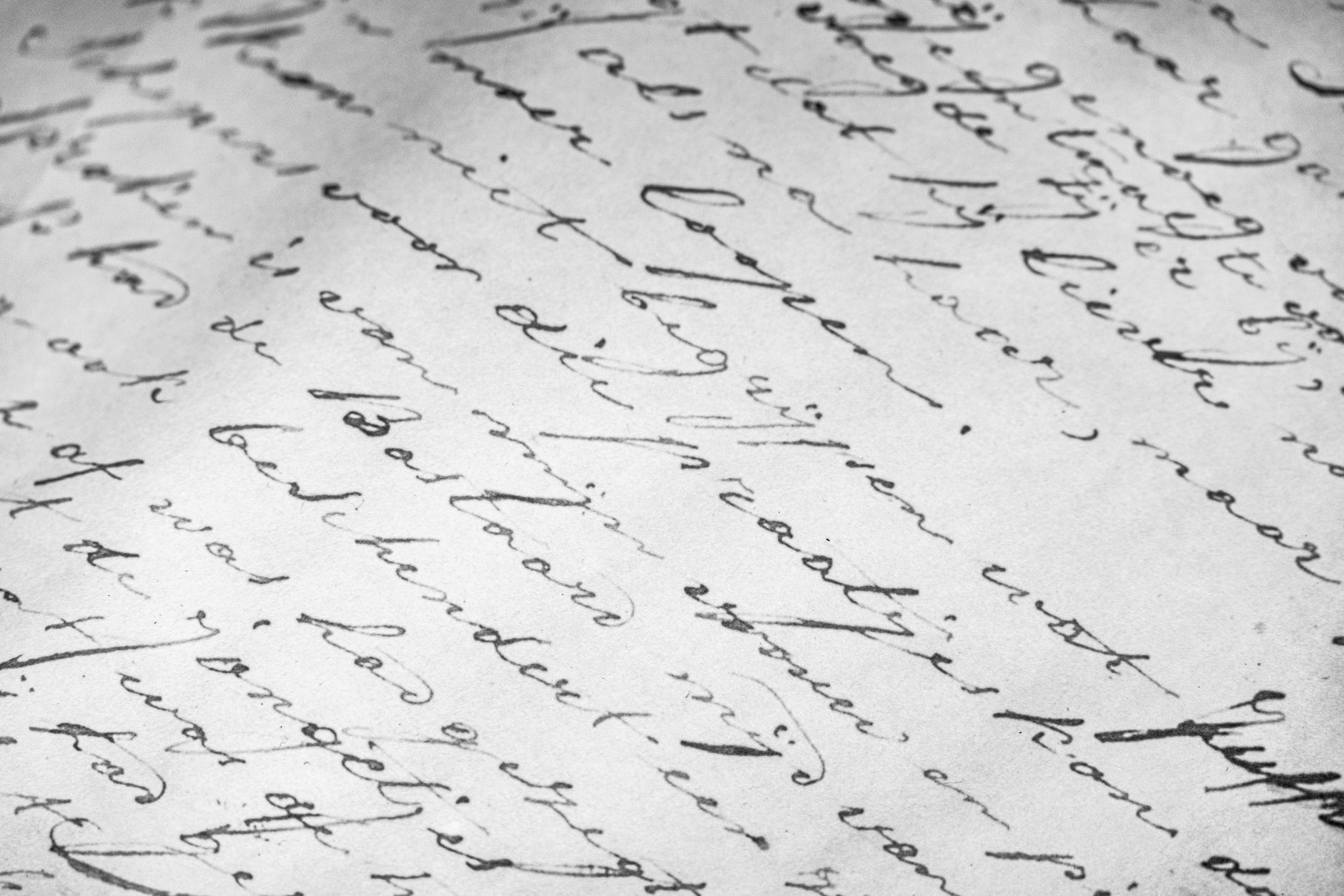
Which brings us back to Gilbert White. His 1763 letter signs off, “I am, with many a xxxxxxx and many a Pater noster and Ave Maria, Gil White” — a line the OED once cited as the first recorded X-kiss. But Stephen Goranson, a researcher at Duke University, pointed out the obvious problem: those X’s sit directly beside Latin prayers, not sweet nothings. In context, they read far more like blessings or crosses than kisses. The OED agreed, moved the 1763 citation into brackets, and added a note saying it “seems more likely to show the sense ‘blessing.'”
The dictionary’s new earliest confirmed citation is 1878, from English novelist Florence Montgomery’s novel Seaforth, which describes a letter closing with “the inevitable row of kisses,—sometimes expressed by × × × × ×, and sometimes by o o o o o o, according to the taste of the young scribbler.” From there the habit spread fast among ordinary letter-writers, not aristocrats or clergy. Historian Katie Barclay of Macquarie University, writing in The Conversation, points to an 1898 breach-of-promise lawsuit reported by the Halifax Evening Courier: a 32-year-old laundry maid named Harriet Ann McLean sued a suitor, green grocer Francis Charles Matthews, producing evidence of 1,030 letters carrying roughly 15,000 kisses exchanged over their decade-long courtship — and won. A teenage Winston Churchill got in on the habit too, signing off an 1894 letter to his mother with a row of x’s.
The part most people miss
The real twist isn’t the origin story — it’s how easily even a fact-checking source can end up endorsing a legend it can’t actually document. History Myths Debunked set out to test the medieval-signature claim and confidently called it true, but its own reasoning only proves the parts that were never in dispute (X was a real signature, X was tied to Christ). The one specific, vivid detail everyone repeats — the kiss itself — is the part nobody can source, on that blog or anywhere else. Meanwhile nobody actually knows why O means a hug. A 2014 Washington Post investigation into the question concluded there’s simply no definitive answer, though one theory holds that some Jewish immigrants to North America, wary of drawing a cross-shaped X on documents, used O instead — a workaround that may have hitched a ride alongside the more popular X and eventually paired with it. The honest version of this history isn’t a single clean origin; it’s a Victorian letter-writing habit that caught on with ordinary people, got dressed up later with a tidier medieval backstory, and stuck around because the tidier version was simply more satisfying to repeat — satisfying enough to fool even the myth-busters.
Sources
The Oxford English Dictionary’s revised entry for “X,” as reflected in its reassessment of Gilbert White’s 1763 letter and its earliest confirmed citation from Florence Montgomery’s 1878 novel Seaforth, including the reinterpretation credited to Duke University researcher Stephen Goranson.
Katie Barclay, ARC Future Fellow and Professor at Macquarie University, “X has been used to represent love and kisses for centuries. But how did it start?” published in The Conversation.
History Myths Debunked, “Revisited Myth #120: Using X for ‘kiss’ comes from illiterate people signing a document and kissing their signature” (which concludes the legend is true but whose comment thread disputes the evidence for the kissing itself), and Wikipedia’s “Hugs and kisses” article, which calls the signature-kissing origin unscholarly speculation and summarizes further reporting including a 2014 Washington Post investigation into the origin of “O.”
Explore more: more true stories behind everyday words and phrases.
X (kiss symbol) FAQs
Did medieval people really kiss the X they signed with?
Nobody has found a documented account of it. X was genuinely used as a signature and carried religious weight tied to the Christian cross, but even sources that call the legend “true” can’t point to a primary record of anyone actually kissing the mark.
What’s the earliest confirmed use of X to mean a kiss?
The Oxford English Dictionary’s earliest confirmed print example is from 1878, in Florence Montgomery’s novel Seaforth. An earlier 1763 letter by naturalist Gilbert White was once credited but has since been reinterpreted as referring to blessings, not kisses.
Why does O mean a hug?
No one knows for certain. It’s less documented than X, and the leading theories — including one tied to Jewish immigrants avoiding the cross-like shape of X — remain unconfirmed.
Tales You Can Hold
Fun-facts books for curious kids, personalized books that star your child, and more from the FYI Tales Bookstore. Visit the Bookstore.