
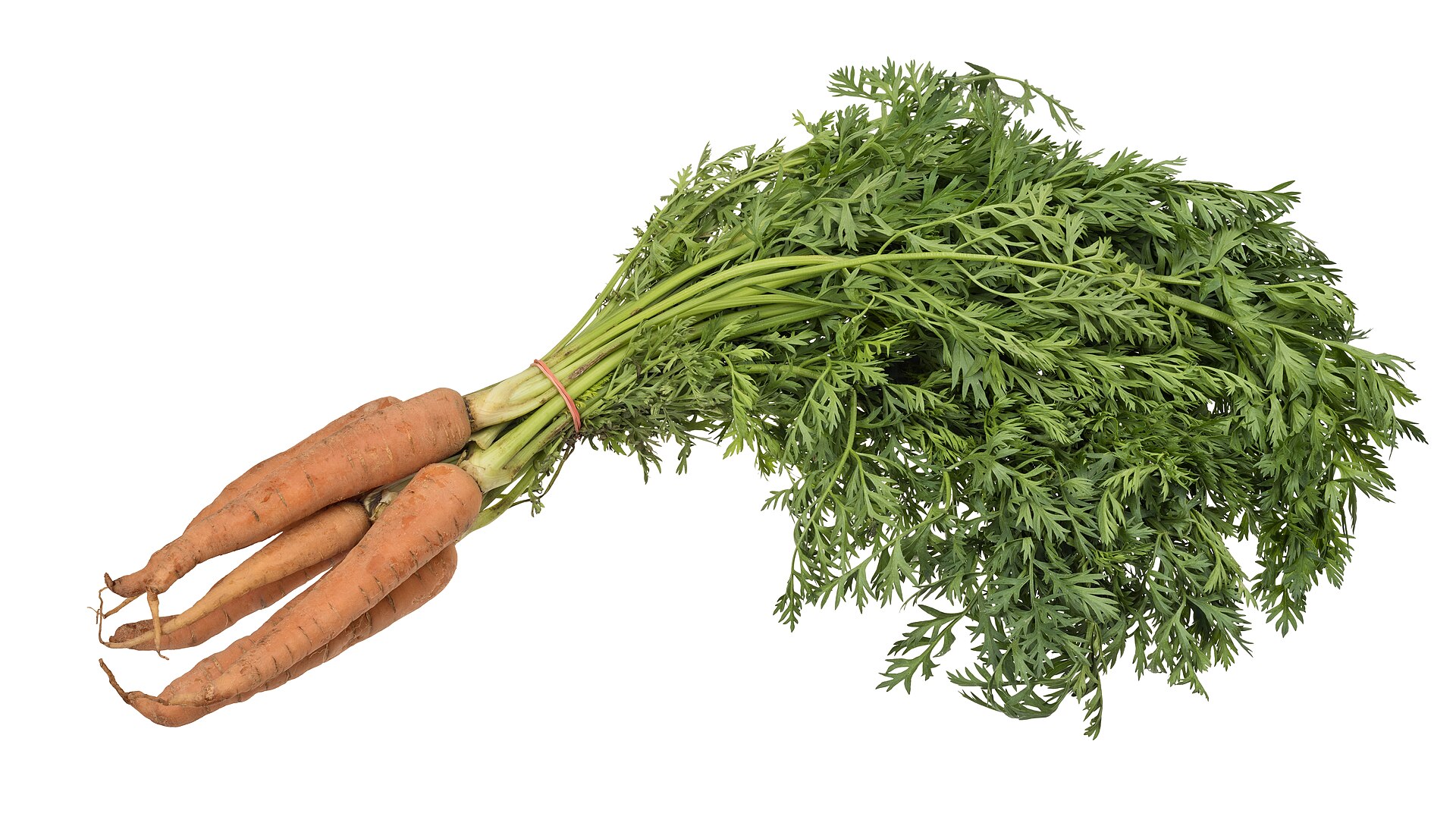
For most of human history, if you pulled a carrot out of the ground, there was a decent chance it came out purple. Or yellow. Maybe white, maybe streaked red. The blazing orange carrot in your fridge right now — so orange it looks like a color swatch — didn’t exist until a few hundred years ago, and it didn’t happen by accident. Somebody bred it that way, on purpose, over generations.
Table of Contents
The story usually told is a tidy, patriotic one: 17th-century Dutch farmers, loyal to their rebel prince William of Orange, engineered an orange carrot as an edible tribute, and the world simply adopted their taste. It’s a great yarn. The trouble is that historians who’ve actually gone looking for the paperwork can’t find it. The real story, pieced together from old seed catalogues, garden paintings, and modern DNA, is stranger — and it says more about soup than about kings.
Quick answer
Domesticated carrots were originally purple and yellow, first cultivated roughly 1,100 years ago (the Early Middle Ages) in a region spanning western Asia to Central Asia. Orange-colored mutants turned up in Europe by the 1500s, and Dutch growers spent the following decades selectively breeding them into a sweeter, more stable, uniformly orange root, a process largely finished by the early 1700s with a cultivar known as ‘Long Orange.’ The popular claim that this was done to honor William of Orange has no supporting historical documents; most food historians treat it as folklore that attached itself to the vegetable well after the fact.
A purple root out of Central Asia
According to a large-scale 2023 genomic study in Nature Plants, which resequenced 630 carrot accessions using an improved reference genome, the domestic carrot was first cultivated during the Early Middle Ages — roughly 1,100 years ago — in a region stretching from western Asia into Central Asia, an area that still holds the wild carrot’s greatest genetic diversity today. Those early carrots were nothing like the ones in your crisper drawer: thin, forked, often bitter, and colored purple or yellow thanks to anthocyanin pigments (the same family of pigments that color red cabbage and blueberries), unlike their white-rooted wild ancestors.
Purple carrots had a practical problem, though. Cook them in a stew or a broth, and those anthocyanins bleed out, turning the whole pot a muddy grayish-brown. Not exactly appetizing. That single kitchen annoyance would end up mattering more than any king.
How the Dutch turned it orange
Horticultural historians John Stolarczyk and Jules Janick, in their 2011 survey ‘Carrot: History and Iconography,’ traced orange carrot mutants appearing in European paintings and records as early as the 1500s, in Spain and Germany — but as a curiosity, not yet a stable, reliable crop. That changed in the Netherlands. Starting in the late 1500s and running through the 1600s, Dutch growers crossed yellow and purple mutant lines, selecting generation after generation for roots that were sweeter, less woody, less bitter, and — crucially — a consistent orange that wouldn’t discolor a soup. The 2023 genomic study backs this up from the DNA side, showing the high-carotenoid orange trait was selected during the Renaissance period, probably in western Europe.
By 1677, a London seedsman named William Lucas was already listing ‘Red,’ ‘Orang,’ and ‘Yellow’ carrots for sale in his printed seed catalogue, one of the earliest of its kind in England — solid evidence that a stable orange variety had crossed the Channel and become an ordinary commercial item, not a novelty. The Dutch kept refining the trait, and by the start of the 18th century they’d fixed it into a cultivar still grown today under the name ‘Long Orange.’
So where does William of Orange come in? The House of Orange-Nassau, led by William the Silent, was the family behind the Dutch revolt against Spanish Habsburg rule starting in 1568, and orange later became the country’s signature color. It’s an appealing coincidence — same country, same century, same color. But Stolarczyk, who curated the World Carrot Museum for years, and other food historians who’ve dug through Dutch agricultural records have found no contemporary document that ties carrot breeding to royal tribute. It looks far more likely that the timeline ran the other way: growers bred an orange carrot for taste and shelf appeal, and only afterward did it get swept into the country’s orange-mad national branding.

The part most people miss
Everyone assumes the Dutch picked orange because it’s the ‘healthy’ color — all that beta-carotene, all that vitamin A. That gets the history backwards. Vitamin A didn’t have a name yet in the 1600s. Beta-carotene, the pigment responsible for the orange color, wasn’t even isolated until 1831, when German chemist Heinrich Wackenroder extracted it from carrot roots — and even then, nobody knew what it did in the body. It took until 1930–31 for Swiss chemist Paul Karrer to work out that the body converts beta-carotene into vitamin A, research that later earned him a share of the 1937 Nobel Prize in Chemistry. In other words, carrots got their reputation as a health food roughly three centuries after they got their orange color. The Dutch weren’t selecting for nutrition; they were selecting for a sweeter root and a broth that didn’t turn brown.
Modern genetics has since caught up with what those farmers did by eye and taste. The 2023 Nature Plants study, along with earlier genome work led by University of Wisconsin–Madison geneticist Philipp Simon, found that three recessive genes — at loci called REC, Or, and Y2 — were essential to selecting for the high-carotene orange phenotype. Dutch breeders were unknowingly selecting for specific recessive genes centuries before anyone knew genes existed. And purple carrots never actually disappeared — they just became a niche crop, now enjoying a comeback at farmers markets and in heirloom seed catalogues, muddy broth and all.
Sources
Nature Plants — ‘Population genomics identifies genetic signatures of carrot domestication and improvement and uncovers the origin of high-carotenoid orange carrots’ (2023), the genomic study establishing the roughly 1,100-year-old Central Asian domestication timeline.
Wikipedia’s entry on the carrot, drawing on published horticultural histories, for the ‘Long Orange’ cultivar timeline and general background.
Stolarczyk, J. and Janick, J., ‘Carrot: History and Iconography,’ Chronica Horticulturae, 2011 — the standard academic reference on the color history of carrots.
University of Wisconsin–Madison News, on the carrot genome project led by geneticist Philipp Simon and the genes involved in carotene accumulation.
Explore more: More true tales from Food Lore.
carrots FAQs
Were carrots originally purple?
Yes. The first domesticated carrots, cultivated roughly 1,100 years ago in a region spanning western Asia to Central Asia, were mostly purple or yellow, colored by anthocyanin pigments, unlike the white wild carrots they came from.
Did the Dutch invent orange carrots to honor William of Orange?
Probably not. It’s a popular legend, but historians have found no contemporary documents tying carrot breeding to the House of Orange — it looks like folklore that got attached to the vegetable after the fact.
When did orange become the standard carrot color?
Orange mutants appeared in Europe by the 1500s, but it took Dutch growers until around the early 1700s, with a cultivar called ‘Long Orange,’ to stabilize the trait into the reliable orange carrot sold today.
Tales You Can Hold
Fun-facts books for curious kids, personalized books that star your child, and more from the FYI Tales Bookstore. Visit the Bookstore.
Photo: Evan-Amos / Public domain, via Wikimedia Commons.