
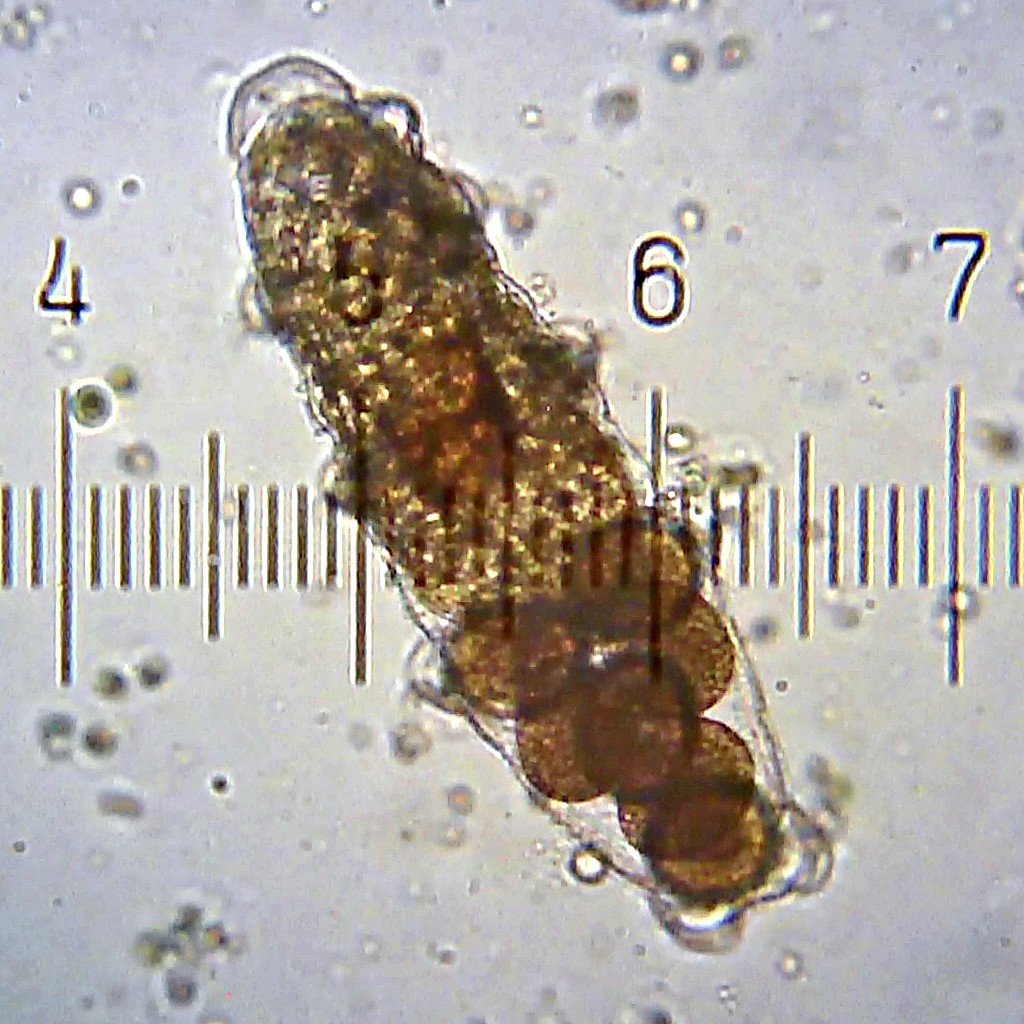
In September 2007, a Swedish biologist named Ingemar Jönsson sent about 3,000 microscopic animals into orbit aboard a Russian rocket, bolted their trays to the outside of a European Space Agency satellite, and opened them to the cold nothing of low Earth orbit. Some trays let in only vacuum and cosmic radiation. Others had their UV filters stripped away entirely, exposing the animals to raw solar ultraviolet light roughly 1,000 times stronger than what reaches Earth’s surface.
Table of Contents
The two groups had very different trips. The ones facing vacuum and cosmic radiation alone came through remarkably well — most survived, rehydrated back on Earth, and some even laid eggs that hatched. The ones hit with unfiltered solar UV fared much worse: most died, though a handful pulled through anyway, which was still further than anyone expected an animal to get. The animal was the tardigrade — a water bear smaller than a grain of sand — and its trip on ESA’s FOTON-M3 mission became one of the strangest, best-documented survival stories in biology.
Quick answer
Tardigrades survive space by drying themselves into a shriveled, near-lifeless state called a ‘tun,’ dropping their metabolism to almost nothing. When ESA tested this directly in 2007, tardigrades shielded from solar UV but exposed to vacuum and cosmic radiation mostly survived; those hit with full, unfiltered solar UV mostly died, though a few of those survived too.
The experiment that shouldn’t have worked
The mission was called TARDIS — Tardigrades in Space — led by Ingemar Jönsson of Kristianstad University in Sweden. His team packed two tough species, Richtersius coronifer and Milnesium tardigradum, into trays aboard the Biopan-6 platform on the outside of the FOTON-M3 satellite, which launched from Kazakhstan in September 2007 and spent about ten days at 258 to 281 kilometers up.
Before launch, the tardigrades had dehydrated themselves into their dormant ‘tun’ form, the same trick they use to survive drought in the moss and lichen where they normally live. Some trays were exposed only to space vacuum and cosmic radiation. Others had their UV shielding removed, so the animals took a direct hit of solar ultraviolet radiation at doses that would shred the DNA of almost anything else.
When the capsule came back down and researchers rehydrated the survivors, the vacuum-and-cosmic-radiation group came back to life at high rates within minutes, largely unaffected. The direct-UV group told a harsher story: most of those animals died, their DNA damaged beyond repair. But not all of them — a smaller number of UV-exposed tardigrades survived anyway, and some of the survivors across both groups went on to lay eggs that hatched normally, meaning the ones that made it weren’t just alive, they were biologically intact.
Why the math says this shouldn’t be possible
It was the first time any animal had been shown to survive open space vacuum and cosmic radiation at all, and Jönsson’s team published the full results in Current Biology in 2008. The trick isn’t armor — tardigrades have no special radiation shielding. It’s that in the tun state, they lose almost all their body water, their metabolism drops to a tiny fraction of normal, and their DNA-repair machinery, which is unusually efficient even when they’re active, kicks into overdrive the moment they rehydrate and start patching whatever damage got through.
That repair system explains why the vacuum-and-cosmic-radiation group did so well, and why UV was a different story. Raw solar UV doesn’t just nick DNA here and there — unfiltered, it inflicts damage faster than even a tardigrade’s repair machinery can keep up with, which is why it killed most of the animals exposed to it directly. The handful that survived weren’t invincible; they were the extreme tail end of a real, measurable limit.
The part most people miss
The internet took this story and ran way past what the data supports. In 2019, the Israeli lunar lander Beresheet crashed on the Moon carrying the Arch Mission Foundation’s ‘Lunar Library’ — a nickel disc etched with millions of pages of human knowledge, embedded with human DNA samples and several thousand dehydrated tardigrades, an idea championed by the foundation’s founder, Nova Spivack. Headlines ran with ‘tardigrades are now living on the Moon,’ as if the 2007 orbital survival meant they’d simply walk off any landing. But surviving vacuum in orbit is not the same as surviving a crash at roughly a kilometer per second, and in 2021 researchers Alejandra Traspas and Mark Burchell at the University of Kent tested exactly that, firing tardigrades from a two-stage gas gun and finding they survive impacts only up to about 825 meters per second before the shock simply kills them. Beresheet’s impact speed was at or above that ceiling, so the honest answer is nobody knows for certain, but the physics says the water bears almost certainly didn’t make it — they’re extraordinary survivors with real, well-documented limits, not indestructible ones, and the Moon story is the folklore that grew out of a more modest, more interesting result.
Sources
Ingemar Jönsson and colleagues, ‘Tardigrades Survive Exposure to Space in Low Earth Orbit,’ Current Biology (2008), and the European Space Agency’s own summary of the TARDIS/FOTON-M3 mission results.
Alejandra Traspas and Mark Burchell, ‘Tardigrade Survival Limits in High-Speed Impacts — Implications for Panspermia,’ Astrobiology (2021), via the University of Kent’s research news.
ScienceDaily’s report on the 2008 Current Biology findings, and reporting on the Beresheet crash and the Arch Mission Foundation’s Lunar Library confirming the tardigrade payload and Nova Spivack’s account of why they were included.
Explore more: More wild animal tales.
tardigrades FAQs
Did tardigrades really survive in space?
Yes, but with an important split. In a 2007 ESA experiment (TARDIS, aboard FOTON-M3), thousands of dehydrated tardigrades were exposed to space vacuum and cosmic radiation for about 10 days, and most of those survived. A separate group exposed to full, unfiltered solar UV mostly died, though a smaller number survived even that, and several laid viable eggs afterward.
How do tardigrades survive the vacuum of space?
They dry out into a shriveled, dormant ‘tun’ state, dropping their metabolism to a tiny fraction of normal. With almost no active biology and almost no water to lose, vacuum and cold have far less to damage, and their DNA-repair systems fix what radiation does get through once they rehydrate.
Can tardigrades survive direct sunlight’s UV radiation in space?
Not well. When ESA’s 2007 experiment removed UV shielding entirely, most of the exposed tardigrades died from the radiation damage, since raw solar UV is roughly 1,000 times stronger than what reaches Earth’s surface. A minority survived even that, but UV is genuinely the tardigrade’s biggest weakness.
Are tardigrades really living on the Moon?
Probably not. Thousands of dehydrated tardigrades were aboard Israel’s Beresheet lander when it crashed on the Moon in 2019. A 2021 University of Kent study found tardigrades survive impacts only up to about 825 m/s, and Beresheet’s crash speed was at or above that limit, so survival is considered unlikely, though unconfirmed.
Tales You Can Hold
Fun-facts books for curious kids, personalized books that star your child, and more from the FYI Tales Bookstore. Visit the Bookstore.
Photo: Bob Blaylock / CC BY-SA 4.0, via Wikimedia Commons.