Ask three etymologists where ‘mind your Ps and Qs’ comes from and you’ll get three confident, colorful, mutually exclusive answers. One will tell you it’s a bartender’s warning about pints and quarts. Another will swear it’s a printer’s apprentice fumbling backward metal type. A third will insist it’s a French dancing master murmuring instructions about feet and wig-tails. All three stories have been repeated in print for over a century. Only one of them has any dated evidence behind it at all.
Table of Contents
Here’s the twist, though: even that one doesn’t have a confirmed origin. In 2007, editors revising the Oxford English Dictionary went digging through 18th-century archives and turned up citations nobody had connected to the phrase before. What they found made the alphabet-learning theory look far more plausible than the folklore — but the dictionary itself still stops short of calling it solved. Officially, the OED lists the origin as unknown. The story of why is more interesting than a tidy answer would have been.
Quick answer
The Oxford English Dictionary’s own published position is that the origin of ‘mind your Ps and Qs’ is unknown, and it specifically calls the popular schoolroom/printing mix-up theory unlikely because it doesn’t match the chronology of early citations. What the OED’s 2007 revision did turn up were 18th-century citations — including a 1756 use and a 1763 poem by Charles Churchill — that use ‘Ps and Qs’ in the context of a child learning the alphabet and general good behavior, which etymologists consider the best-supported (though still unproven) explanation. The pub-tally, printer’s-devil, and dancing-master stories all remain undocumented folklore.
Three suspects in the lineup
The pub theory says 18th-century tavern keepers chalked drinkers’ tabs in pints (P) and quarts (Q) on a slate behind the bar, and told rowdy patrons to ‘mind their Ps and Qs’ — watch how much they were running up. It’s a great bar story. It’s also one nobody has ever traced to an actual tally slate, tavern record, or contemporary account. Etymologist Gary Martin, who runs the long-running reference site Phrase Finder, lists it among theories that sound plausible but lack any real supporting evidence beyond the coincidence of the letters matching the units.
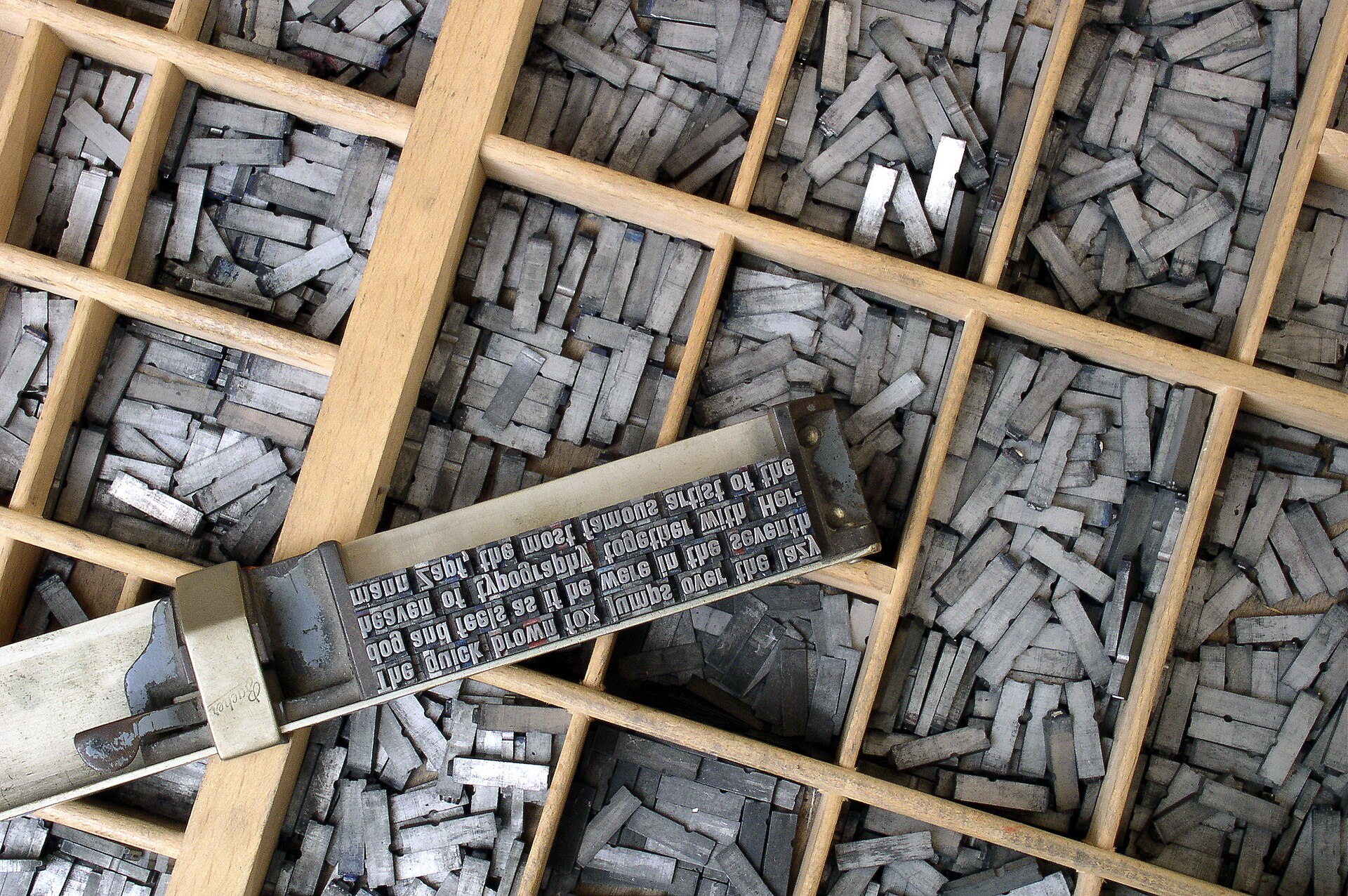
The printing theory is older and more technical. Compositors set metal type by hand, letter by letter, backward and upside down, so it would read correctly on the page. Lowercase p and q are mirror images of each other in that layout, so a careless apprentice really could swap them. A letter to the journal Notes and Queries floated this explanation as early as 1851. It’s tidy and mechanically plausible — but it’s also the exact theory the OED singles out as unlikely, because the phrase’s earliest known uses don’t carry any printing or typesetting connotation at all.
Then there’s the long shot: French dancing masters supposedly telling students to mind their pieds (feet) and queues (the tails of their wigs, or a line of dancers) during formal steps. It’s the least supported of the bunch — there’s no equivalent French phrase for anyone to have translated in the first place, and no dated citation ties it to English usage.
What the 2007 dig actually found — and didn’t settle
When Oxford English Dictionary editors revised the entry for ‘mind your Ps and Qs,’ they combed 18th-century print archives for the phrase’s earliest real appearances, not folklore, actual dated text. Among what surfaced was a 1763 poem by the satirist Charles Churchill, describing a boy being taught: ‘to instruct him how to use / His A’s and B’s, and P’s and Q’s.’ There it sits, sandwiched between the ABCs, doing exactly the job of a beginner’s alphabet lesson. An earlier 1756 citation, from a comic work called The Life and Memoirs of Mr. Ephraim Tristram Bates, uses the phrase as general life advice — ‘mind your P’s and your Q’s’ — right around the age when a child would still be sorting out which loopy letter was which.
Michael Quinion, who spent over two decades reading for the OED and chronicling word origins at World Wide Words, has argued these citations make the alphabet-lesson theory the phrase’s most defensible explanation. But that’s Quinion’s own reading of the evidence, not a settled OED ruling. The dictionary’s published entry is more cautious: it explicitly rejects the letter-confusion version of the theory as chronologically unlikely, and it still lists the phrase’s ultimate origin as unknown. In other words, the 2007 research narrowed the field and made one theory look stronger than the rest — it didn’t crown a winner.
The part most people miss
Here’s the detail almost nobody mentions: the very earliest known use of anything resembling ‘mind your Ps and Qs’ has nothing to do with letters, drinks, or dancing at all. In playwright Thomas Dekker’s 1602 comedy, and again in a 1612 poem by Samuel Rowlands, writers use phrases like ‘pee and kue’ in passages about clothing and quality — decades before anyone was writing about alphabets or pub tabs. Etymologist David Wilton, author of Word Myths and the reference site Wordorigins.org, has traced several of these 17th-century sightings and cautions that nobody is confident they’re even the same expression; they may be unrelated coincidences of sound. It’s a reminder that phrase-hunting isn’t always a straight line — sometimes the paper trail has a false start hiding in it. And when lexicographer Francis Grose finally defined the phrase in his 1785 Classical Dictionary of the Vulgar Tongue, he didn’t describe it as being about manners at all — he glossed it as being ‘attentive to the main chance,’ meaning watch your own interests closely. The leap from ‘watch your own advantage’ to ‘mind your alphabet’ to today’s ‘behave nicely’ took the phrase through several different meanings before it settled into the polite warning grandmothers give at the dinner table now — and the dictionary tasked with pinning down exactly how that happened still, officially, shrugs.
Sources
Wikipedia’s entry ‘Mind your Ps and Qs,’ which cites and quotes the Oxford English Dictionary’s third edition (2007 revision) directly on the phrase’s origin being unknown and the letter-confusion theory being unlikely.
World Wide Words, article ‘Mind Your Ps and Qs’ by Michael Quinion, longtime Oxford English Dictionary reader and contributor, describing the 1756 and 1763 citations uncovered during the 2007 OED revision.
Wordorigins.org, entry ‘Mind Your Ps and Qs’ by etymologist David Wilton, author of Word Myths: Debunking Linguistic Urban Legends, cataloguing the phrase’s full citation history back to 1602.
Explore more: more true stories behind everyday words and phrases.
mind your Ps and Qs FAQs
Does the Oxford English Dictionary say what ‘mind your Ps and Qs’ really means?
No — the OED’s published position is that the phrase’s origin is unknown. Its 2007 revision did uncover 18th-century citations that support the alphabet-learning theory as plausible, but the dictionary stops short of declaring it confirmed.
Does ‘mind your Ps and Qs’ really come from pints and quarts at the pub?
There’s no documented evidence for this popular story — no surviving tally slates or tavern records use the phrase this way. Most etymologists treat it as a colorful folk explanation invented after the fact.
What is the printer’s devil theory?
It holds that print apprentices confused mirror-image lowercase p and q while hand-setting backward metal type. The idea dates to an 1851 letter in Notes and Queries, but the OED specifically calls this version unlikely, since it doesn’t match the timeline of the phrase’s earliest known uses.
When was ‘mind your Ps and Qs’ first used in print?
Ambiguous phrases like ‘pee and kue’ appear as early as 1602 and 1612, though their connection to the modern saying is uncertain. The clearest early match to today’s phrase and meaning dates to 1756, with a well-known alphabet-teaching citation from 1763.
Tales You Can Hold
Fun-facts books for curious kids, personalized books that star your child, and more from the FYI Tales Bookstore. Visit the Bookstore.
Photo: Willi Heidelbach / CC BY 2.5, via Wikimedia Commons.