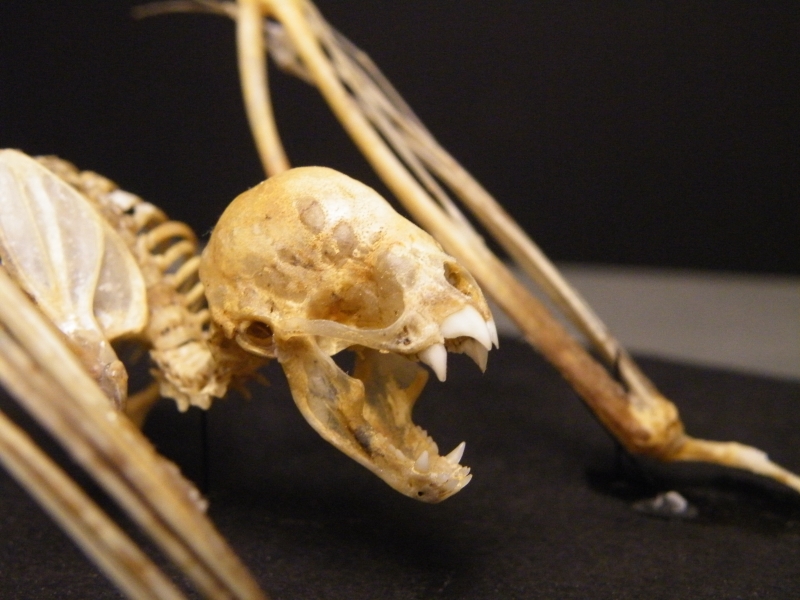
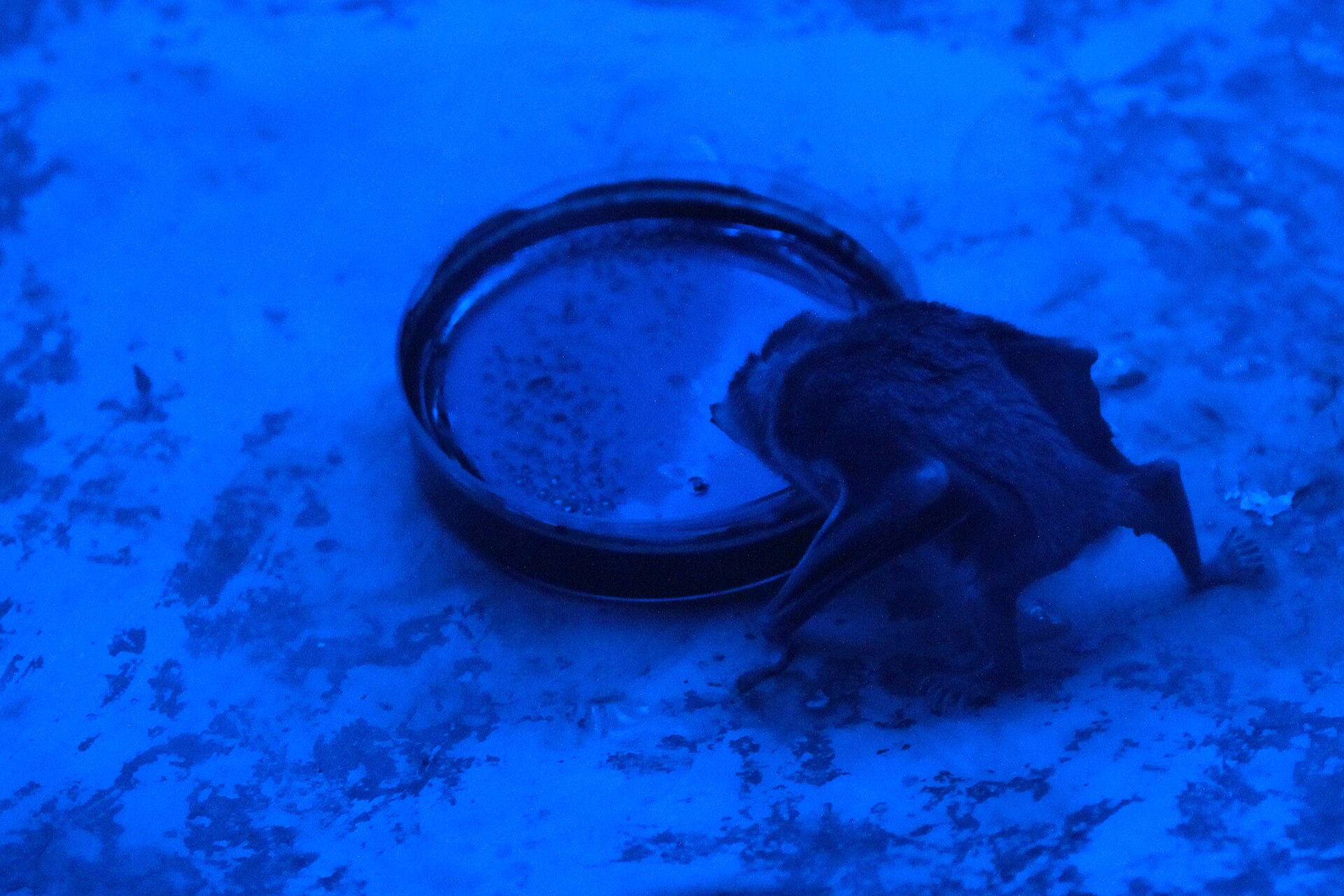
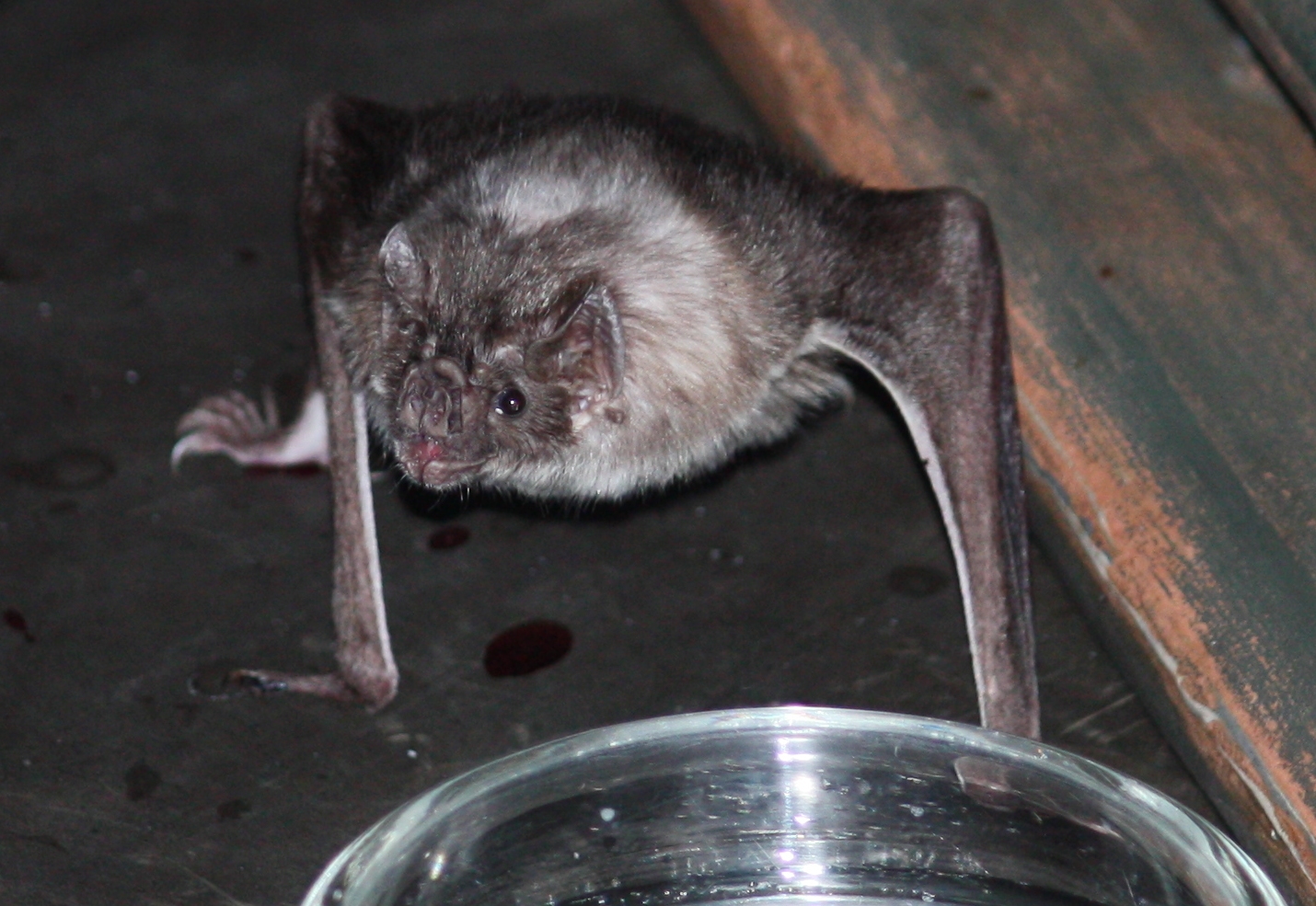
Picture the inside of a hollow tree in Costa Rica, dark and warm and smelling faintly of iron. A dozen bats hang from the wood, and one of them, having failed to find a meal that night, is starving. Another bat leans in close and, mouth to mouth, regurgitates a share of her own blood meal directly into the hungry one’s mouth. It looks like something out of a horror film. It is actually one of the best-documented acts of generosity in the animal kingdom.
Table of Contents
The species is the common vampire bat, Desmodus rotundus, and the behavior isn’t a fluke or a one-off mercy. It’s a routine, trackable social system, one a young graduate student spent years lying on his back inside tree trunks to watch, and one that later researchers would prove holds up even outside the lab, deep in the wild.
Quick answer
Common vampire bats that fail to find a blood meal can starve within about two to three nights. To prevent that, roost-mates, often unrelated to each other, will regurgitate part of their own meal into a hungry bat’s mouth. Biologist Gerald Wilkinson documented this as reciprocal food sharing in a landmark 1984 Nature paper, and later work by biologist Gerald Carter showed the bond behind it is built deliberately, through mutual grooming, before any blood changes mouths.
A biologist on his back in a hollow tree
In the late 1970s and early 1980s, Gerald S. Wilkinson, then a graduate student at the University of California, San Diego, spent multiple field seasons at a site in Costa Rica watching groups of eight to twelve adult female vampire bats that shared a set of hollow trees as day roosts. Some of the trunks were wide enough that Wilkinson and a research assistant could climb inside and lie flat on their backs, staring straight up at the colony above them.
What he saw, night after night, was that bats who came home empty-mouthed weren’t simply left to fend for themselves. Other bats, sometimes sisters or daughters, but often bats with no blood relation at all, would regurgitate a portion of their own hard-won meal directly into a hungry neighbor’s mouth. Vampire bats survive on blood alone, and a bat that goes without a meal for roughly two to three nights risks starving to death, so this wasn’t a small favor. It could be the difference between living and dying.
It wasn’t just kindness to kin
The obvious explanation, that bats were simply helping their relatives, turned out to be only half the story. In his 1984 Nature paper, “Reciprocal food sharing in the vampire bat,” Wilkinson showed that donations depended just as much on an entirely different factor: how likely the two bats were to encounter each other again in the future, and whether the recipient had returned the favor before.
Wilkinson backed this up with captive experiments, pairing unrelated bats and watching them reciprocally trade blood meals over time, and with long-term field data tracking which bats roosted together across years. Bats, it turned out, were keeping something like a mental ledger, favoring partners who had helped them in the past and who were likely to help them again. It became one of the first solid field demonstrations of reciprocal altruism outside of theory, a concept until then discussed mostly in the abstract by evolutionary biologists.
The part most people miss
Here’s the layer that rarely makes it into the retelling: these bat friendships aren’t automatic, and they don’t start with blood. Decades after Wilkinson’s fieldwork, biologist Gerald Carter and colleagues, including Damien Farine, Rachel Crisp, Julia Vrtilek, Simon Ripperger, and Rachel Page, ran experiments pairing captive bats from geographically distant colonies in Panama, near Las Pavas and Tolé, who had never met. Published in Current Biology in 2020, their work showed that strangers build trust gradually, starting with cheap, low-risk social grooming, before ever risking a costly regurgitated meal. Carter’s team described it as a pattern of raising the stakes, small investments testing the relationship before either bat commits to something as costly as sharing food that could mean survival. And when Ripperger and Carter fitted a group of roughly two dozen female bats with tiny proximity sensors, essentially bat-sized backpacks weighing less than a penny, and released them back into a wild roost of about 200 bats in a hollow tree in a Panamanian cattle pasture, they found something remarkable: the social bonds those bats had formed in captivity held up in the wild, tracked in real encounters logged every two seconds for more than a week. The friendships weren’t a lab artifact. They were real relationships that traveled home with the bats.
Sources
Gerald S. Wilkinson, “Reciprocal food sharing in the vampire bat,” Nature, vol. 308, 1984, pages 181-184.
Smithsonian Tropical Research Institute, “Bound by Blood,” covering the Ripperger and Carter field study of wild vampire bat social networks.
Current Biology coverage via ScienceDaily, “Vampire bats that share food and groom each other are showing loyalty, not manipulation,” on the 2020 Carter, Farine, Crisp, Vrtilek, Ripperger, and Page study.
Explore more: More true wild animal tales.
vampire bats FAQs
Do all bats share food with each other?
No. This behavior is best documented in the common vampire bat, Desmodus rotundus, which relies entirely on blood meals and faces a hard survival deadline if it misses a feeding.
How long can a vampire bat go without feeding before it starves?
Roughly two to three nights without a meal puts a vampire bat at serious risk of starving, which is part of why food sharing among roost-mates evolved as such a high-stakes behavior.
Do vampire bats only share blood with relatives?
No. Gerald Wilkinson’s 1984 research and later work by Gerald Carter both found that unrelated bats regularly share blood too, especially once they’ve built a relationship through mutual grooming and repeated interaction.
Tales You Can Hold
Fun-facts books for curious kids, personalized books that star your child, and more from the FYI Tales Bookstore. Visit the Bookstore.
Photo: Mokele / CC BY 3.0, via Wikimedia Commons.