
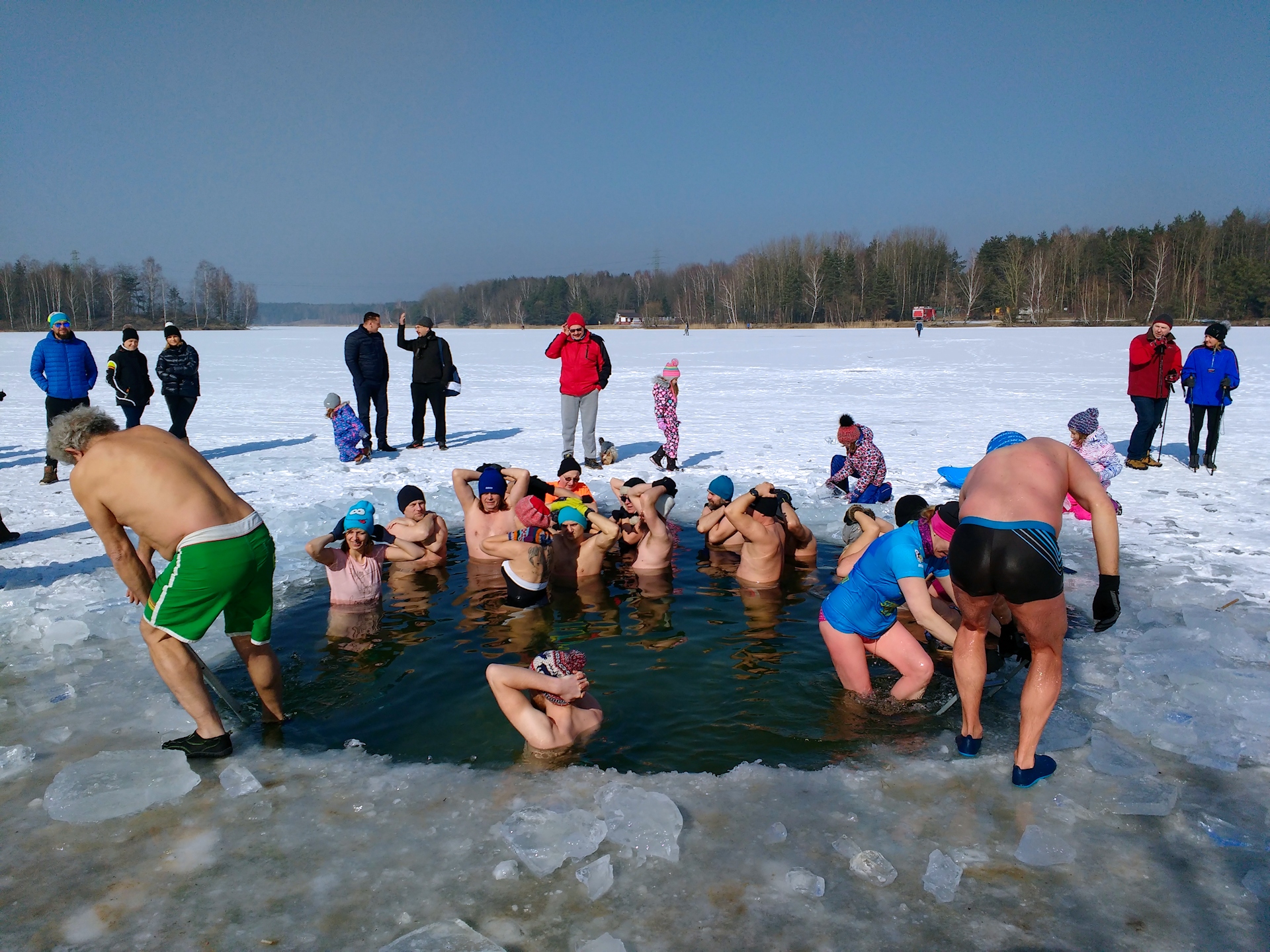
You wade into a cold lake, a cold ocean, a cold shower even, and before you’re fully in, your bladder sends an urgent memo: go now. It doesn’t matter that you emptied it twenty minutes ago. The cold hits your skin and your body suddenly acts like it’s been drinking water all day.
Table of Contents
This isn’t a coincidence or a nervous reaction to icy water. It’s a real, well-documented physiological reflex called cold diuresis, or immersion diuresis, and the paper trail on it stretches from an 18th-century pamphlet about the healing powers of English spa water to a U.S. Air Force doctor who spent a week floating in a tank to help figure out what happens to astronauts in orbit.
Quick answer
Cold water constricts the blood vessels in your skin and limbs, shoving extra blood into your core. Your body reads that surge of central blood volume as “too much fluid on board” and tells your kidneys to start filtering it out as urine, fast — which is why the urge to pee can hit within minutes of getting cold.
A pamphlet about the healing waters of Bath
The first known write-up of this effect wasn’t a physiology paper — it was a sales pitch. In 1764, a physician named Sutherland published a book promoting the medicinal virtues of the mineral waters at Bath and Bristol, England. Buried in a section on treating dropsy (the old term for fluid retention), he noted that patients who bathed in cold water started urinating more afterward. He didn’t know why. He just wrote it down.
It took nearly 150 years for anyone to test the obvious follow-up question: was it the cold, or just being wet? In 1909, a researcher named Gibson showed that cold exposure alone — no water required — could trigger the same increase in urine output. The mystery had a mechanism worth chasing, even if nobody yet knew what it was.
The Air Force doctor who floated for a week
The story jumps forward to the early 1960s and, of all places, the space race. NASA and the military wanted to know what happens to the human body when it’s suddenly relieved of the everyday work of fighting gravity — because in orbit, blood that normally pools in the legs shifts up into the chest, exactly the way it does when cold water squeezes it there from the outside. Water immersion became a cheap, Earth-bound way to fake that fluid shift.
In 1962, researchers Margaret Jackson and Duane Graveline published a study in the Journal of Applied Physiology tracking volunteers through six-hour stretches of full water immersion, measuring exactly how their kidneys responded to that redirected blood. Graveline wasn’t just a lab researcher — three years later, in June 1965, he was selected as one of NASA’s scientist-astronauts. He resigned that August, before ever flying a mission, but the immersion research he helped pioneer became a foundation for understanding how fluid shifts, whether from cold water or zero gravity, force the kidneys into overdrive.
The part most people miss
Here’s the twist: scientists still don’t agree on the exact hormonal wiring behind cold diuresis. The long-standing explanation was that cold suppresses antidiuretic hormone (ADH), the signal that normally tells kidneys to hold onto water, so without it your kidneys just let fluid pass straight to the bladder. But in 1974, researcher Stefan Lennquist and colleagues argued the bigger driver might simply be pressure — cold-induced vasoconstriction raises blood pressure enough that kidneys flush more fluid on their own, no hormone drop required. Later work has muddied that further, finding that other hormones, including atrial natriuretic peptide, released when the heart’s upper chambers stretch from the extra incoming blood, and reduced aldosterone both play a role too. Divers Alert Network, which studies this constantly because it affects nearly every diver on every dive, describes it simply as the body dumping fluid to relieve pressure it thinks it doesn’t need. The honest answer is that it’s not one single switch — it’s several overlapping systems responding to the same signal, and researchers are still sorting out which one deserves top billing.
Sources
Institute of Medicine, “Nutritional Needs in Cold and High-Altitude Environments” (National Academies Press), chapter on cold stress and human fluid balance, which traces the research history from Sutherland’s 1764 observation through Gibson (1909) and Lennquist et al. (1974).
M. M. Jackson and D. E. Graveline, “Diuresis Associated with Prolonged Water Immersion,” Journal of Applied Physiology, 1962.
Divers Alert Network (DAN), “Immersion Diuresis,” health resource on the mechanism behind fluid loss during water immersion.
Explore more: more true stories about your body.
cold diuresis FAQs
What is it called when cold water makes you need to pee?
It’s known as cold diuresis or immersion diuresis — a reflex where cold-triggered blood vessel constriction pushes extra blood to your core, prompting your kidneys to filter out fluid faster.
Does this happen in cold air too, not just cold water?
Yes. Researchers confirmed as early as 1909 that cold exposure alone, without water, triggers the same increased urine production — it’s part of why you tend to pee more in winter.
Is needing to pee in cold water a sign something’s wrong?
No, it’s a normal protective reflex. It only becomes a concern during prolonged cold-water exposure, where the fluid loss can contribute to dehydration and speed up hypothermia risk.
Can you prevent or reduce cold diuresis?
Research from the 1950s found that moderate exercise during cold exposure can reduce the effect, likely because muscle activity helps counteract the blood-shifting vasoconstriction.
Why does the urge feel almost instant?
Vasoconstriction in the skin and limbs begins within minutes of cold exposure, and the resulting pressure signal reaches the kidneys quickly — so if your bladder already had some fluid in it, the extra output can tip it into urgent territory fast.
Tales You Can Hold
Fun-facts books for curious kids, personalized books that star your child, and more from the FYI Tales Bookstore. Visit the Bookstore.
Photo: Marek Ślusarczyk (Tupungato) Photo portfolio / CC BY 3.0, via Wikimedia Commons.