
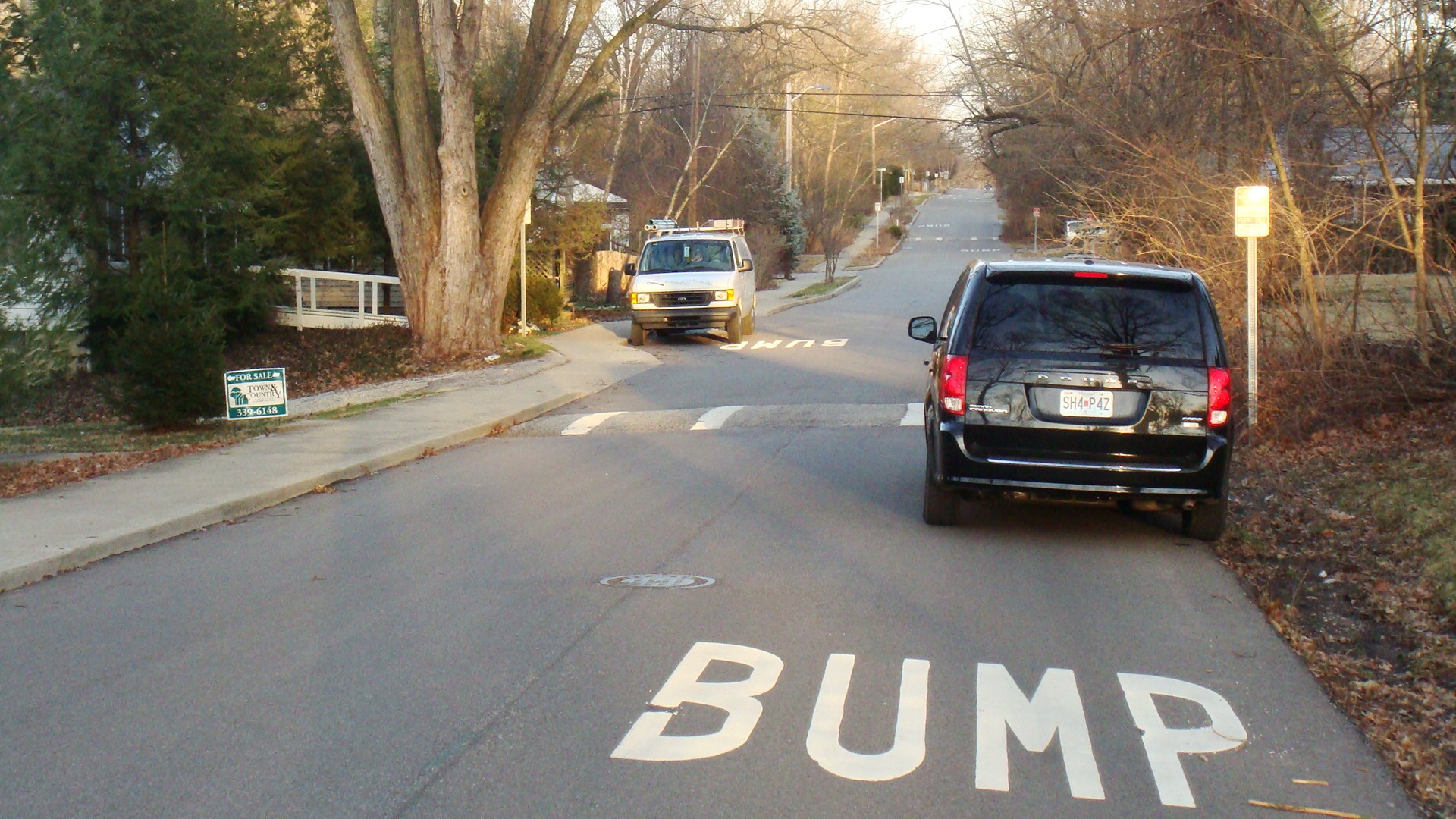
In the spring of 1953, a Nobel Prize–winning physicist got so fed up with speeding drivers outside his office that he designed his own weapon against them: a lump of asphalt.
Table of Contents
Arthur Holly Compton — the man who’d already reshaped physics by proving light behaves like a particle — was chancellor of Washington University in St. Louis, and cars kept blowing past Brookings Hall. His fix, installed that spring, is often credited as the ancestor of the modern speed bump. But the shape wars had barely begun. Depending on where you live, that lump might be a stubby speed bump, a long lazy speed hump, or a slotted speed cushion — and the differences aren’t cosmetic. Each one is solving a completely different traffic problem, and one of them exists because ambulances kept getting stuck.
Quick answer
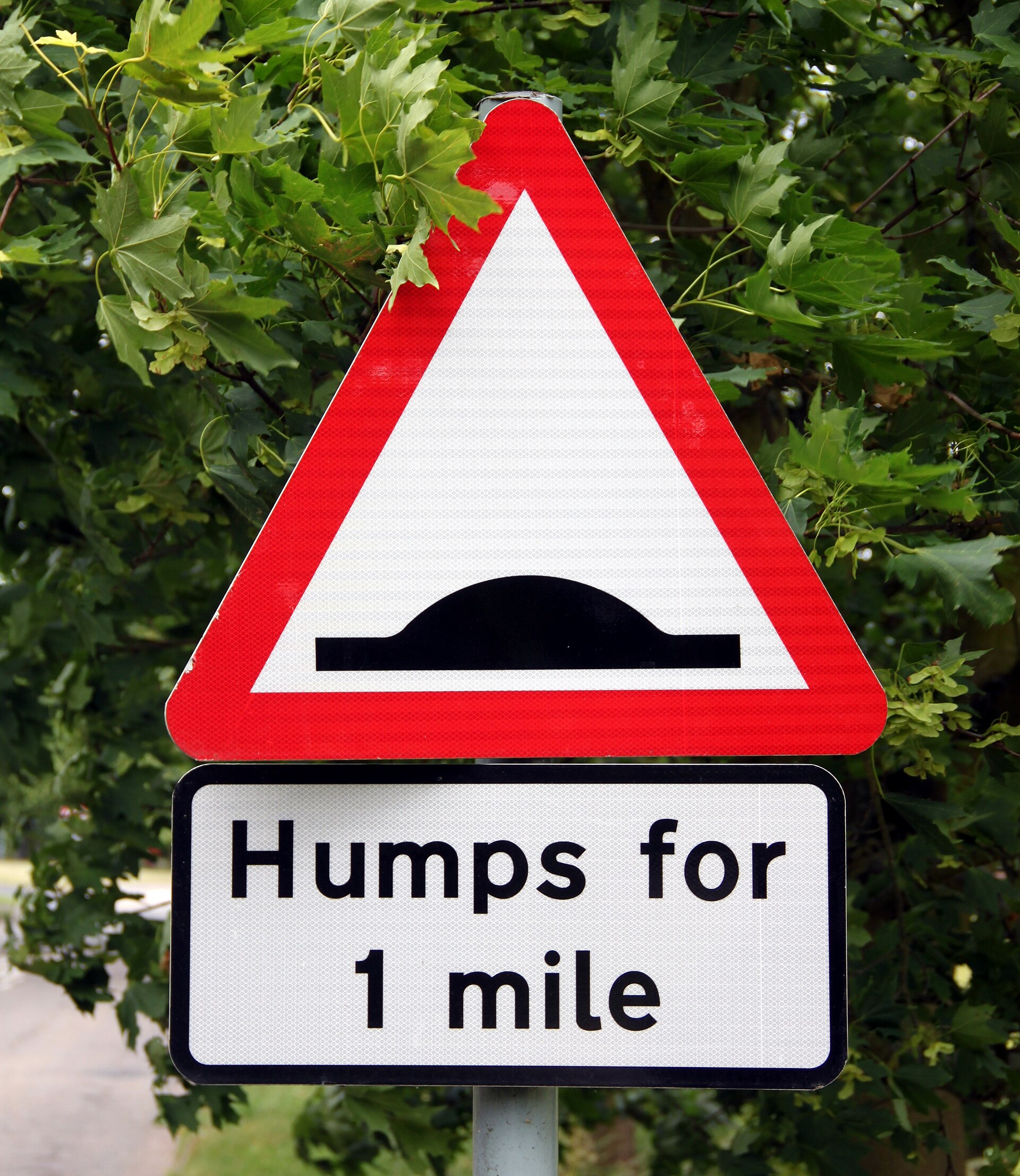
Speed bumps, humps, and cushions differ in shape because they control different amounts of speed for different vehicles: short, steep bumps force cars to slow to a near-crawl (mostly in parking lots), long, low-angle humps ease residential traffic down more gently, and cushions — humps broken into sections with gaps — let wide-axle vehicles like fire engines and buses straddle through while ordinary cars still get slowed.
A Nobel laureate declares war on speeders
Compton had won the 1927 Nobel Prize in Physics for showing that X-rays behave like particles, a finding that helped launch quantum mechanics. By 1953 he’d swapped the lab for the chancellor’s office at Washington University in St. Louis and was watching motorists barrel down Hoyt Drive past Brookings Hall. According to the university’s own library archives, his solution was what he called a ‘traffic control bump’ — he sketched two versions in his personal papers that summer, one with a single raised hump and one with two humps in sequence, and had them installed along Hoyt Drive that spring.
The bumps didn’t survive campus construction over the following decades, but they made enough of an impression that the university rebuilt a set in 1992 to mark what would have been Compton’s 100th birthday. To this day, Washington University fields questions from visitors curious whether their chancellor really invented the speed bump.
The bump he didn’t invent — and the fight that reshaped it
He didn’t, quite. Compton’s tidy origin story cracks the moment you check a newspaper from 47 years earlier. In June 1906, the New York Times reported that Chatham, New Jersey had raised its crosswalks five inches above the street to stop automobile speeding, calling it the first town in the country to try the idea. Compton’s version is simply better documented and better remembered.
What actually changed after 1953 was standardization — and eventually an argument about shape. Europe’s first public speed bump went in at Delft in the Netherlands in 1970; Britain didn’t legalize them on public roads until the Highways (Road Humps) Regulations of 1983, which specified long, low, round-topped humps rather than the sharper bumps Americans were used to. British drivers nicknamed them ‘sleeping policemen’ — hitting one at speed felt like running over an officer lying in the road.
Then came the backlash that actually explains why cushions exist. In December 2003, Sigurd Reinton, chairman of the London Ambulance Service, told a London Assembly transport committee that delays caused by road humps were contributing to as many as 500 avoidable cardiac-arrest deaths a year — a startling figure he later denied having said. Denied or not, the underlying complaint from ambulance crews and fire brigades was real and long-standing: a hump built to punish a speeding car also punished a fire engine racing to a house fire. Britain’s answer, folded into updated Highways (Road Humps) Regulations by 1999, was the speed cushion — a hump chopped into narrower sections with gaps on either side, sized so a fire truck’s wide axle can straddle it untouched while an ordinary car’s narrower wheelbase still climbs over.
The part most people miss
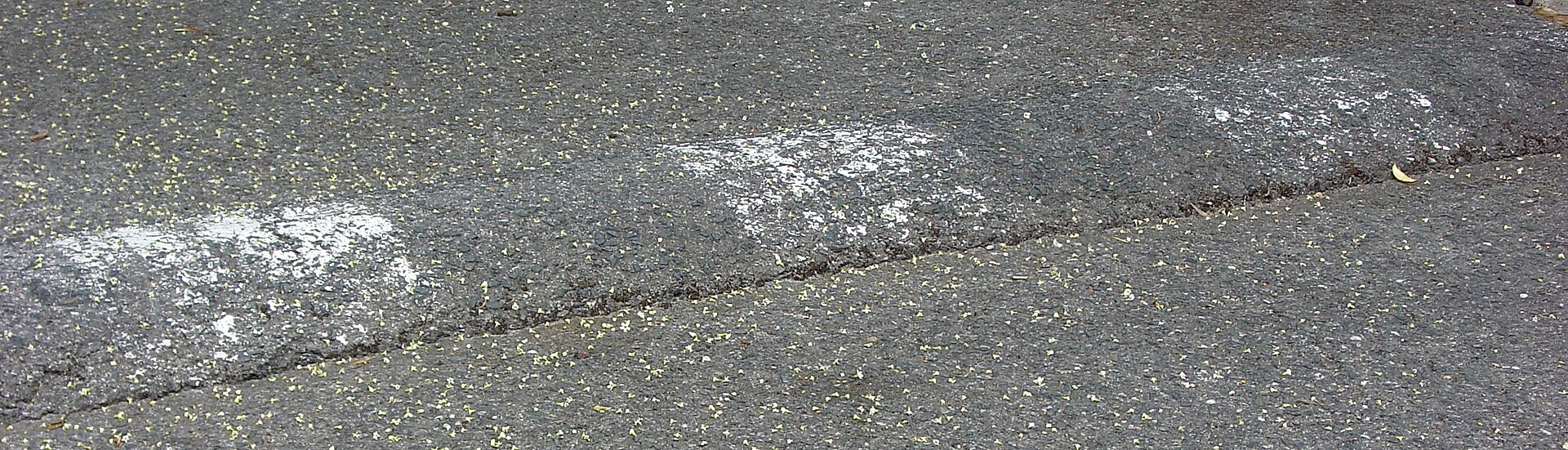
The shape of the bump under your tires is quietly doing geometry on your vehicle. A cushion’s gaps aren’t arbitrary — they’re spaced to match the axle track of the emergency vehicles and buses a town actually operates, so a fire engine can straddle the gap without any wheel touching the raised section, while a passenger car’s narrower stance means at least one wheel always lands on it. UK trials found fire crews could cross three-inch speed cushions 10 to 20 mph faster than they could cross standard humps of the same height, which is the entire point of the design. Even the plain ‘bump’ versus ‘hump’ distinction comes down to a length-to-height ratio: a short, steep rise forces a near-stop, a longer, gentler one just takes the edge off — and traffic engineers pick between them based on whether they’re managing a parking lot or somebody’s daily commute.
Sources
Washington University in St. Louis’s library archives on the ‘Compton Speed Bumps,’ which document Arthur Holly Compton’s 1953 designs and their 1992 reconstruction.
Wikipedia’s ‘Speed bump’ entry, cross-referencing the 1906 Chatham, New Jersey newspaper report, the 1970 Delft installation, and the 2003 London Assembly testimony from Sigurd Reinton.
Wikipedia’s ‘Speed cushion’ entry, detailing the UK’s Highways (Road Humps) Regulations and the engineering logic behind gapped cushions for wide-axle vehicles.
Explore more: More everyday object origin stories.
speed bumps FAQs
What’s the difference between a speed bump and a speed hump?
Speed bumps are short and steep — usually under a couple of feet long — and slow cars to walking pace, mostly in parking lots. Speed humps are much longer and lower, spanning roughly 12 feet, and are built for public streets where traffic still needs to keep moving at a moderate speed.
Why do speed cushions have gaps?
The gaps let vehicles with a wide wheel track — fire engines, ambulances, and buses — straddle the raised sections without ever driving over them, while an ordinary car’s narrower stance means its wheels still hit the humps and slow down.
Who really invented the speed bump?
Nobody owns the idea outright. Chatham, New Jersey, raised crosswalks to slow cars in 1906, decades before physicist Arthur Holly Compton built his well-documented ‘traffic control bumps’ at Washington University in St. Louis in 1953 — Compton just has the better paper trail.
Tales You Can Hold
Fun-facts books for curious kids, personalized books that star your child, and more from the FYI Tales Bookstore. Visit the Bookstore.
Photo: Vitaly Barsov / CC BY-SA 3.0, via Wikimedia Commons.