
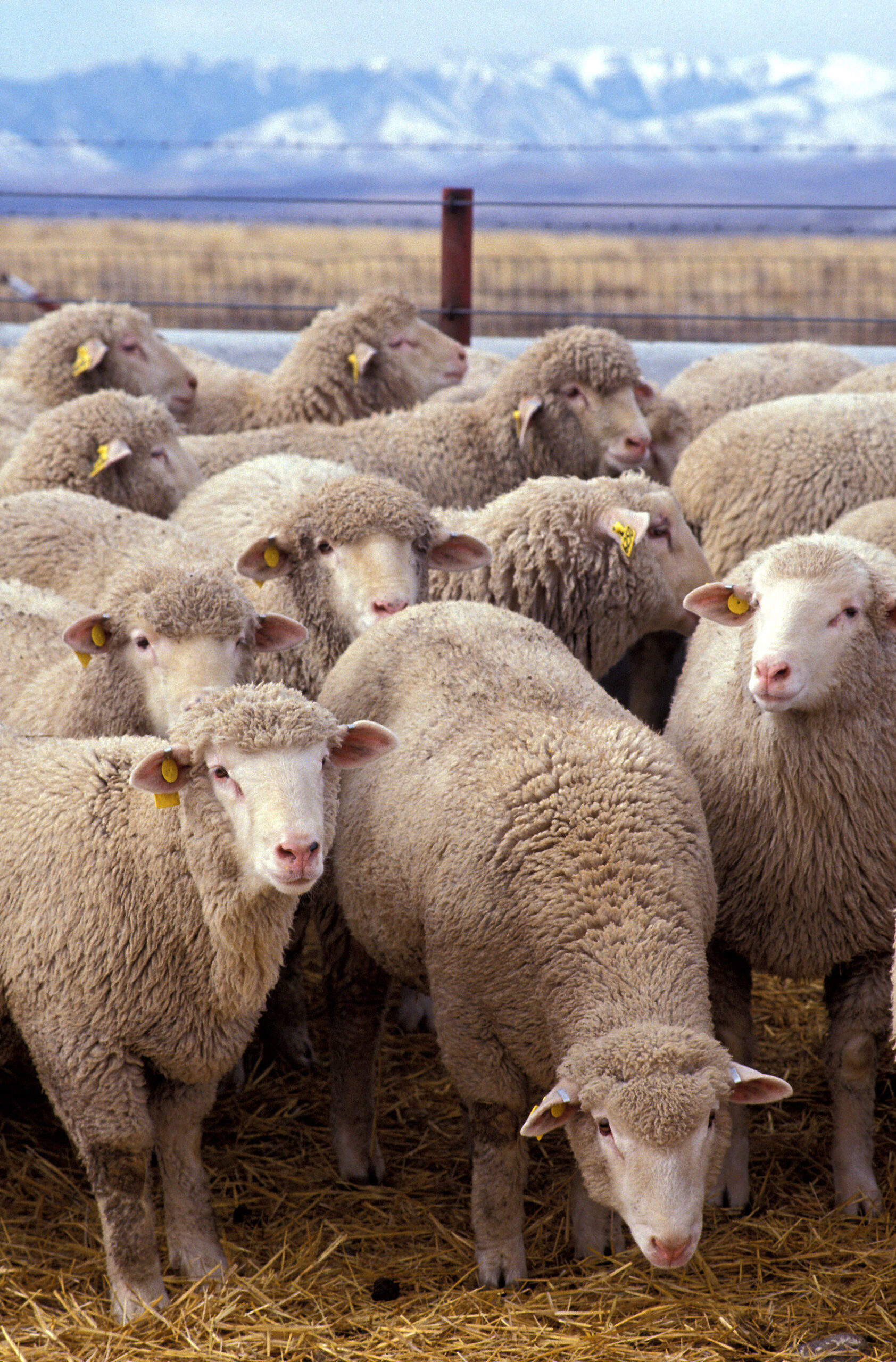
In 2017, eight sheep at the University of Cambridge were shown two photographs on computer screens — one a stranger, one a celebrity they’d been trained to recognize — and asked, essentially, to point. They didn’t have hands, so they used their noses to break an infrared beam under the correct picture. More often than not, they got it right.
Table of Contents
The sheep could pick Barack Obama’s face out of a lineup. They could do the same for Emma Watson, Jake Gyllenhaal, and news anchor Fiona Bruce. Then, without any training at all, they picked out a photo of the person who fed them every day. It turned out to be the opening move in a much bigger story about using sheep to study a devastating human disease.
Quick answer
A 2017 University of Cambridge study found sheep can learn to recognize human faces from flat, 2D photographs — including picking their own handler’s photo from a stranger’s without being trained to do it — because sheep have more sophisticated visual face-processing than most people assume.
A pen, two screens, and four celebrities
The study was led by Jenny Morton, a neuroscientist in Cambridge’s Department of Physiology, Development and Neuroscience, along with Franziska Knolle and Rita Gonçalves. They built a pen with two computer screens at one end. Sheep walked up, saw two faces, and chose one by breaking an infrared beam positioned in front of their pick. Choose the celebrity’s face correctly, and a dispenser dropped a food pellet. Choose wrong, and a buzzer sounded with nothing to show for it.
Over repeated trials, the sheep learned to recognize Barack Obama, Emma Watson, Jake Gyllenhaal, and Fiona Bruce from straight-on photographs, choosing the right face about 8 times out of 10. When researchers rotated the images to show the faces at an angle — a much harder task, since it strips away the simple trick of just memorizing a flat pattern — accuracy dropped, but only by around 15 percent, a decline similar in scale to what happens when humans are tested the same way.
The sheep that recognized their own shepherd
The more striking moment came when researchers slipped in a photo of each sheep’s own handler — someone who spent a couple of hours a day with the flock — paired against a stranger’s face. No training, no food-reward rehearsal for this specific photo. The sheep still chose the handler’s face about 7 times out of 10.
On the very first handler photo they saw, several sheep paused and did something researchers described as a double take: glance at the stranger’s face, glance at the handler’s face, glance back at the stranger, then commit to the handler. It reads, in the footage, exactly like a person squinting at two photos trying to place someone.
The part most people miss
The headlines in 2017 leaned hard into “sheep are basically as good at faces as humans and monkeys,” and that framing didn’t go unchallenged. In 2019, a group of face-perception researchers — Towler, Kemp, Bruce, Burton, Dunn, and White — published a formal critique in the same journal arguing the comparison was shakier than it sounded. Their case: the original study never tested humans on the identical task, so there was no apples-to-apples number to compare against; sheep topped out around 66 percent accuracy on novel, rotated images of learned faces, well below typical human performance on similar face-matching tasks; and sheep recognized brand-new faces about as well as very familiar ones, whereas humans get dramatically better at familiar faces — suggesting sheep might be relying on a different mechanism entirely, not a smaller version of the human one.
Two separate responses followed in the same journal, and neither came from Morton’s own team. Keith M. Kendrick, a neuroscientist whose earlier research the sheep-face study had built on, argued the critics had overlooked that sheep are simply better at recognizing sheep faces than human ones, just as the reverse is true for people. Then, in July 2019, University of Nottingham psychologist Jonathan W. Peirce published his own response — conceding that the original data didn’t fully support the boldest claims, but pointing to older experiments from Kendrick’s lab showing sheep display very human-like quirks around face processing, including a bias toward one side of the visual field and a boost in recognition when they’re socially familiar with the person. The debate over how far to push the comparison is, honestly, still part of the story.
What’s easy to miss underneath the celebrity-photo headlines is why Cambridge was running this experiment in the first place: it wasn’t really about sheep trivia. Morton’s lab studies Huntington’s disease, a genetic neurodegenerative disorder, and sheep — thanks to their large brains, long lifespans, and now-documented face-recognition ability — are used as an animal model for testing how the disease progresses and whether treatments can slow cognitive decline. Teaching sheep to recognize photographs wasn’t the finish line. It was a baseline test, proving the sheep’s visual recognition skills were sharp enough that researchers could later measure how those same skills deteriorate in sheep bred to carry the human Huntington’s gene.
Sources
University of Cambridge, Department of Physiology, Development and Neuroscience — press release on the facial-recognition study, November 2017.
Knolle, F., Gonçalves, R. P., and Morton, A. J., “Sheep recognize familiar and unfamiliar human faces from two-dimensional images,” Royal Society Open Science, 8 November 2017.
Towler, A., Kemp, R., Bruce, V., Burton, A. M., Dunn, J. D., and White, D., “Are face recognition abilities in humans and sheep really ‘comparable’?”, Royal Society Open Science, January 2019.
Peirce, J. W., “Do sheep really recognize faces? Evidence from previous studies. Response to ‘Sheep recognize familiar and unfamiliar human faces from two-dimensional images’,” Royal Society Open Science, 17 July 2019, University of Nottingham.
Explore more: More wild animal tales.
sheep FAQs
Can sheep really recognize human faces?
Yes — Cambridge researchers trained sheep to pick out specific celebrities’ faces from photographs with about 80% accuracy, and the sheep could also pick out a photo of their own handler without being specifically trained on it.
Which celebrities did the sheep recognize?
Barack Obama, Emma Watson, Jake Gyllenhaal, and British news presenter Fiona Bruce.
Why were scientists testing sheep on facial recognition?
Sheep are used as an animal model for studying Huntington’s disease, and the facial-recognition test gave researchers a way to measure sheep cognition that could later be compared against sheep carrying the disease gene.
Is it true sheep recognize faces as well as humans do?
That claim is disputed. The original study said sheep performance was ‘comparable’ to humans and monkeys, but a 2019 critique argued the study never tested humans on an identical task and that sheep accuracy was actually well below typical human results — a point two later responses, from researcher Keith Kendrick and University of Nottingham psychologist Jonathan W. Peirce, partly conceded even while defending the broader finding.
Tales You Can Hold
Fun-facts books for curious kids, personalized books that star your child, and more from the FYI Tales Bookstore. Visit the Bookstore.
Photo: Keith Weller / Public domain, via Wikimedia Commons.