
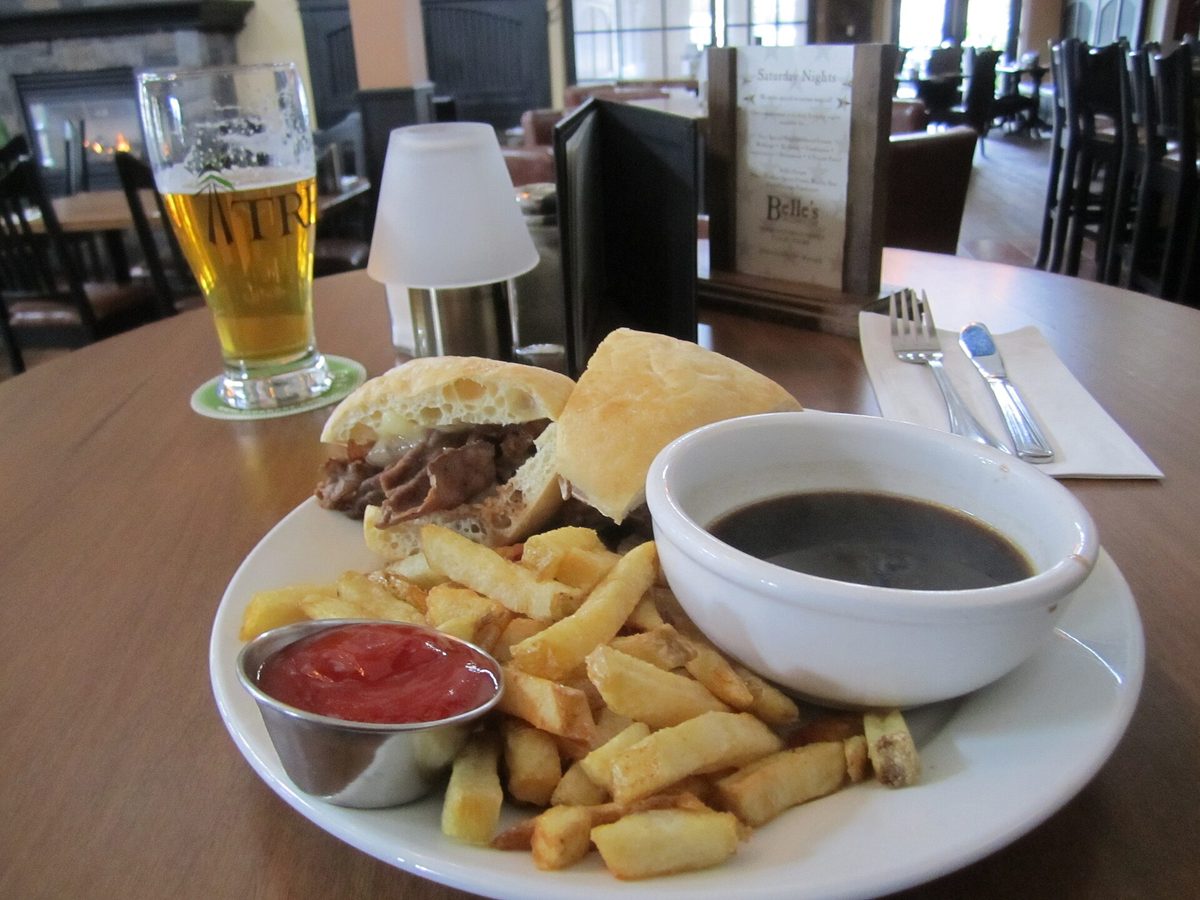
For most of the 20th century, you could walk into two different restaurants a few blocks apart in downtown Los Angeles and hear two completely different men credited with inventing the same sandwich. Philippe’s said it was their founder, a French immigrant named Philippe Mathieu. Cole’s said it was their own cook, a guy named Jack Garlinghouse, working for a boss named Harry Cole. Both restaurants put the claim on their menus, their walls, and their window signs. Neither one ever backed down.
Table of Contents
Here’s the strange part: nobody can actually prove either story. There’s no patent for a sandwich, no newspaper clipping from the exact day it happened, no surviving eyewitness. What survives is decades of oral history, two sets of grandchildren insisting their version is true, and a sandwich — roast meat on a roll, dunked in its own pan juices — that became one of LA’s defining dishes anyway. In 2026, after 118 years, one half of the rivalry finally closed its doors, which makes this as good a time as any to look at what the record actually shows.
Quick answer
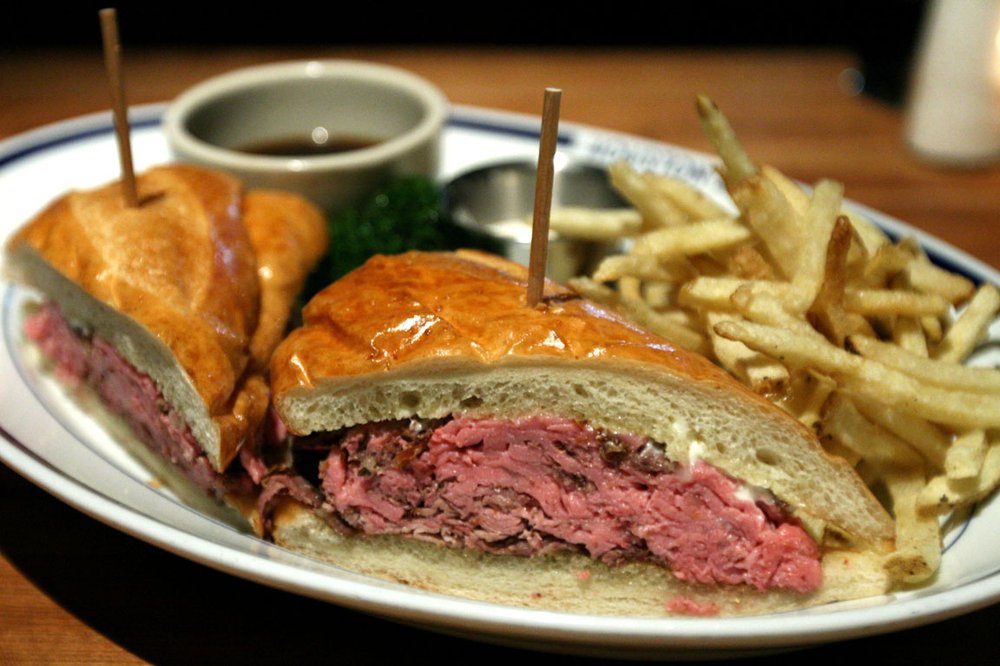
Nobody knows for certain. Philippe the Original and Cole’s Pacific Electric Buffet, both founded in downtown Los Angeles in 1908, have each claimed to have invented the French dip sandwich, and historians have never found documentation that settles it one way or the other.
Two restaurants, one birth year
Philippe Mathieu left France for Buffalo, New York, in 1901, then made his way to Los Angeles by 1903. In 1908, he opened a small restaurant near the city’s produce markets that’s still known today as Philippe the Original. That same year, across downtown, Harry Cole opened a bar and lunch counter called Cole’s Pacific Electric Buffet (also remembered as the Red Car Bar) on the ground floor of the Pacific Electric Building, the terminal that handled a huge share of the city’s streetcar commuters.
So both places agree on the founding year. Where they split is on when — and by whom — the dip itself happened. Cole’s says its version came almost immediately, in the restaurant’s earliest days. Philippe’s own telling puts its version a decade later, around 1917 or 1918.
Two origin stories, neither one documented
Cole’s account, as later recounted by longtime staff and owners — including bartender Jimmy Barela in a Los Angeles Times interview — involves a customer with sore gums who couldn’t manage a hard French roll. The request, as Barela remembered it: ‘Can you tip the bun into the juice? They are too hard. They hurt my gums.’ The cook, remembered as Jack Garlinghouse, dunked the bread in the roasting pan’s gravy. Other diners saw it, wanted the same thing, and a menu item was born.
Philippe’s own account comes straight from Mathieu, in a 1951 Los Angeles Times interview — and it doesn’t involve a fireman or a dropped roll at all. Mathieu said a customer noticed gravy pooling in the bottom of a pan of roast meat and asked if he’d mind dipping one side of a French roll in it. Mathieu did, and five or six other customers immediately wanted the same thing. He ran out of gravy that day; the next morning he had a full gallon ready, and ran out again. His original version used roast pork, not beef, served with pickles, onions, and olives on the side.
The fireman story — stale bread dropped or swiped into the drippings, the one most often repeated today — doesn’t come from Mathieu himself. It surfaced decades later, told by his grandson, Philippe Guilhem, long after Mathieu’s own account was already on the record. Both versions agree on the basic physics (bread meets pan juice, a customer approves, word spreads), but they disagree on who started it and how — which says less about what happened in 1917 and more about how a family story can drift across generations, even inside the restaurant that owns the legend.
Either way, no menu, receipt, or newspaper item from 1908–1918 has surfaced to confirm Philippe’s or Cole’s claim. That’s the honest state of the evidence: competing legends, both missing a paper trail from the actual year in question.
The part most people miss
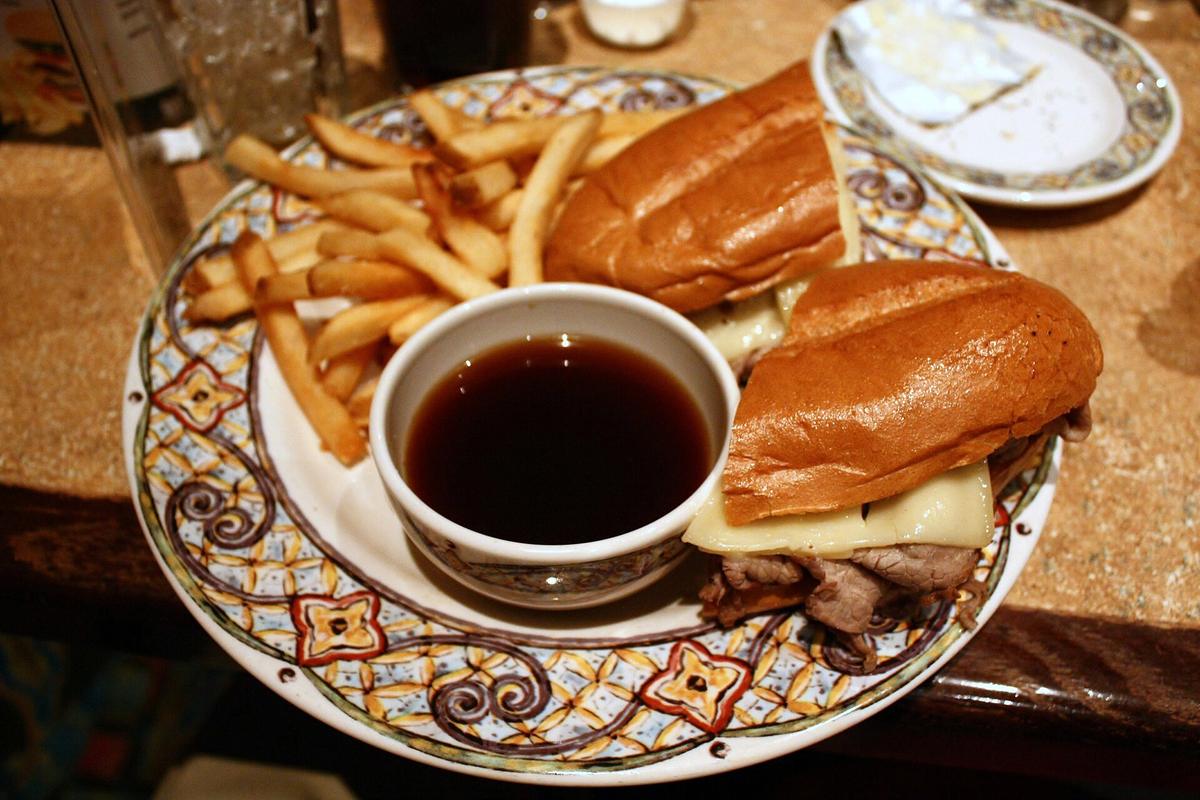
The fight got an official-looking stamp of legitimacy in 1972, when the City of Los Angeles designated Cole’s a Historic-Cultural Monument (No. 104) — but that designation recognized the building and restaurant’s historic standing in the city, not a verified claim to inventing anything. Philippe’s, for its part, never got a matching landmark designation, but it didn’t need one: it built its own legend into its branding, putting ‘Home of the Original French Dip Sandwich’ right on its sign, and it’s the restaurant most tourists associate with the dish today. Neither claim has ever been adjudicated by a historian, a court, or anyone else with the authority to end the argument — it has survived purely on reputation, signage, and stubbornness. And after 118 years, that argument lost one of its two originators: Cole’s, owned since the 2000s by Cedd Moses’s hospitality group, closed on March 29, 2026, after a year of announced-then-delayed closures driven by rent, the pandemic’s long tail, and the 2023 strikes. Philippe’s, meanwhile, is still open, still serving, and now the only one of the two left standing to tell its version of the story.
Sources
Chowhound’s history of Cole’s Pacific Electric Buffet and its French dip origin claim, including the 1993 Los Angeles Times interview with bartender Jimmy Barela.
Tasting Table’s reporting on the century-long rivalry between Philippe’s and Cole’s, which lays out Philippe Mathieu’s own 1951 Los Angeles Times account of the gravy-dipping request separately from the later fireman story told by his grandson, Philippe Guilhem.
Los Angeles Magazine’s coverage of Cole’s final closure in March 2026 after 118 years, and its earlier reporting on the restaurant’s history in the Pacific Electric Building.
Explore more: More true food origin stories.
French dip sandwich FAQs
Did Philippe’s or Cole’s really invent the French dip?
No one can say for sure. Both downtown LA restaurants opened in 1908 and have told competing stories for over a century, but neither has surviving documentation from the time to prove it.
Is Cole’s French Dip still open?
No. Cole’s closed on March 29, 2026, after 118 years in business, citing rent, labor costs, and the lasting effects of the pandemic and 2023 strikes.
What did the original French dip sandwich look like?
Philippe Mathieu’s own 1951 account described roast pork, not beef, served with pickles, onions, and olives — closer to a French-style cold cut plate than today’s beef-and-jus version.
Did a fireman really invent the French dip at Philippe’s?
That version wasn’t told by founder Philippe Mathieu. He described a customer simply asking him to dip the roll in gravy. The fireman-and-stale-bread story came decades later from his grandson, Philippe Guilhem.
Tales You Can Hold
Fun-facts books for curious kids, personalized books that star your child, and more from the FYI Tales Bookstore. Visit the Bookstore.
Photo: Vranak / CC BY-SA 3.0, via Wikimedia Commons.