
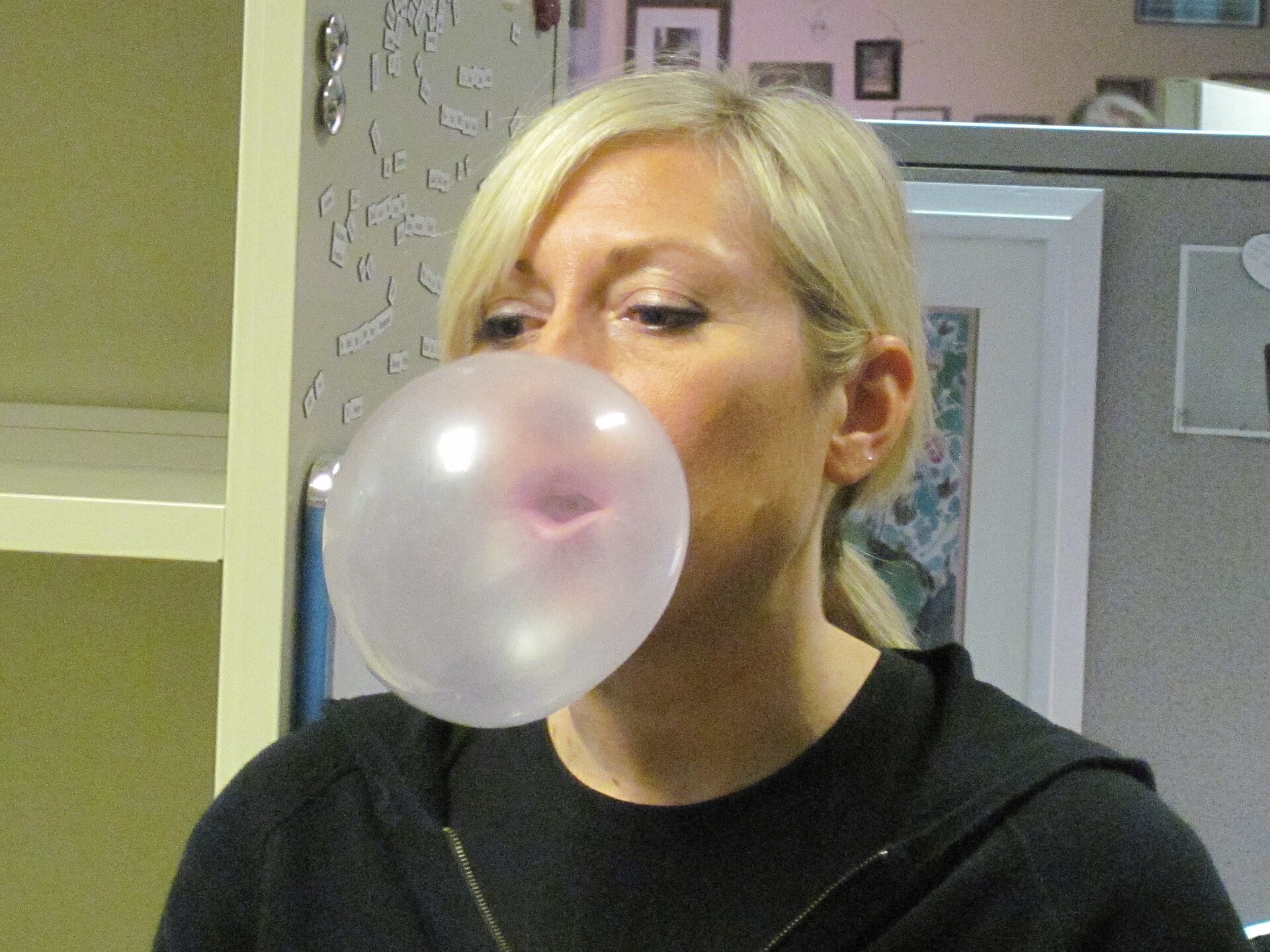
In late 1928, a 23-year-old accountant named Walter Diemer finished mixing a batch of gum in a back room of the Fleer Chewing Gum Company in Philadelphia, and it was ugly. Gray, like wet cement. He’d spent months sneaking into the lab after hours trying to invent something no one had managed to make work: a gum stretchy enough to blow into a bubble without falling apart. He’d finally cracked the formula. The color, though, was a problem for a candy nobody was going to buy looking like that.
Table of Contents
So he grabbed the only food coloring sitting around the factory. It happened to be pink. He tinted the whole 300-pound batch, then hand-wrapped about 100 individual pieces on a taffy machine and carried them to a single Philadelphia candy store, where they sold for a penny apiece. Every piece was gone within a day — and nearly a century later, bubble gum is still, overwhelmingly, that same shade of pink, for no better reason than that’s what was on the shelf that afternoon.
Quick answer
Bubble gum is pink because Walter Diemer, the Fleer Chewing Gum Company accountant who invented the modern recipe in 1928, happened to have only one food dye on hand in the factory — pink — to cover up the gray color of his finished formula. It became Dubble Bubble, a runaway hit, and pink stuck as the industry’s default ever since.
An accountant breaks into the lab
Fleer wasn’t new to the bubble-gum problem. Company founder Frank Fleer had patented his own attempt back in 1906, a gum he called Blibber-Blubber, but it never made it to market — too sticky, and it fell apart the moment anyone tried to blow it into a bubble. The idea sat shelved for more than two decades.
Walter Diemer wasn’t a chemist. He was a cost accountant at Fleer with no formal training in the chemistry of gum bases at all. That didn’t stop him from spending his evenings in the company’s small lab, tinkering with batches on his own time, trying to find a formula elastic enough to stretch into a bubble but dry enough not to stick to everything it touched. According to accounts of Fleer’s own company history, he worked at it for months before landing on a mix that finally behaved the way he wanted — less tacky than regular chewing gum, with just the right stretch.
The only color in the building
The winning formula came out an unappealing gray. Diemer needed to dye it something a kid would actually want to put in their mouth, and the only food coloring anyone could find around the factory that day was pink. He diluted it down and tinted the full 300-pound batch.
Rather than ship the whole batch out, Diemer hand-wrapped about 100 individual pieces using a salt-water-taffy machine and personally carried just those to one local Philadelphia candy store, pricing them at a penny apiece. That small test run sold out in a single day. Fleer named the product Dubble Bubble, and to help move the rest of the batch, Diemer personally trained the company’s traveling salesmen to blow bubbles, since most of them — like Diemer himself a few months earlier — had no idea how. First-year sales topped $1.5 million.
The part most people miss
Diemer never patented the formula and never collected a royalty on Dubble Bubble — he was a salaried employee, and the invention belonged to Fleer. He stayed with the company for decades anyway, eventually rising to senior vice president before retiring in 1970. In his later years, he reportedly told his wife the thing he was proudest of wasn’t his title: “I’ve done something with my life. I’ve made kids happy around the world.” After she passed away, he was known to ride a tricycle around his Pennsylvania retirement community handing out free bubble gum to children. The bigger twist, though, is about the color itself: pink was never chosen for any marketing reason — no focus group, no color psychology, nothing. It was simply what was left in the cupboard that day. But because Dubble Bubble became the template every competitor copied, pink calcified into the unofficial industry standard, and manufacturers kept using it long after they had every color imaginable available to them. The accident became the brand.
Sources
Wikipedia’s entry on Walter Diemer, covering his biography, career at Fleer, and the 1928 invention.
Wikipedia’s entry on Dubble Bubble, detailing the Fleer company’s earlier Blibber-Blubber attempt, the 300-pound batch, and the 100-piece test run at one candy store.
Billy Penn (billypenn.com), a Philadelphia local news outlet, on the city’s bubble-gum origin story and Fleer Corporation’s history.
Explore more: more accidental inventions.
bubble gum FAQs
Why is bubble gum pink?
Because in 1928, Fleer Chewing Gum Company accountant Walter Diemer had only one food dye available in the factory — pink — to color his newly invented, otherwise gray bubble gum formula. The shade stuck as the industry default.
Who actually invented bubble gum?
Walter Diemer, a 23-year-old accountant (not a chemist) at the Fleer Chewing Gum Company in Philadelphia, developed the first commercially successful bubble gum formula in 1928, sold as Dubble Bubble.
Did Walter Diemer get rich from inventing bubble gum?
No. He never patented the formula and received no royalties — only his regular salary from Fleer, where he worked for decades, eventually becoming senior vice president before retiring in 1970.
Tales You Can Hold
Fun-facts books for curious kids, personalized books that star your child, and more from the FYI Tales Bookstore. Visit the Bookstore.
Photo: Jim McCluskey from Everett, Washington, United States / CC BY 2.0, via Wikimedia Commons.