
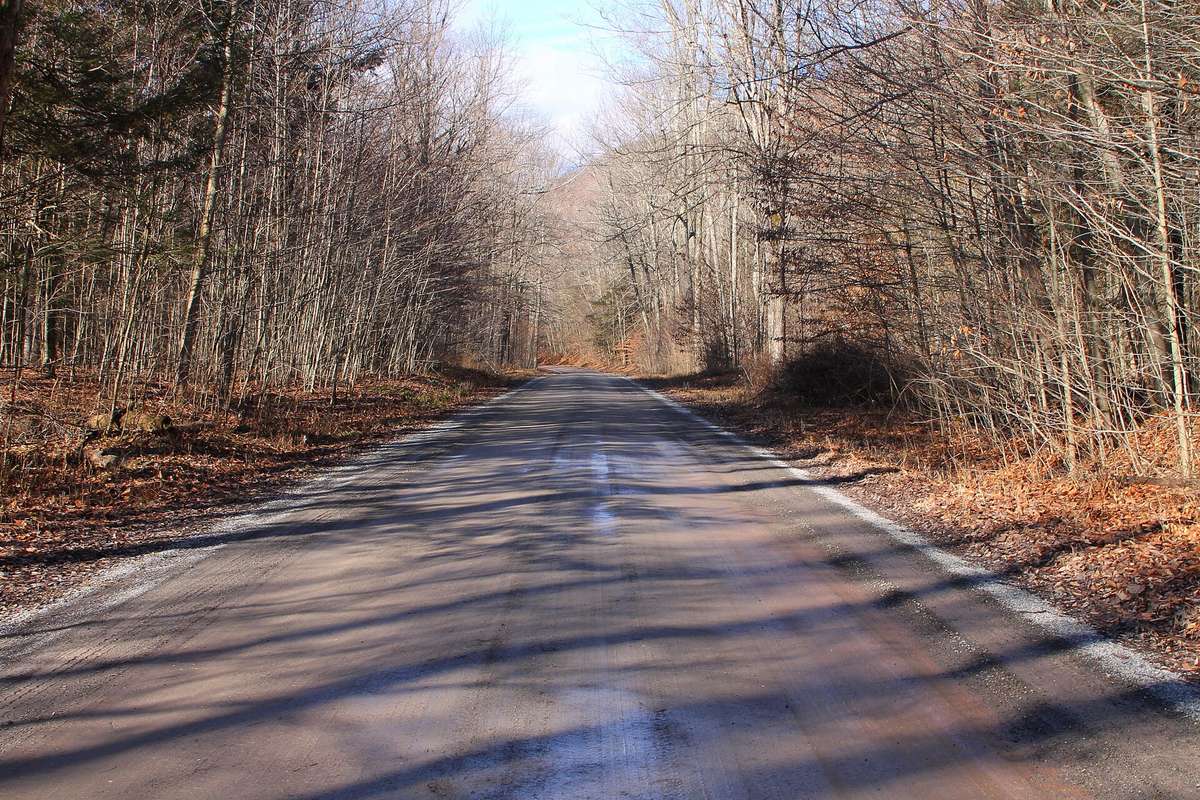
Say “boondocks” and most Americans picture dirt roads, no cell signal, and a gas station that closes at six. What almost nobody pictures is a mountain in the Philippines — but that’s exactly what the word means, word for word, in its original language.
Table of Contents
“Boondocks” comes from the Tagalog word bundok, meaning simply “mountain.” It crossed into English on the lips of American soldiers and Marines occupying the Philippines in the early 1900s, and it spent decades as insider military slang before finally crawling into everyday American speech.
Quick answer
“Boondocks” comes from the Tagalog word bundok (“mountain”). American soldiers and Marines stationed in the Philippines after the Philippine-American War (1899–1902) borrowed it to describe any remote, rugged terrain, and the word stayed largely confined to military slang for decades before entering mainstream English.
A war, a grammar book, and a word that wouldn’t leave
The United States took the Philippines from Spain in 1898, then spent 1899 to 1902 fighting Filipino insurgents who had no interest in trading one colonial ruler for another. American troops stayed on for decades afterward as an occupying force, and they picked up Tagalog words the way soldiers stationed anywhere pick up the local vocabulary — not out of scholarly interest, but because the words described things English didn’t have a ready term for.
Bundok was one of those words. In Tagalog it just means “mountain,” descended from an ancient Proto-Malayo-Polynesian root. But to American soldiers slogging through the Philippine highlands chasing guerrillas, “the bundok” meant something more specific: the wild, trackless country away from any town, base, or road. According to etymologist David Wilton, the first documented step toward English came in 1905, when U.S. Army officer W.E.W. MacKinlay published A Handbook and Grammar of the Tagalog Language and glossed the phrase “Ang bundok” simply as “The mountain.” Within a decade, soldiers’ letters home were already using an anglicized version. A letter printed in the New York newspaper Allegany County News on February 8, 1914, mentions “maneuvers in the boondocks,” and a sailor’s letter published that October in Missouri’s Walnut Grove Tribune refers to “the bondocks roundabout.” Dictionaries followed soon after, defining it as both the literal Philippine mountain and, in everyday English, the hills and woods in general — any place far from a population center.
From Marine slang to the whole country’s vocabulary
For decades, having a dictionary entry didn’t make “boondocks” a popular word. It stayed almost exclusively inside the Marine Corps and the Army — in-group slang passed from one deployment to the next, popping up in places like the Marine Corps magazine Leatherneck rather than in everyday civilian conversation. World War II gave the word a cousin: “boondockers,” the nickname Marines and sailors gave their heavy, rugged field shoes, built for exactly the kind of terrain the word described.
Here’s where the popular version of this story gets it wrong: Vietnam is often credited with coining the clipped form “boonies,” but the paper trail says otherwise. A wire story the Associated Press sent out on March 3, 1954 — more than a decade before American ground troops landed in Vietnam — already used “boonies” as settled slang. It was about Saipan, ten years after the island’s brutal World War II battle: “Remember Garapan? That was the biggest town before the fighting. It doesn’t even exist today. The jungle — everyone here calls it the boonies — has taken over.” So “boonies” wasn’t born in a Vietnamese jungle; it had already been circulating among Pacific-based U.S. servicemen for at least a decade. What Vietnam did was broadcast it: Time magazine ran a 1965 piece defining “BOONIES” for civilian readers as “short for boondocks, an unaffectionate term for the back country where the fighting and the living are rough,” and Vietnam-era news coverage and returning veterans carried the term the rest of the way into mainstream American English.
The part most people miss
There’s a popular folk theory floating around that “boondocks” comes from “Boone’s docks” — some imagined backwoods landing tied to frontiersman Daniel Boone, whose name is genuinely attached to dozens of real American places. It’s a tidy story, and it’s wrong; there’s no documented link between Boone and the word at all, just a coincidental sound-alike that folk etymology latched onto. The real chain of custody runs straight from Tagalog to Philippine-era military slang to the Pacific theater of World War II, with the paper trail to prove it — including that overlooked 1954 Saipan dispatch, which quietly undercuts the tidy “Vietnam coined it” story the same way the Boone story gets debunked. The deeper irony is what happened to the word’s meaning along the way: in the Philippines, bundok is a completely neutral, descriptive word — it just means mountain, the way “hill” or “valley” does in English. It was only after American soldiers exported it that it picked up its condescending edge, becoming shorthand for “backward” and “cut off from civilization.” A geography word turned into a judgment, and the judgment is the part of the word’s history that quietly got left out of most casual retellings.
Sources
David Wilton, “Boondocks / Boonies,” Wordorigins.org — the fullest documented timeline, including the 1905 Tagalog grammar book, the 1914 soldiers’-letter citations, and the 3 March 1954 Associated Press dispatch about Saipan that predates Vietnam-era use of “boonies.”
Merriam-Webster, dictionary entry for “boondocks” — etymology note tracing the word to Tagalog bundok and its path into standard dictionaries.
Mental Floss, “Why Do We Call the Country ‘the Boonies’?” — on the Vietnam-era mainstreaming of the clipped form and the 1965 Time magazine citation.
Explore more: More true stories behind everyday words and phrases.
Frequently Asked Questions
What does “bundok” mean in Tagalog?
It simply means “mountain.” It’s a neutral, descriptive word in the Philippines with none of the dismissive connotation it later picked up in English.
Did “boondocks” come from Daniel Boone?
No. That’s a popular folk etymology based on the sound-alike name, but there’s no documented connection. The word traces directly to the Tagalog bundok, carried into English by American troops in the Philippines.
Did U.S. troops coin “boonies” during the Vietnam War?
No. A documented Associated Press wire story from March 3, 1954 — about Saipan, a decade after World War II’s fighting there — already used “boonies” as established slang, more than ten years before American ground troops arrived in Vietnam. Vietnam-era media and veterans popularized the word nationally, but didn’t coin it.
What are “boondockers”?
The nickname U.S. Marines and sailors gave their rugged field shoes during and after World War II, named for the rough terrain the boots were built to handle.
Tales You Can Hold
Fun-facts books for curious kids, personalized books that star your child, and more from the FYI Tales Bookstore. Visit the Bookstore.
Photo: Jakec / CC BY-SA 4.0, via Wikimedia Commons.