

In July 1879, the Chicago Daily Tribune ran a tongue-in-cheek piece about ostriches, claiming the birds could digest almost anything lying around a cavalry camp: old nails, tin cans, and scraps of ‘hay wire.’ It’s one of the earliest known appearances in print of a word that, within thirty years, would become an insult aimed at cheapskate logging crews — and within fifty, a byword for anything spinning wildly out of control.
Table of Contents
That word is haywire, and the story of how it got from barnyard chore to ‘gone haywire’ runs through logging camps in the American Northwest, a 1905 government pamphlet on timber slang, and a small-town telephone company that really should have upgraded its lines sooner.

Quick answer
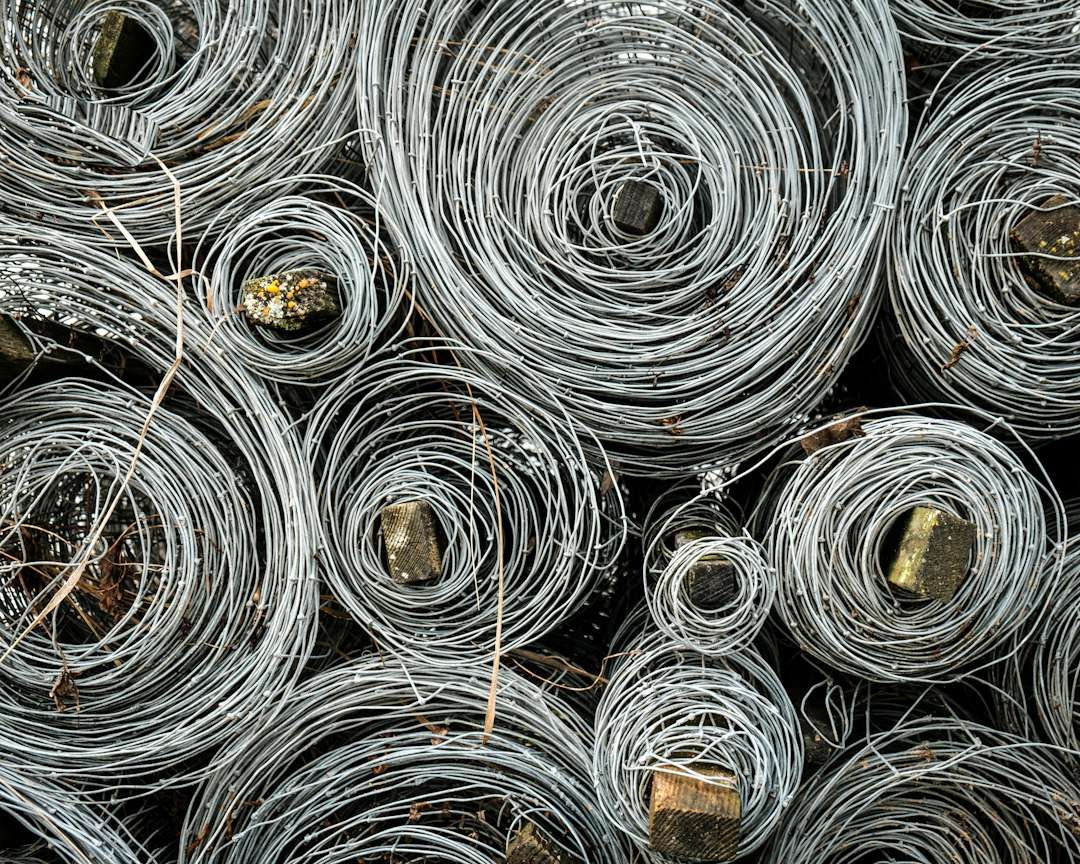
Haywire was the cheap, soft wire used to bind hay into bales. Loggers and farmhands kept leftover scraps around camp and used them to patch almost anything — tool handles, furniture, stovepipes — so an operation held together with it got mocked as a ‘hay-wire outfit.’ That contemptuous sense of ‘cheap and barely functional’ hardened into ‘go haywire,’ meaning to break down or go chaotically wrong, by the late 1910s.
The all-purpose fix of the logging camp
Baling wire was never meant to last — it was sold by the coil, cheap and plentiful, meant to be cut once and discarded after it held a hay bale together for shipping. But on farms, and especially in logging camps, nobody threw out wire that still had use left in it. In his 1938 history of lumberjack culture, Holy Old Mackinaw, writer Stewart Holbrook described loggers winding haywire around split axe helves, wrapping it around the handles of peaveys (the long hooked poles used to roll logs), and, in one memorable case, restringing a broken zither with it.
It wasn’t only loggers. A 1900 item in the Washington, D.C. Evening Times describes a once-grand coach belonging to streetcar magnate Henry Hart as so battered it was literally ‘mended with hay wire’ — too embarrassing, the paper joked, for even a cab driver to be caught in. Hay wire was the duct tape of the pre-automobile era: ugly, obvious, and a dead giveaway that something had run out of money before it ran out of problems.
When ‘hay-wire’ became a government-recognized insult
By the first decade of the 1900s, loggers had turned the material into a label for an entire operation. A camp too poor or careless to buy proper gear got dismissed as a ‘hay-wire outfit’ or ‘hay-wire show,’ as opposed to a well-run ‘candy show.’ The put-down was common enough to earn a formal citation: a 1905 U.S. Department of Agriculture, Bureau of Forestry bulletin titled Terms Used in Forestry and Logging recorded ‘hay-wire outfit’ as slang from the Northern Forest region, defining it as a contemptuous term for a poorly equipped crew.
Newspapers picked up the sting fast. In 1909, the Virginia Enterprise of Virginia, Minnesota, reported that when a theater curtain malfunctioned onstage, a ‘murmur of hay-wire’ rippled through the audience — shorthand for ‘this town still doesn’t have a real opera house.’ In 1912, the Bessemer Herald in Michigan needled the local phone company over its ‘antiquated, hay wire outfit,’ promising readers a modern exchange was coming. By then the word had stopped being about wire at all; it was about anything cobbled together and embarrassing.
The verb phrase followed close behind, and it shows up first attached to machines, not moods. A 1918 item in the Warren Evening Times of Pennsylvania — a Friday-the-13th joke column — reported that an associate editor’s typewriter ribbon ‘went haywire,’ prompting ‘a little cussing.’ A 1919 garage advertisement in the St. Helens Mist, in Oregon, promised repairs ‘if your car goes HAYWIRE on the road.’ By 1921, an Ironwood, Michigan paper was blaming the local electric company because ‘the juice has gone haywire.’ By 1927, the Burlington Hawk Eye in Iowa caught the phrase crossing into matters of the heart, printing the line ‘I’ve gone hay-wire about you’ — chaos officially promoted from machines to people.
The part most people miss
The popular version of this story pictures a loose coil of wire sprung from its spool, snapping and curling into a wild, impenetrable tangle — and that image does capture something real; cut hay wire under tension really would spring apart and knot itself into a mess. Plenty of old-timers point to that as the reason ‘haywire’ means ‘out of control.’ But in 1942, Elrick B. Davis, who spent years collecting logging-camp vocabulary for the journal American Speech, pushed back on exactly that explanation. Dictionary writers, he wrote, had guessed the word came from ‘a tangled mess of wire snarls’ — but the real origin was simpler and less poetic: it was just junk wire, reused to fix things that were already broken, over and over, until ‘haywire’ meant ‘cheap and improvised’ long before it meant ‘chaotic.’ The tangle theory sounds more satisfying. The receipts point to a cheaper story: an insult about bad equipment that slowly grew teeth.
Sources
Michael Quinion’s etymology site World Wide Words traces the newspaper record of ‘hay wire’ and ‘gone haywire’ from an 1881 Colorado Springs citation through the 1920s.
Pascal Tréguer’s Word Histories antedates the Oxford English Dictionary’s 1917 date with an 1879 Chicago Daily Tribune find and documents the 1905 USDA Bureau of Forestry bulletin that first recorded ‘hay-wire outfit.’
Journalist Livia Gershon, writing for JSTOR Daily, draws on logger Elrick B. Davis’s 1942 American Speech article ‘Paul Bunyan Talk’ for the direct rebuttal of the tangled-wire theory and the ‘haywire show’ versus ‘candy show’ distinction.
Explore more: More stories behind everyday words and phrases.
Frequently Asked Questions
What does ‘gone haywire’ mean?
To go haywire means to break down, malfunction, or spiral into chaos — whether describing a machine, a plan, or, by the 1920s, a person’s emotions.
Where does the word ‘haywire’ come from?
It comes from the cheap wire used to bind hay bales in the late 1800s. Loggers reused the scraps for makeshift repairs, and a camp that ran on patched, improvised gear was mocked as a ‘hay-wire outfit’ — a sense first recorded in a 1905 U.S. Department of Agriculture bulletin on logging slang.
Is ‘haywire’ about tangled wire snapping out of control?
That’s the popular explanation, and it’s plausible — cut baling wire really does snarl and spring unpredictably. But logging historian Elrick B. Davis argued in 1942 that the real root was simpler: haywire meant ‘cheap and jury-rigged’ long before it meant ‘chaotic.’
Tales You Can Hold
Fun-facts books for curious kids, personalized books that star your child, and more from the FYI Tales Bookstore. Visit the Bookstore.
Photo by Dennis Brekke on Unsplash.