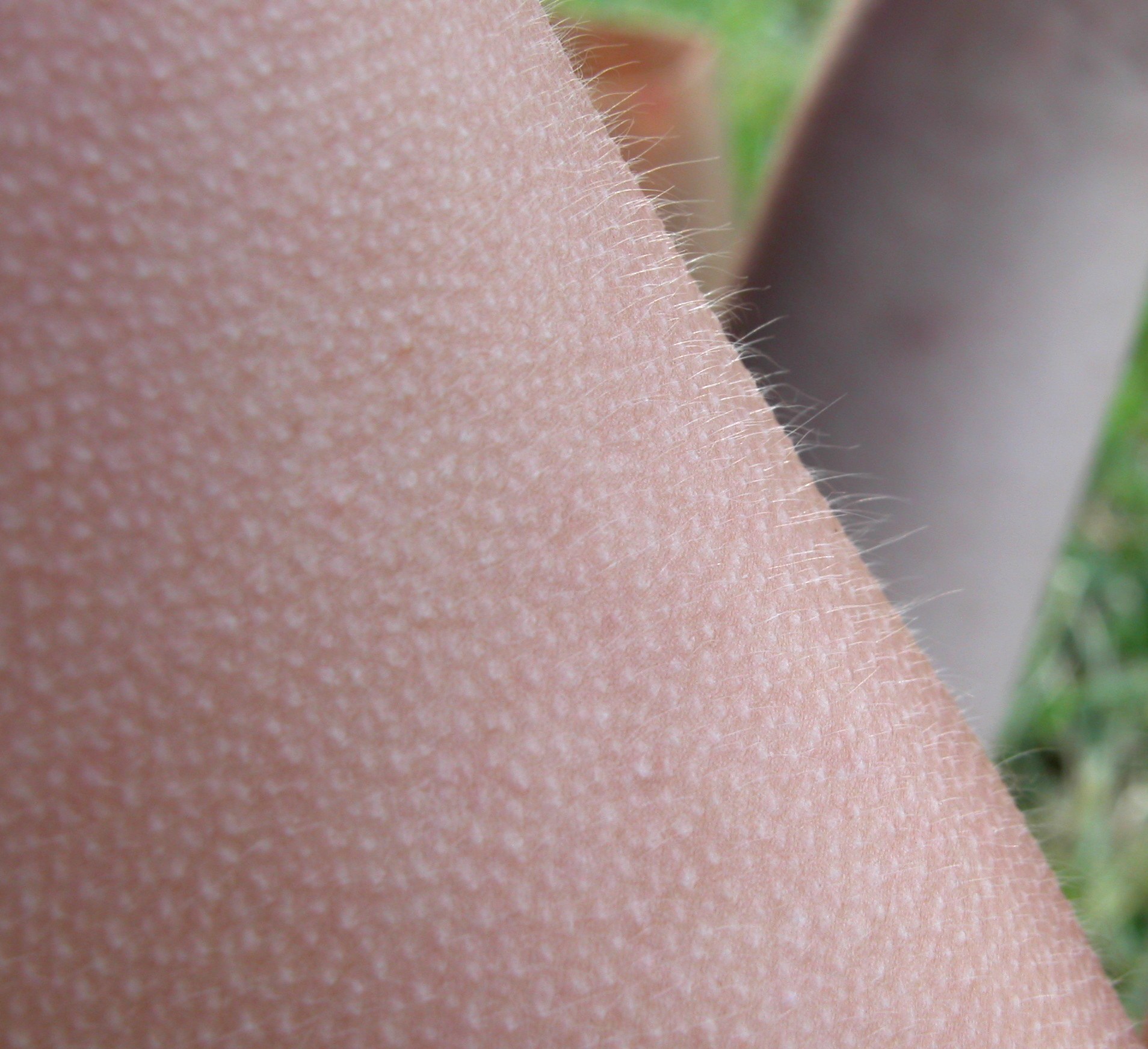
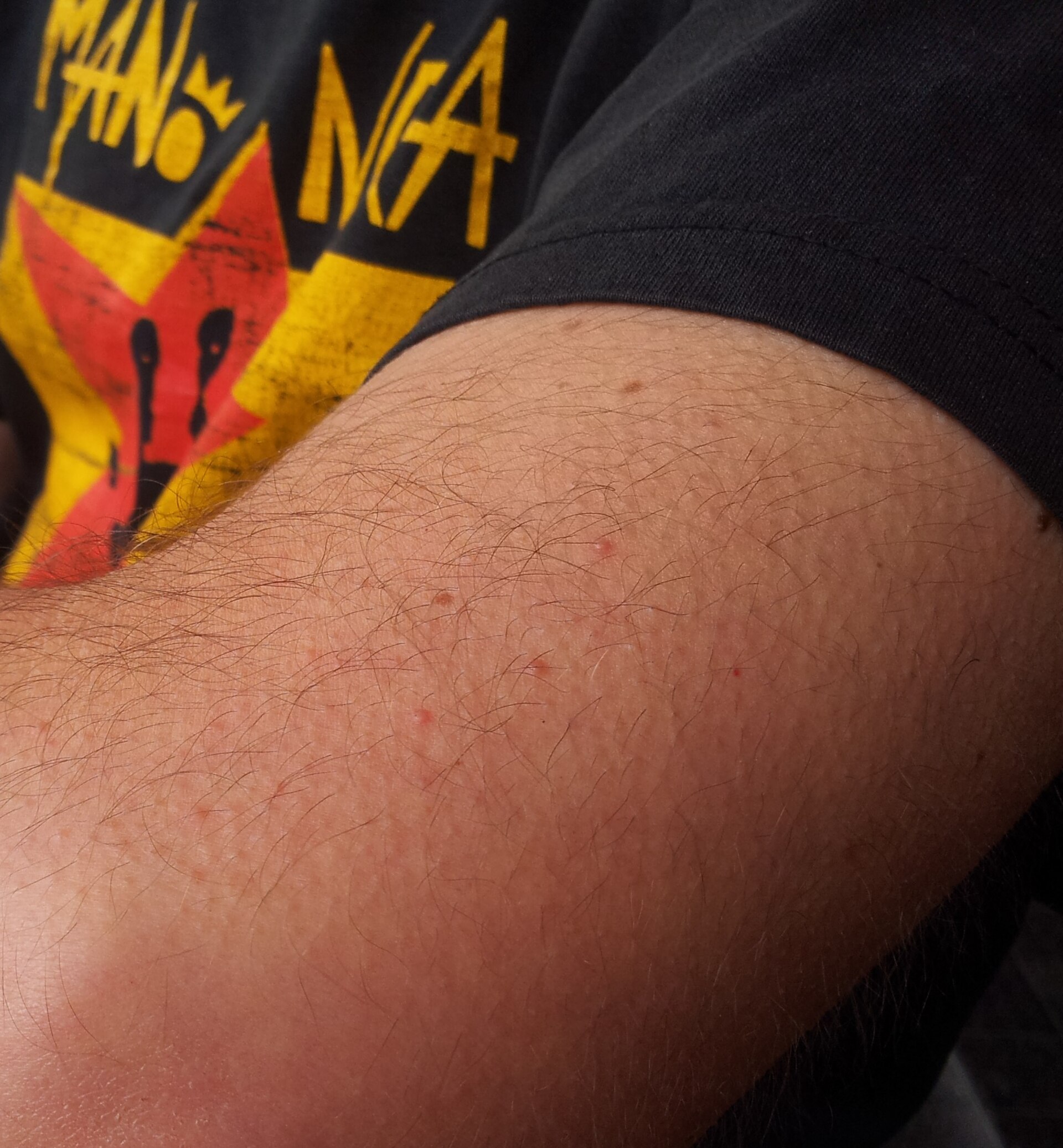
You’re watching a sad movie, or you step out of a hot shower into cold bathroom air, and suddenly the hair on your arms stands up in a field of little bumps. Somewhere under your skin, a muscle you’ve never once consciously flexed just fired off — trying to fluff up a coat of fur you don’t actually have.
Table of Contents
That reflex is real, it’s ancient, and for a long time nobody could say why the body still bothers with it. Charles Darwin had a theory back in 1872. Then, in 2020, a Harvard lab found something Darwin never could have guessed: the ‘useless’ muscle behind your goosebumps has a second job, and it’s still on the clock.
Quick answer
Goosebumps happen when tiny smooth muscles called arrector pili — one attached to the base of nearly every hair follicle — contract and yank the hair upright. In thick-furred animals, that motion traps a warm layer of air or makes the animal look bigger to a threat. In humans, who lost most of that fur, the muscles still fire on cue; they just don’t have enough hair left to accomplish either job.
A muscle with nothing left to lift
The arrector pili muscle is controlled by the sympathetic nervous system, the same ‘fight or flight’ wiring that speeds up your heart and dries out your mouth. Cold skin, sudden fear, a swell of awe, even a favorite chord change in a song can all trip the same switch, which is why you can get chills from a symphony as easily as from a snowstorm. Researchers have also found that a single arrector pili muscle often serves several hair follicles at once, bundling them together rather than tugging one hair at a time.
The reflex has real names: piloerection, the pilomotor reflex, or the old-fashioned medical term horripilation, from the same Latin root as ‘horror.’ The bumps themselves are sometimes labeled cutis anserina — literally ‘goose skin’ — because plucked poultry skin puckers into the same pattern around each missing feather. English isn’t alone in reaching for a bird: other languages picture different animals when the hairs rise, and the sensation shows up as ‘chicken skin’ in Vietnamese and Korean, and as ‘ant skin’ in Russian and Ukrainian.
The naturalist who called it a fossil reflex
Charles Darwin got there first. In his 1872 book The Expression of the Emotions in Man and Animals, he described how a frightened or enraged animal raises its hair as a display — a lion’s mane bristles, a dog’s hackles rise along its spine — ‘to strike terror’ by looking larger and more dangerous. He then pointed out that humans do the exact same thing under fear, despite having no mane, no hackles, and barely any hair to raise. His conclusion was blunt: the bristling of human hair under terror, he wrote, ‘can hardly be understood, except on the belief that man once existed in a much lower and animal-like condition.’ In other words, goosebumps are a message from an ancestor who had somewhere for that message to land.
The part most people miss
For nearly 150 years after Darwin, the arrector pili muscle was filed away as pure evolutionary leftover — a switch with no circuit behind it anymore. Then, in July 2020, a team led by Ya-Chieh Hsu at Harvard, working with Sung-Jan Lin of National Taiwan University and co-first authors Yulia Shwartz, Meryem Gonzalez-Celeiro, and Chih-Lung Chen, published a study in the journal Cell showing the muscle is doing something nobody expected. Using high-resolution imaging in mice, they found that the same sympathetic nerve fibers that trigger the goosebump muscle also wrap directly around hair follicle stem cells, forming synapse-like connections usually reserved for neuron-to-neuron communication — not the kind of link a stem cell typically gets. Cold exposure fires that nerve twice over: instantly, it contracts the muscle for the goosebump you can see; over the longer term, the same nerve signal nudges the stem cells to start regenerating hair. The muscle isn’t just clenching for old time’s sake — it’s physical scaffolding that lets a nerve reach a stem cell it otherwise couldn’t touch. A reflex Darwin filed under ‘vestigial’ turned out to be moonlighting as hair-growth infrastructure.
Sources
The Harvard Gazette’s July 2020 report on the Hsu Lab findings, drawing on interviews with Ya-Chieh Hsu and Yulia Shwartz, covers how the study connected goosebumps to hair follicle stem cell activation.
The peer-reviewed study itself, ‘Cell Types Promoting Goosebumps Form a Niche to Regulate Hair Follicle Stem Cells,’ by Shwartz, Gonzalez-Celeiro, Chen, and colleagues, published in Cell (2020) and indexed on PubMed, is the primary source for the nerve–muscle–stem cell mechanism.
Charles Darwin’s own 1872 text, The Expression of the Emotions in Man and Animals, available in full through Darwin Online and Project Gutenberg, is the original source for the ‘vestigial fur reflex’ argument, including his comparison to lions, dogs, and other maned or hackled animals.
Explore more: more true stories about the human body.
goosebumps FAQs
Why do we get goosebumps from music or emotion, not just cold?
It’s the same sympathetic nervous system reflex. Strong emotional or aesthetic responses — awe, nostalgia, a musical chill — can fire the identical nerve pathway that cold air or fear does, contracting the same arrector pili muscles.
Do other animals get goosebumps?
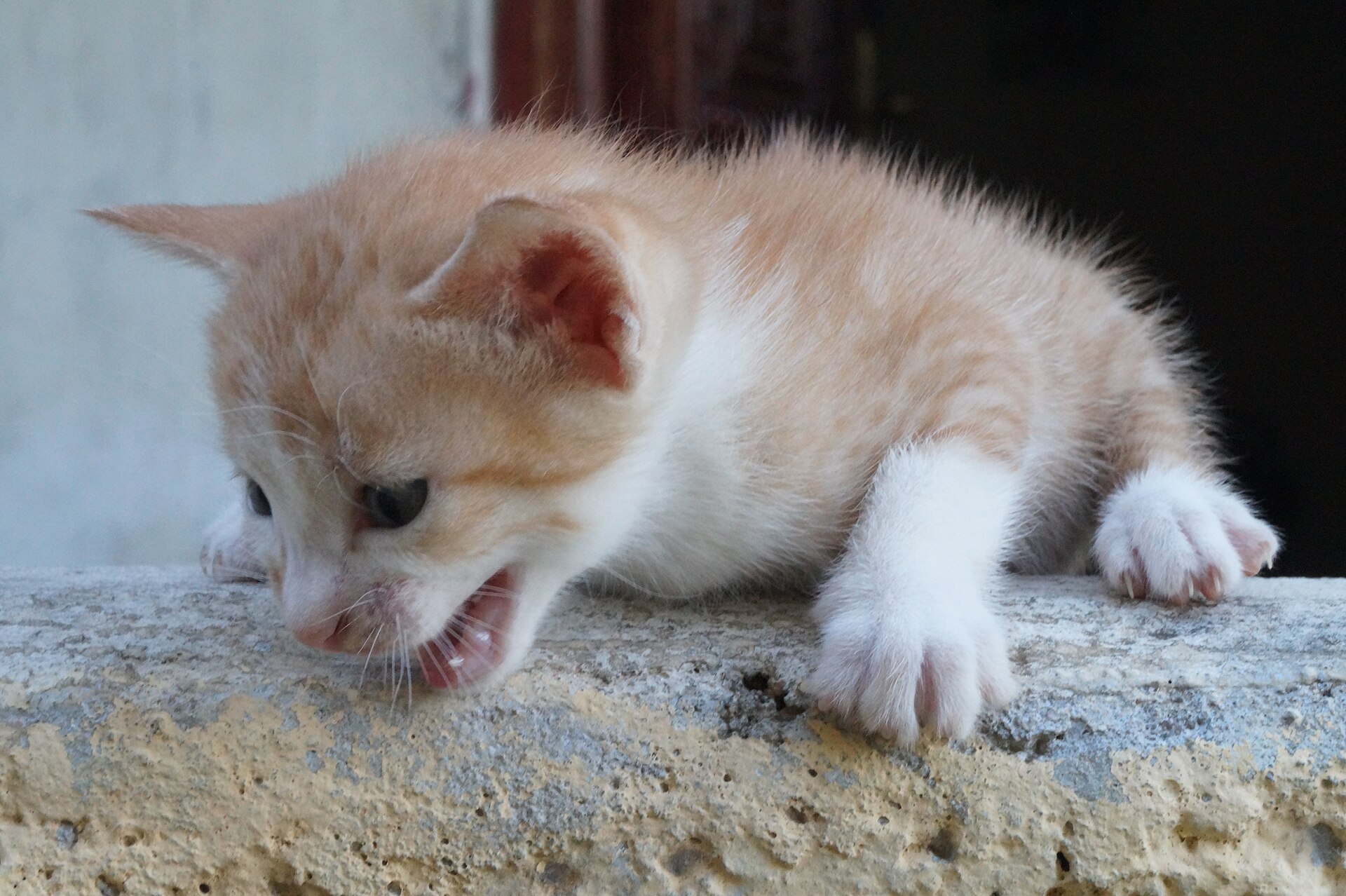
Yes. Piloerection is common across mammals — cats, dogs, and porcupines all raise their fur — and unlike in humans, it actually works, either trapping insulating air or making the animal look bigger and more threatening.
Is there a medical term for goosebumps?
Piloerection or the pilomotor reflex is the standard clinical term; the older name horripilation and the descriptive Latin cutis anserina (‘goose skin’) both refer to the same thing.
Can goosebumps still keep humans warm?
Not meaningfully. Human body hair is too short and sparse for the muscle’s tug to trap a useful layer of warm air, unlike in thickly furred mammals where the same reflex provides real insulation.
Tales You Can Hold
Fun-facts books for curious kids, personalized books that star your child, and more from the FYI Tales Bookstore. Visit the Bookstore.
Photo: Ildar Sagdejev (Specious) / CC BY-SA 3.0, via Wikimedia Commons.