
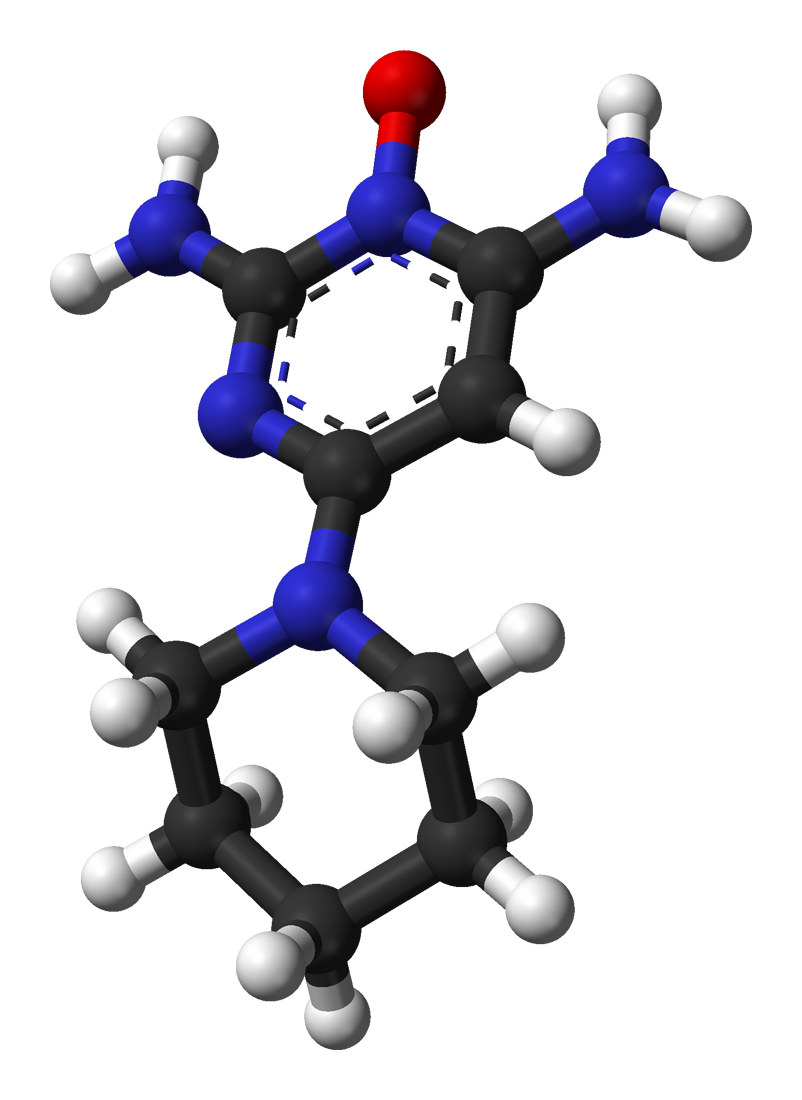
In the early 1970s, patients on an experimental heart drug started noticing hair sprouting in places it had no business sprouting — forearms, foreheads, cheeks. Nobody at the Upjohn Company had designed the pill to do that. They’d designed it to keep the sickest hypertension patients alive.
Table of Contents
That drug was minoxidil, and the trail from failed ulcer remedy to blood-pressure lifesaver to the active ingredient in Rogaine runs through a university lab in Colorado, a two-week FDA loophole, and a 15-year patent fight that ended with a dermatologist’s name bolted onto a patent he’d spent a decade suing for.
Quick answer
Minoxidil was developed by the Upjohn Company as a blood pressure medication (sold as Loniten). Doctors noticed that patients taking it grew hair all over their bodies, and that discovery — chased by dermatologist Guinter Kahn and Upjohn consultant Dr. Charles Chidsey — eventually led to the topical formulation sold as Rogaine, approved by the FDA in 1988.
A stomach drug that couldn’t do its job
Upjohn chemists started with a compound called N,N-diallylmelamine back around 1960, hoping it would help with stomach acid. It didn’t. But when they tested it on dogs, the researchers noticed something else entirely: it relaxed blood vessels and dropped blood pressure dramatically. That’s the kind of ‘failure’ a drug company doesn’t walk away from.
Upjohn’s chemists spent years synthesizing more than 200 variations of the compound chasing a version safe and effective enough for humans. The one that stuck, synthesized and named in 1963, was minoxidil. It was eventually marketed as Loniten, an oral tablet reserved for severe hypertension that other drugs couldn’t control — because it was powerful, but it also came with real side effects like fluid retention and a racing heart.
The two-week rule nobody followed
Loniten was potent enough that the FDA granted an emergency-use protocol in 1971 for critically ill patients, but capped treatment at two weeks. In practice, doctors kept desperate patients on it longer, because it was working on their blood pressure when nothing else had. That’s when the odd reports started piling up: unwanted hair, thick and dark, showing up on arms, faces, and backs.
Dr. Charles A. Chidsey, an Upjohn research consultant at the University of Colorado School of Medicine, was one of the physicians who documented the pattern in his hypertension patients. Later research would estimate that somewhere between 60 and 80 percent of people on oral minoxidil developed this excess hair growth, known medically as hypertrichosis. For a company selling a heart drug, it was a side effect to manage. For a dermatologist looking for something — anything — that regrew hair, it looked like a gift.
A dermatologist, his lab assistant, and a decade in court
Chidsey brought the oddity to Guinter Kahn, a South Florida dermatologist connected to the Colorado program, who worked with his assistant Paul Grant to turn the observation into something usable: a topical solution that could be rubbed directly onto a scalp, developed around 1971. Upjohn, meanwhile, was running its own studies — including tests on stump-tailed macaques, a monkey species known to lose hair the way men do — and chasing the same idea through its own channels.
When Kahn and Grant tried to patent minoxidil for treating baldness, they discovered Upjohn had already filed first. What followed was roughly 15 years of litigation. It ended in 1986 with a consolidated U.S. patent (4,596,812) listing both Charles A. Chidsey III and Guinter Kahn, and a royalty deal — reportedly 2 to 5 percent — on what became a very large pie. The FDA approved the topical version for male pattern baldness in 1988, and Upjohn launched it under a new name built for the drugstore shelf: Rogaine.
The part most people miss
The twist nobody puts on the bottle: Guinter Kahn, the man who spent a decade fighting to get credit for turning a blood-pressure drug into a baldness treatment, couldn’t use his own invention. His daughter later said simply that he was allergic to it. He helped build a business worth hundreds of millions of dollars in annual sales and never got to test the payoff on himself.
Sources
The Pharmaceutical Journal’s history of minoxidil’s path from gastric treatment to hair-loss drug.
The Philadelphia Inquirer’s obituary of Guinter Kahn, detailing his role, the patent dispute with Upjohn, and his daughter’s comment about his allergy.
The U.S. patent record for Methods and Solutions for Treating Male Pattern Alopecia (U.S. Patent 4,596,812), listing Chidsey and Kahn.
Explore more: More accidental inventions.
Frequently Asked Questions
Was minoxidil originally a hair loss drug?
No. It was developed by the Upjohn Company as a treatment for severe high blood pressure and sold as Loniten. The hair growth was an unintended side effect doctors noticed in patients taking it.
Who discovered minoxidil’s hair growth effect?
Dr. Charles Chidsey, an Upjohn research consultant at the University of Colorado, documented the side effect in hypertension patients. Dermatologist Guinter Kahn and his assistant Paul Grant then developed the topical formulation that led to Rogaine.
When was Rogaine approved?
The FDA approved the topical minoxidil solution for treating male pattern baldness in 1988, after a patent dispute between Guinter Kahn and Upjohn was resolved in 1986.
Tales You Can Hold
Fun-facts books for curious kids, personalized books that star your child, and more from the FYI Tales Bookstore. Visit the Bookstore.
Photo: Ben Mills / Public domain, via Wikimedia Commons.