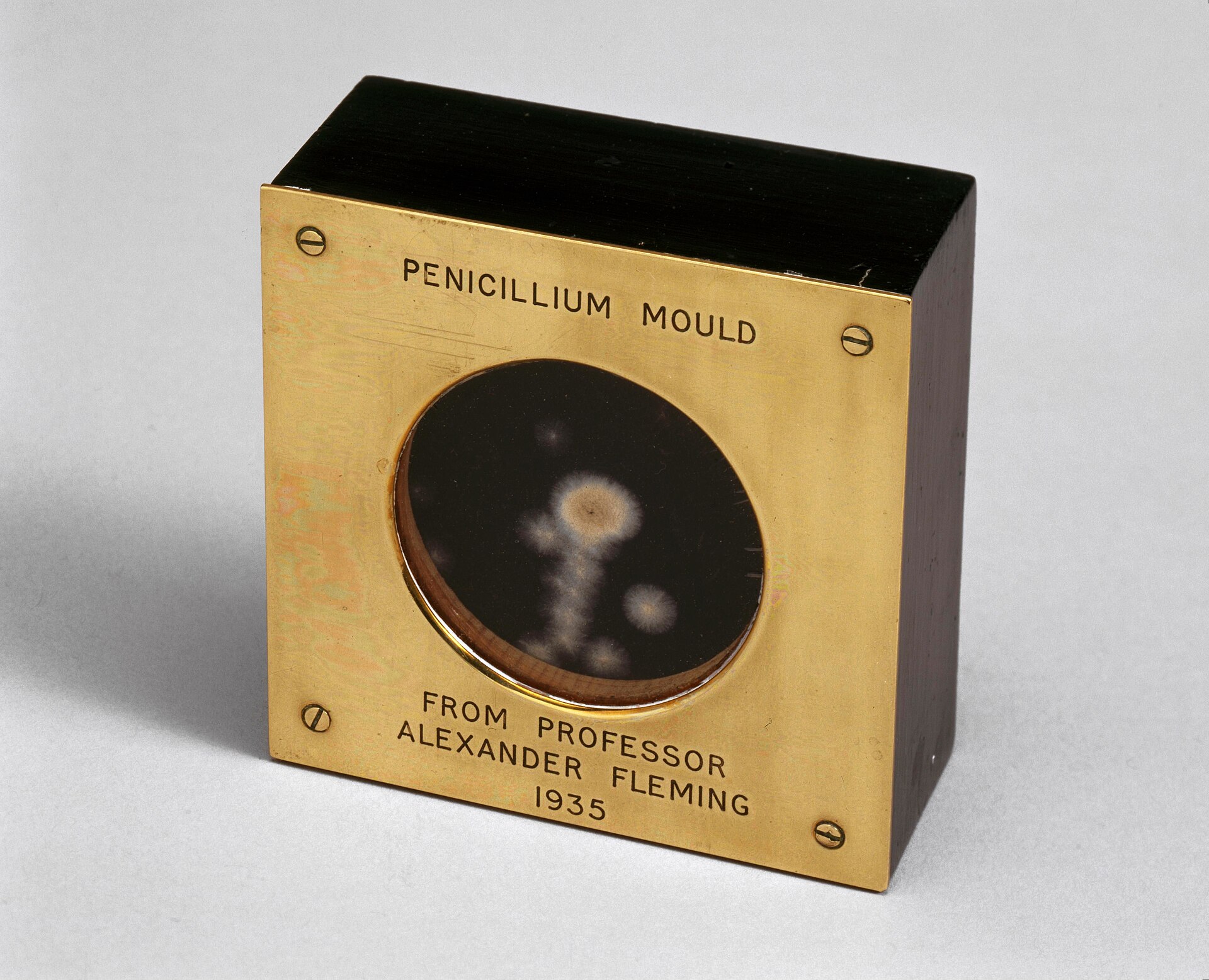
In September 1928, a bacteriologist in London almost threw out a stack of dirty petri dishes without a second look. One of them had grown a fuzzy blob of mold, and in a ring around that mold, the bacteria he’d been growing were simply dead. That unwashed dish is the reason antibiotics exist.
Table of Contents
The man was Alexander Fleming, and the mold was a stray Penicillium spore that had drifted in through a window while he was away on holiday. He noticed the dead bacteria, wrote it up, and then — this is the part most retellings skip — largely gave up on it. Turning that moldy dish into a medicine that could actually save a life took more than a decade, a world war, and, of all things, a rotting cantaloupe from an Illinois fruit market.
Quick answer
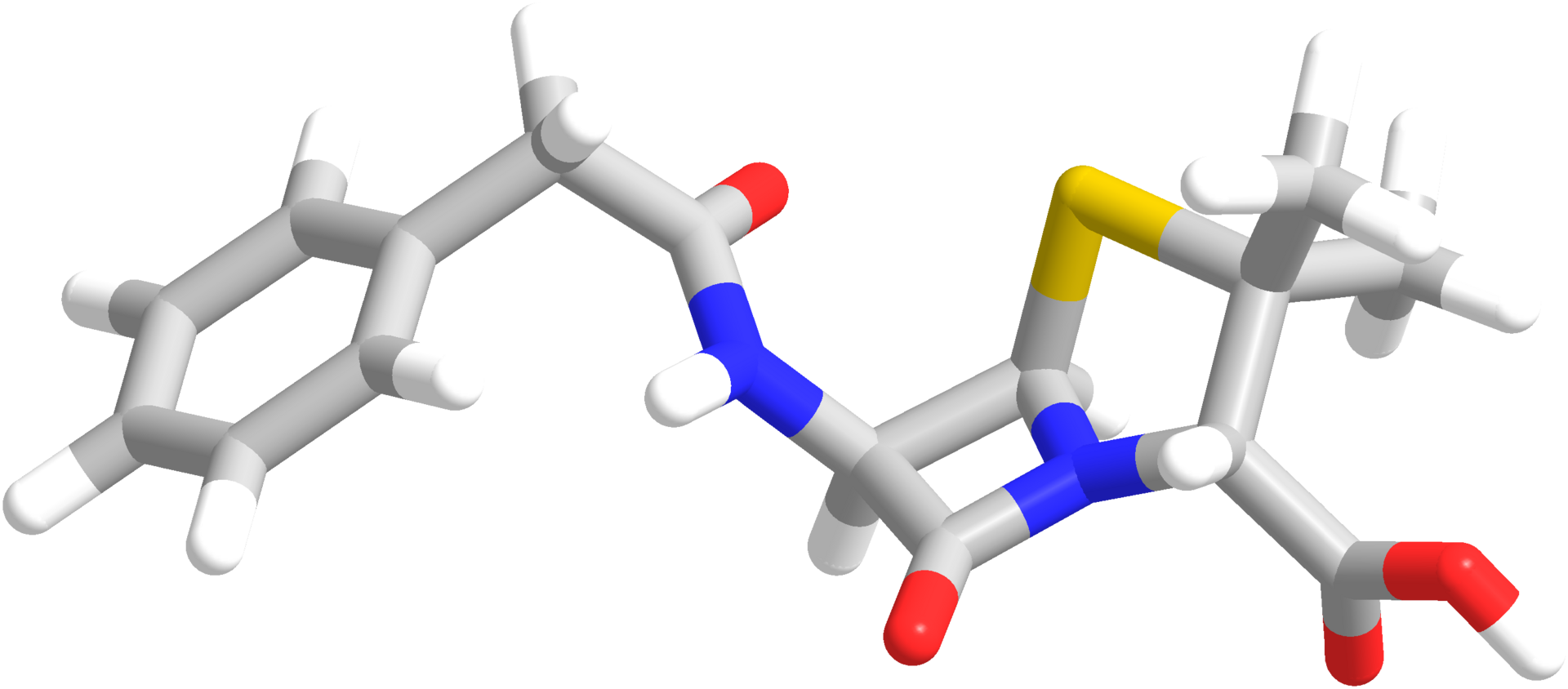
In September 1928, Alexander Fleming noticed that a stray mold contaminating a bacterial culture dish at St. Mary’s Hospital in London was killing the surrounding bacteria, and named the substance penicillin. It took until the early 1940s for a separate Oxford team — Howard Florey, Ernst Chain, and Norman Heatley — to purify it into a usable drug, and until 1943–44 for American mass production, aided by a mold strain found on a Peoria, Illinois cantaloupe, to turn it into the antibiotic now credited with saving an estimated 200 million lives.
A window left open at St. Mary’s
Fleming, a professor of bacteriology, came back to his lab at St. Mary’s Hospital after time away and started clearing out old petri dishes of Staphylococcus he’d left piled up. One dish stopped him: a blob of mold had grown on it, and everywhere near that mold, the staph colonies had been wiped out. He identified the mold as a Penicillium species and called the mystery bacteria-killing substance penicillin, publishing his findings in 1929 in the British Journal of Experimental Pathology.
But Fleming hit a wall. Penicillin was maddeningly hard to isolate in a stable, concentrated form, and the chemistry of the era couldn’t produce enough of it to run a real trial. Fleming largely moved on to other work, and his discovery sat mostly as a laboratory curiosity for more than ten years.
Oxford, a dying policeman, and a transatlantic gamble
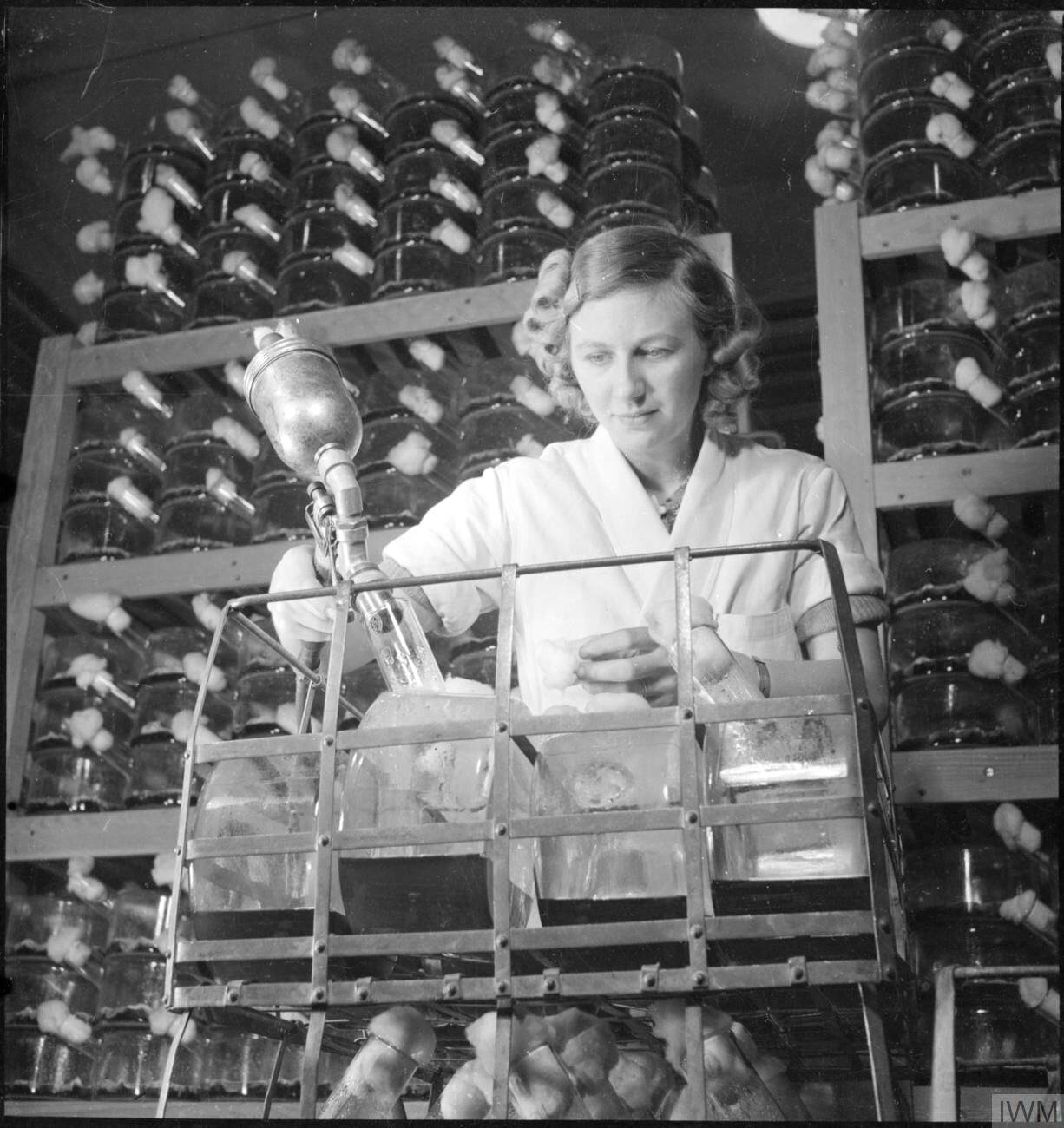
In the late 1930s, a team at Oxford’s Sir William Dunn School of Pathology — led by pathologist Howard Florey, with biochemist Ernst Chain and lab scientist Norman Heatley — picked Fleming’s old paper back up. Heatley rigged makeshift fermentation vessels to grow the mold in bulk, and by 1940 the team had purified enough penicillin to cure infected mice, publishing their results in The Lancet.
On February 12, 1941, they tried it on a person: Albert Alexander, a 43-year-old Oxford police officer dying of a spreading infection. He improved dramatically within days — and then the team ran out of penicillin. They even tried recycling it from his urine to stretch the supply, but it wasn’t enough. Alexander relapsed and died on March 14, 1941. It was a heartbreaking first trial, but it proved the drug worked and told the team exactly how much they’d need.
Wartime Britain, under bombing and stretched thin, couldn’t build the industrial capacity to mass-produce it. So in the summer of 1941, Florey and Heatley flew to the United States, eventually landing at a USDA fermentation research lab in Peoria, Illinois.
The part most people miss
Almost every dose of penicillin made since 1943 descends not from Fleming’s original mold, but from a cantaloupe. Lab workers in Peoria spent months scouring local markets for higher-yield mold samples, and the strain that finally worked — a much more productive Penicillium — turned up on a rotting cantaloupe from an Illinois market. A young lab technician nicknamed ‘Moldy Mary,’ usually identified as Mary Hunt, is commonly credited with finding it, though historians are honest that the exact story of who found the melon, and how, is genuinely disputed. After scientists irradiated the strain to boost its yield roughly a thousandfold, it became the ancestor of nearly all industrial penicillin production. So the drug credited with saving tens of millions of lives owes as much to an Illinois fruit market as it does to a London hospital — and Fleming, Florey, and Chain shared the 1945 Nobel Prize for a discovery that took a global cast of scientists, and a fair bit of luck, to finish.
Sources
This account draws on the Nobel Prize organization’s official 1945 prize summary for Alexander Fleming, Howard Florey, and Ernst Chain; the Science History Institute’s biographical profile of Alexander Fleming and its feature on Mary Hunt and the Peoria mold hunt, ‘The Forgotten Mother of Penicillin’; and The Conversation’s reporting on Albert Alexander, penicillin’s first patient.
Explore more: More accidental inventions.
Penicillin FAQs
Did Fleming actually discover penicillin by accident?
Yes. He wasn’t looking for an antibiotic — a stray mold spore contaminated a bacterial culture dish he’d left out while on holiday in 1928, and he noticed the bacteria around it had died.
Why didn’t Fleming turn penicillin into a medicine himself?
He couldn’t purify it into a stable, concentrated form. That breakthrough came more than a decade later from Howard Florey, Ernst Chain, and Norman Heatley at Oxford.
Who was the first person treated with penicillin?
Albert Alexander, an Oxford police officer, in February 1941. He improved at first but died after the limited supply ran out.
Is the ‘200 million lives saved’ number exact?
No — it’s a widely repeated estimate used by science writers and museums, not a single peer-reviewed count. The precise figure is unknowable, but the scale of impact isn’t disputed.
Tales You Can Hold
Fun-facts books for curious kids, personalized books that star your child, and more from the FYI Tales Bookstore. Visit the Bookstore.
Photo: Cacycle / Public domain, via Wikimedia Commons.