
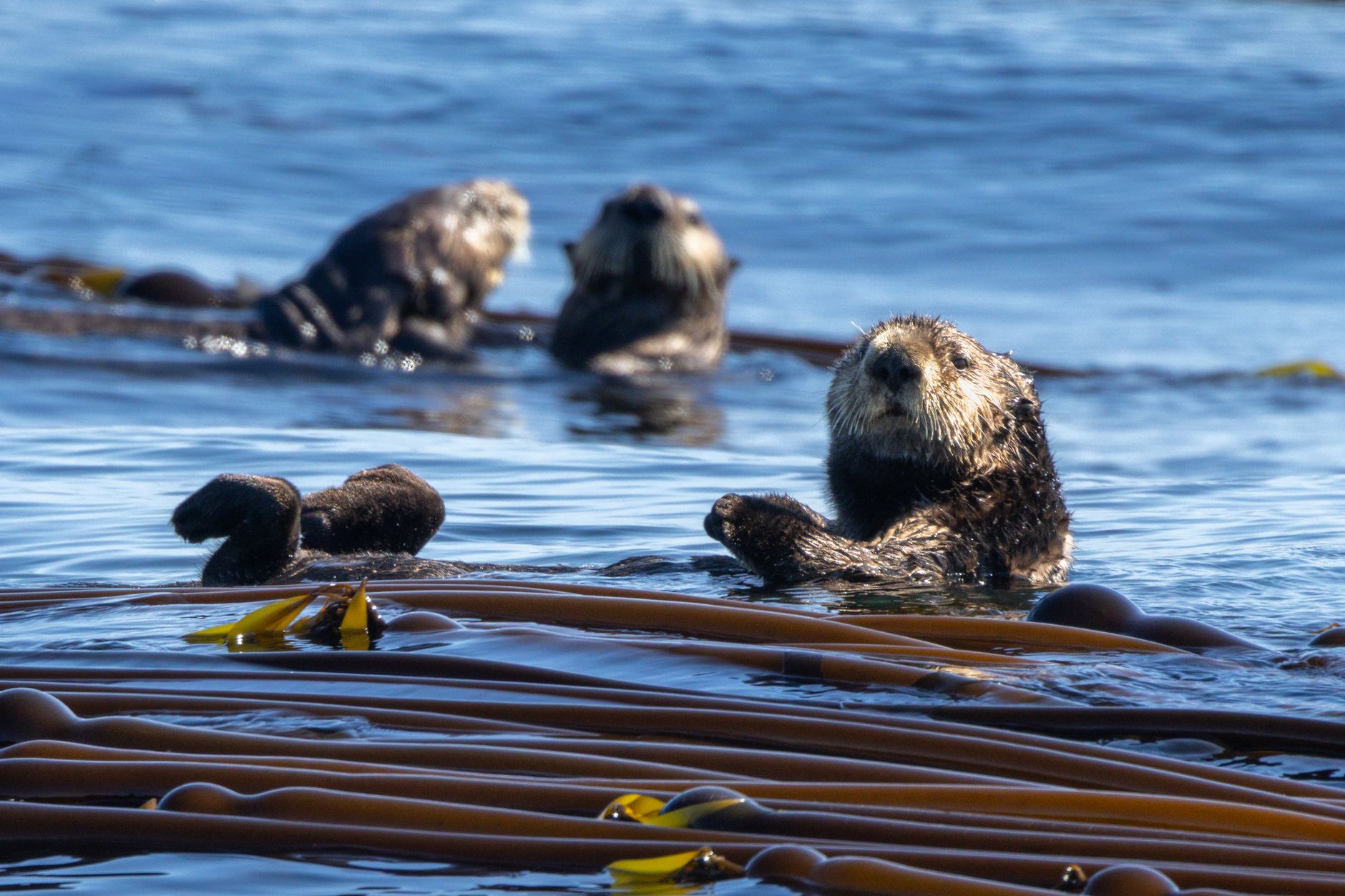
Yes, it’s real: sea otters hold hands — or more precisely, grip each other’s forepaws — while sleeping on their backs at the surface. The internet fell in love with the behavior thanks to a 2007 video from the Vancouver Aquarium, but the question of why sea otters hold hands has a thoroughly practical answer: so they don’t drift apart while unconscious on moving water.
Table of Contents
Life in the raft
Sea otters sleep at sea, floating on their backs. To stay together, they gather in groups called rafts — usually a few animals, but rafts of dozens and occasionally hundreds have been documented, generally sorted male rafts and female-with-pup rafts. A sleeping otter can’t monitor the current, so physical connection does the work: paw grips, sleeping in contact, and one more trick that outdoes even the hand-holding.
The kelp seatbelt
Where kelp forests grow, otters routinely wrap themselves in strands of kelp before sleeping — anchoring to the seafloor like a moored boat. Mothers wrap their pups in kelp while diving for food: the baby floats, cocooned and stationary, until mom returns. Newborn pups are so buoyant (thanks to air trapped in their natal fur) that they physically can’t sink — the kelp keeps them from drifting away instead.
Why staying together is life or death
Sea otters have no blubber. They survive frigid Pacific water on the densest fur of any animal — up to around a million hairs per square inch — and a furious metabolism that demands eating roughly a quarter of their body weight daily. Separation from the raft costs energy and safety: lone otters drift into open water, away from feeding grounds and into predator range. The hand-hold is a survival strategy that happens to be adorable.
The part most people miss
Otters also carry a favorite rock in a loose flap of skin under the forearm — a built-in tool pocket — using it to crack shellfish on their chests. Between the pockets, the seatbelts, and the hand-holding, sea otters have essentially invented luggage, child restraints, and sleeping arrangements. The ocean’s most complete little engineers.
More animal solutions: the prize-winning physics of cube-shaped wombat poop.
Sources
- Vancouver Aquarium — documented otter hand-holding (2007) and interpretive materials
- Monterey Bay Aquarium — sea otter rafting, kelp wrapping, and tool-pocket documentation
- Marine mammal literature on sea otter fur density and metabolism