For about twenty years, the goo that would become Play-Doh had exactly one job: scrubbing coal soot off wallpaper. No kid ever squeezed it on purpose. Housewives running a soft, putty-colored dough down sooty walls were the customer, and a Cincinnati soap company called Kutol Products sold it to them by the case.
Table of Contents
Then, in the early 1950s, that entire business quietly died — and it took a nursery school teacher, her frustrated brother-in-law, and one batch of homemade Christmas ornaments to accidentally save it by turning it into one of the best-selling toys in American history.
Quick answer
Play-Doh began in the early 1930s as a nontoxic wallpaper cleaner made by Kutol Products of Cincinnati. When cleaner-burning home heat made sooty wallpaper a thing of the past in the 1950s, company owner Joseph McVicker’s sister-in-law, nursery school teacher Kay Zufall, discovered the leftover dough made a wonderful modeling compound for kids. Kutol dropped the cleaning ingredients, added color and scent, and relaunched it in 1956 as Play-Doh.
A soap company’s coal problem
Kutol Products was founded in Cincinnati in 1912 as a soap and cleaning-supply maker. In the late 1920s, brothers Cleo and Noah McVicker worked out a soft, pliable, off-white compound of flour, water, and salt that could be rolled across wallpaper to lift coal soot without smearing it into the paper. Coal furnaces heated most American homes at the time, and the fine black film they left behind was notoriously hard to clean without ruining delicate wallpaper.
Cleo handled sales, and in 1933 he landed a contract to sell the cleaner through Kroger grocery stores nationwide. It became one of Kutol’s steadiest sellers for two decades, helping keep the company afloat through the Depression and World War II.
Then the fuel that made the whole business necessary started disappearing. After the war, American homes increasingly switched to oil, gas, and electric heat, and sooty wallpaper stopped being a household problem. Cleo McVicker died in 1949, leaving the company to his son Joseph — who inherited a business built almost entirely around a product nobody needed anymore. By the early 1950s, Kutol was reportedly close to bankruptcy.
The teacher who saw a toy, not a chore
Joseph’s sister-in-law, Kay Zufall, ran a community nursery school. She’d come across an idea, reportedly from a teaching magazine, for making Christmas tree ornaments and other craft shapes out of wallpaper cleaner instead of pricier modeling clay. She picked some up at a hardware store and tried it with her class.
The kids loved it. It was nontoxic, easy to knead, didn’t dry out or crumble like clay, and it wiped off carpet and hands without a trace. Zufall called Joseph and told him, in effect, that he wasn’t sitting on a dying cleaning product — he was sitting on a toy.
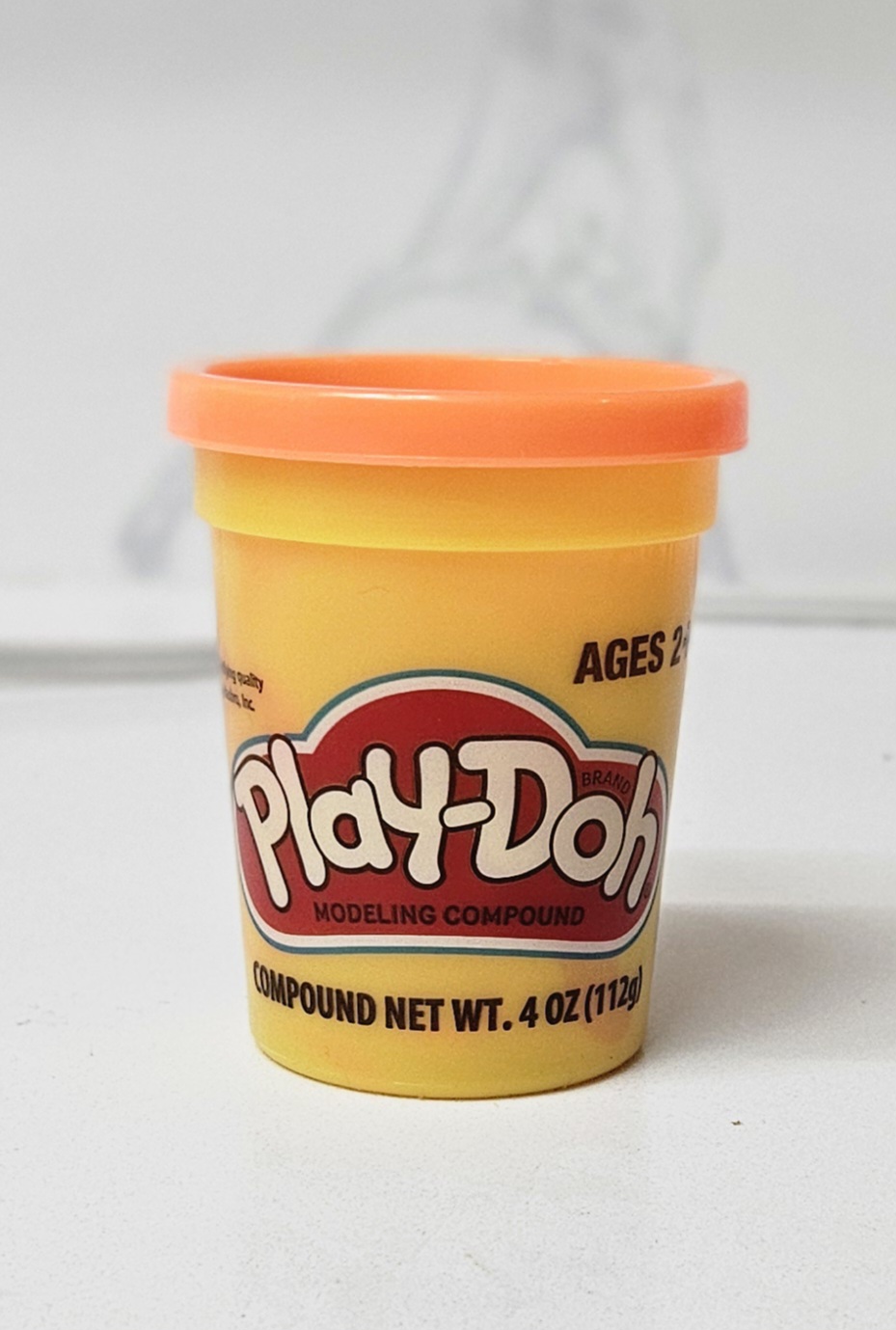
Around 1954–55, Joseph agreed. Kutol stripped out the detergent, added an almond scent and bright coloring, and first rebranded the product ‘Kutol’s Rainbow Modeling Compound’ — a name that tested about as well as it reads. Zufall and her husband, Robert, suggested something shorter and catchier: Play-Doh. Joseph liked it better than his own idea. In 1956 the family spun off a new subsidiary, Rainbow Crafts, and Play-Doh went on sale first to schools around Cincinnati, then in stores like Woodward & Lothrop in Washington, D.C. Two years later, Captain Kangaroo host Bob Keeshan agreed to feature it regularly on his show, and sales went national.
The part most people miss
The popular version of this story often credits Joseph McVicker alone as the toy’s inventor, and for years, company materials leaned that way too. But the pivot from industrial cleaner to children’s toy — the entire idea — came from Kay Zufall, and so did the name; Joseph and his uncle Noah had wanted to stick with ‘Rainbow Modeling Compound.’ It took decades, and later retrospectives from outlets like the Smithsonian and the Strong National Museum of Play, for Zufall to get fuller billing alongside the McVickers as a co-creator of Play-Doh as we know it. There’s also a quieter irony in the paperwork: Rainbow Crafts didn’t secure a patent on the formula until 1965 — nine years after Play-Doh was already a hit and worth millions. For most of that run, the compound was protected less by law than by the McVickers simply not telling anyone the recipe. That same year, 1965, General Mills bought Rainbow Crafts outright; the brand later passed through Kenner and Tonka before Hasbro picked it up in 1991, where it remains today.
Sources
Smithsonian Magazine, ‘The Accidental Invention of Play-Doh,’ which traces the McVicker family’s ownership of Kutol Products and the product’s shift from wallpaper cleaner to toy.
The Strong National Museum of Play, ‘The History of Play-Doh: Good, Clean Fun!,’ which documents the company timeline, Kay Zufall’s role, and the 1956 relaunch under Rainbow Crafts.
Wikipedia’s entry on Play-Doh, cross-checked for corporate ownership history (General Mills, Kenner, Tonka, Hasbro), the 1965 patent, and the naming dispute between ‘Rainbow Modeling Compound’ and ‘Play-Doh.’
Explore more: more accidental inventions.
play-doh FAQs
Was Play-Doh really sold as a wallpaper cleaner first?
Yes. Kutol Products of Cincinnati sold a similar flour-salt-water dough as a coal-soot wallpaper cleaner starting in the early 1930s, roughly two decades before it was reformulated into the toy in 1956.
Who actually invented Play-Doh?
It’s genuinely shared credit: the McVicker family (Noah, Cleo, and later Cleo’s son Joseph) created and ran the original wallpaper-cleaner business, but it was Joseph’s sister-in-law, nursery school teacher Kay Zufall, who saw its potential as a children’s toy and, with her husband, suggested the name Play-Doh.
Why did wallpaper cleaner stop selling in the first place?
It was tied to coal heating, which left sooty film on walls. As American homes switched to cleaner oil, gas, and electric heat after World War II, the soot problem — and the market for a product to clean it — largely disappeared.
Tales You Can Hold
Fun-facts books for curious kids, personalized books that star your child, and more from the FYI Tales Bookstore. Visit the Bookstore.
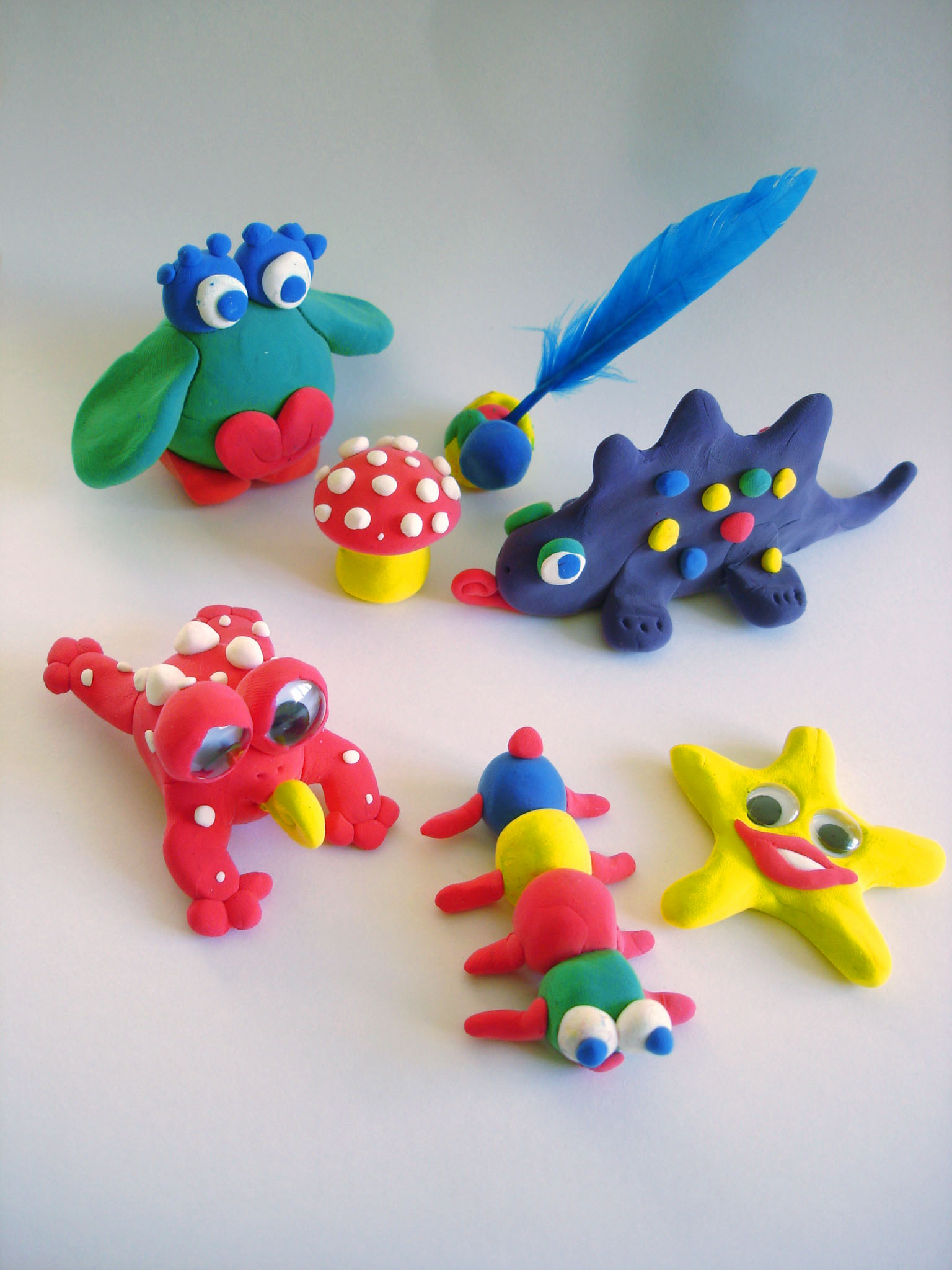
Photo: OliviaRigby / CC BY 4.0, via Wikimedia Commons.