
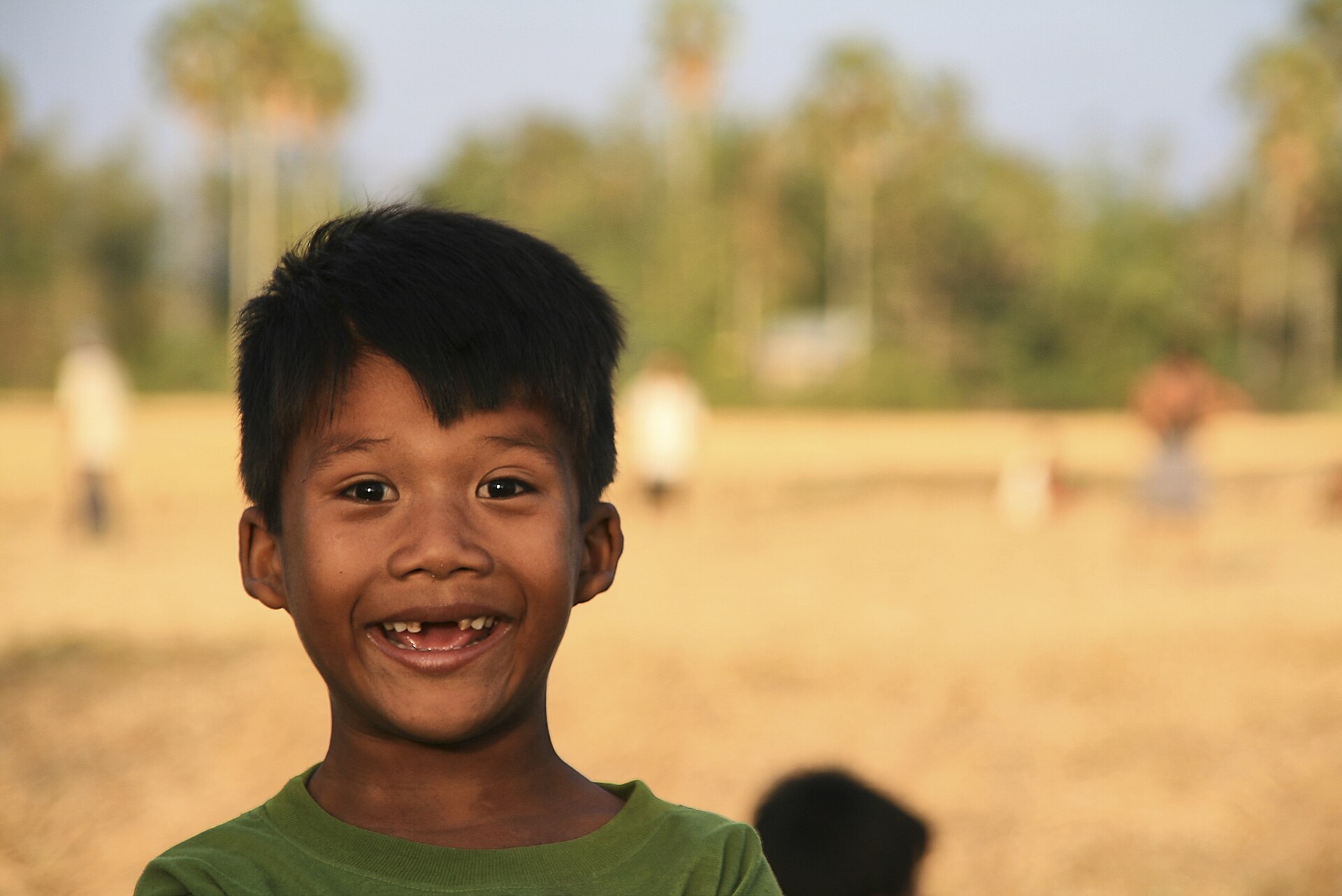
You were born with more teeth in the works than you’d ever actually see at once. Beneath the twenty small teeth that hadn’t even broken through your gums yet, most of your permanent set was already under construction inside your infant jaw — tooth buds for the incisors, canines, premolars, and first molars had all started forming before you were even born. The last stragglers, your second molars and eventually your wisdom teeth, wouldn’t start budding until you were a toddler, then a school-age kid, quietly queuing up behind everything else.
Table of Contents
That staggered build isn’t folklore, it’s basic embryology, understood by dentists for well over a century. But the deeper question — why bother with two rounds of teeth instead of just building it right the first time — took a lot longer to answer properly. The clearest answer yet came in 2022, from a small Australian marsupial doing something scientists were pretty sure mammals had stopped doing 200 million years ago.
Quick answer
Humans are “diphyodont” — biology’s term for growing exactly two sets of teeth — because jaws grow but individual teeth don’t. Twenty small primary teeth get a child through infancy, when the jaw is too small for full-size teeth; once the jaw has grown enough, thirty-two larger, sturdier permanent teeth take over for the rest of a person’s chewing life. It’s a compromise inherited from ancestors who could regrow teeth indefinitely, traded away for a tighter, more precise adult bite.
A shark’s smile and Aristotle’s blunder
Most vertebrates don’t play by the two-set rule. Sharks, many reptiles, and most fish are “polyphyodont”: a permanent strip of tissue called the dental lamina keeps churning out replacement teeth for life, so a lost tooth is never a real loss. Mammals are the odd ones — most of us shut that assembly line down after just two runs.
Humans have been curious about tooth counts for a very long time, and not always accurately. In his 4th-century BCE work History of Animals, Aristotle claimed men have more teeth than women. The philosopher Bertrand Russell later needled him for it, pointing out that Aristotle was married twice and apparently never thought to count his own wives’ teeth. He’d have found the same number: both sexes get 20 baby teeth and up to 32 adult ones. It’s a good reminder that figuring out *why* we have two sets of teeth took a lot more than counting — it took real embryology.
Losing the assembly line
The dental lamina in sharks is a permanent, self-renewing structure — new teeth are always queued up behind the ones in use. Early mammal ancestors had a version of this too, but somewhere around 205 million years ago, most mammal lineages evolved a version of the dental lamina that breaks down and stops working after producing just two generations of teeth.
Why give up an endless supply of free replacement teeth? Because mammals need something reptiles and sharks generally don’t: precise occlusion — top and bottom teeth that interlock tightly for grinding food, not just piercing and swallowing it whole. A mouth that’s constantly swapping in loose new teeth doesn’t grind well. Two sets is the compromise: small teeth to get an infant through nursing and early chewing while the jaw is still tiny, then one clean, permanent upgrade once the jaw reaches adult size and needs a precision-fit set built to last. Even the permanent set arrives in waves — the second molars don’t start forming until roughly a child’s first birthday, and the third molars, the wisdom teeth, don’t begin until around age four or five.
The wallaby that broke the textbook
For decades, the textbook story was tidy: baby teeth come from the primary dental lamina, and adult replacement teeth sprout later from a separate structure called the successional lamina. Then in 2022, researcher Qamariya Nasrullah at Monash University, working with Marilyn Renfree at the University of Melbourne and Alistair Evans, published a study in the Journal of Mammalian Evolution that complicated that picture.
The team used a scanning technique called diceCT — staining soft tissue so it shows up on a CT scan — to watch tooth development in tammar wallabies from embryo to adult. Wallabies replace only their premolars, and those “replacement” teeth were assumed to come from the successional lamina, just like ours. Instead, the scans showed they were delayed baby teeth, still growing out of the original primary dental lamina — a hidden holdover from the ancestral, endlessly-replacing system mammals were supposed to have left behind.
The part most people miss
Here’s the part that rarely makes it into the two-sets-of-teeth explainer: the ancient assembly line isn’t gone from humans either — it’s just switched off. Researchers have identified rudimentary tissue for a theoretical third human dentition, suppressed during development by a protein called USAG-1. Kyoto University’s Katsu Takahashi spent nearly three decades studying that protein, and the startup he helped found, Toregem BioPharma, began first-in-human trials in 2024 of an antibody designed to block USAG-1 and wake those dormant buds up. In earlier animal studies, the same approach regrew real, functional teeth in mice, ferrets, and dogs. It’s still early-stage medicine, not a cure at the dentist’s office yet — but it means the “two sets and that’s it” rule your dentist taught you may not be the final chapter.
Sources
Qamariya Nasrullah, Marilyn Renfree, and Alistair Evans, “From Embryo to Adult: The Complete Development and Unusual Replacement of the Dentition of the Tammar Wallaby (Macropus eugenii),” Journal of Mammalian Evolution (2022), published via Springer Nature Link.
The Conversation / Monash Lens, “Why do humans grow two sets of teeth? These marsupials are rewriting the story of dental evolution” (2022), reporting on the Monash University research team.
TeachMeAnatomy, “Development of Teeth,” for the timeline of permanent tooth germ formation before and after birth, including the delayed appearance of the second and third permanent molars.
Wikipedia, “Diphyodont,” for background on two-generation tooth replacement across mammals.
Toregem BioPharma (Kyoto University spinoff), official company information on Dr. Katsu Takahashi’s USAG-1 antibody research and its 2024 human clinical trials.
Explore more: more amazing body stories.
two sets of teeth FAQs
Why do baby teeth fall out in the first place?
Baby teeth are sized for an infant’s small jaw and aren’t built to last a lifetime. As the jaw grows, the roots of primary teeth dissolve, making room for the larger, sturdier permanent teeth waiting underneath to push through.
How many teeth does a person grow in a lifetime?
Fifty-two, total — 20 primary (“baby”) teeth followed by 32 permanent teeth, including the four wisdom teeth that come in last, if they come in at all.
Are all of a baby’s permanent teeth already forming at birth?
Most, but not all. By birth, the tooth buds for the permanent incisors, canines, premolars, and first molars have already started developing beneath the baby teeth. The second molars don’t begin forming until around a child’s first birthday, and the third molars — wisdom teeth — don’t start until roughly age four or five.
Could humans actually grow a third set of teeth someday?
Possibly. Human trials beginning in 2024 are testing a drug that blocks a protein called USAG-1, which normally keeps dormant extra tooth buds from developing. It’s aimed first at people missing teeth from birth, and it’s still in early clinical testing.
Tales You Can Hold
Fun-facts books for curious kids, personalized books that star your child, and more from the FYI Tales Bookstore. Visit the Bookstore.
Photo: danielkirsch / CC0, via Wikimedia Commons.