
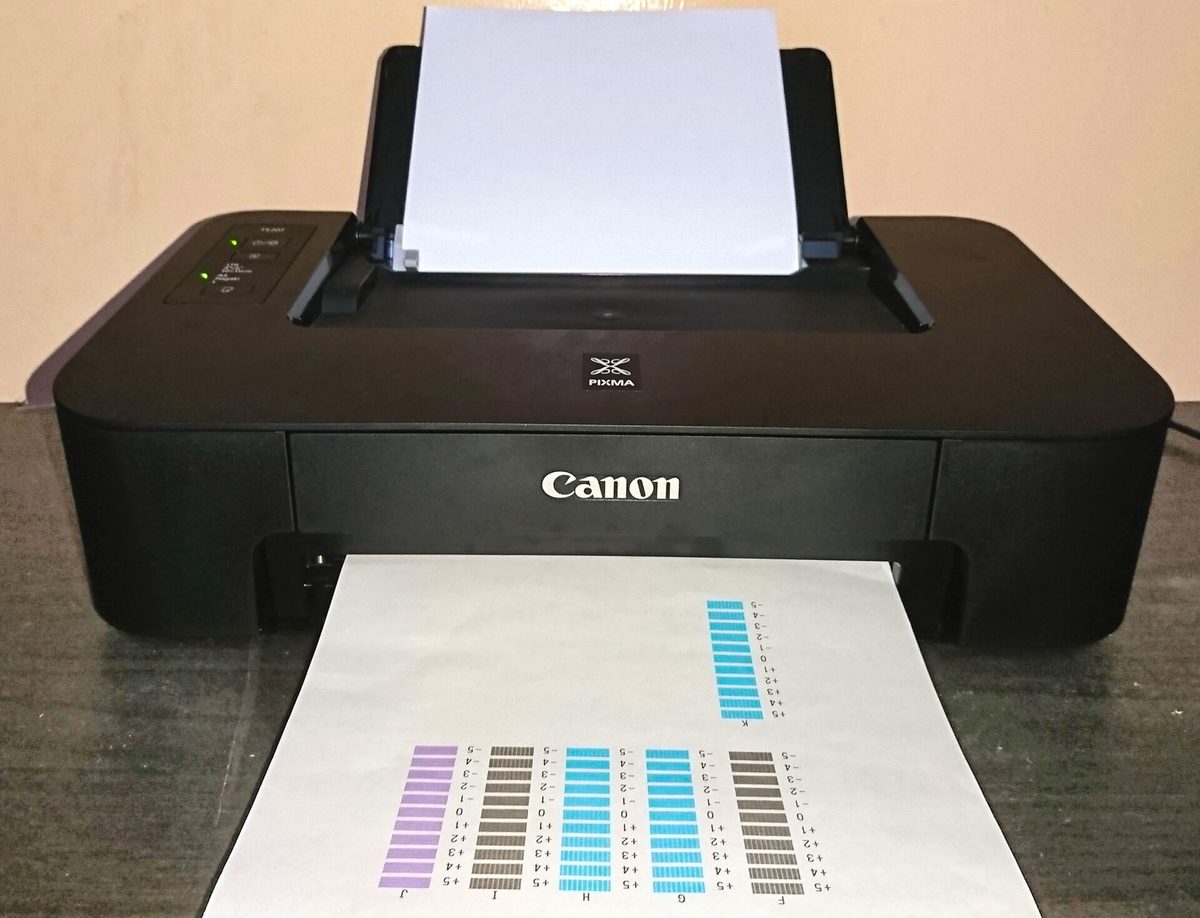
Somewhere in a Canon research lab in Japan, sometime in 1977, somebody set a hot soldering iron down a little too close to a syringe full of ink. It touched the needle. The ink inside flashed to a boil, and a tiny jet of it shot out the tip. Nobody in that room was trying to invent anything. It was the kind of moment that usually ends with someone wiping ink off a workbench and muttering.
Table of Contents
Instead, an engineer named Ichiro Endo was standing right there, and he didn’t see a mess. He saw a mechanism — heat a tiny pocket of ink fast enough, and it would launch itself out of a nozzle in a perfectly controllable droplet. Within days he’d built a working model. That accident is the reason the machine quietly printing your boarding pass or your kid’s homework fires ink by boiling it, not by squeezing it.
Quick answer
The inkjet printer’s thermal (“bubble jet”) technology traces back to a 1977 lab accident at Canon in Japan: a soldering iron accidentally touched a syringe of ink, boiling it and shooting a jet of ink out the needle. Canon engineer Ichiro Endo recognized the principle and built a working prototype within days; Canon patented the method that same year and commercialized it as the Bubble Jet printer in 1985.
A soldering iron, a syringe, and a very bad day in the lab
In the mid-1970s, Canon was chasing better print quality than the clattering dot-matrix printers of the day, and like most of the industry, its engineers were betting on piezoelectric nozzles — crystals that physically flex when zapped with electricity, squeezing out a drop of ink. It’s a fine idea, and it’s still how Epson printers work today.
Then, according to Canon’s own account of its history, a heated soldering iron accidentally touched the needle of an ink-filled syringe in the lab, and ‘ink droplets spurted vigorously from the tip of the needle.’ Endo, watching it happen, didn’t write it off as a lab hazard. He clocked that the heat had turned a little pocket of liquid into an expanding bubble of vapor powerful enough to eject the ink above it in a clean, repeatable burst — and that a burst like that could be triggered on command, thousands of times a second, from a tiny printed heating element instead of a crystal.
Canon filed the foundational patent on the technology in 1977, the same year as the accident. The company demonstrated a working ‘bubble jet’ prototype in 1981, and the first commercial product, the BJ-80, reached the market in 1985. In 1994, the resulting patent won Japan’s Imperial Invention Prize — the country’s highest invention award.
Across the ocean, a very different kind of search
Here’s where the story gets more interesting than ‘two accidents, two continents’ — because the second half of this story wasn’t an accident at all.
On Christmas Eve 1978, a Hewlett-Packard engineer named John Vaught sat down with colleague David Donald and a handful of other engineers specifically to design an entirely new kind of printer from scratch. They spent that afternoon mapping out what an ideal machine would need to do — print at 200 dots per inch, run fast and cheap, and eventually handle color — and Vaught, by some accounts a mechanical-engineering college dropout rather than a credentialed physicist, came back from the holiday with a deliberate assignment: build a solid-state print head that wouldn’t clog or wear out like the mechanical nozzles everyone else was using.
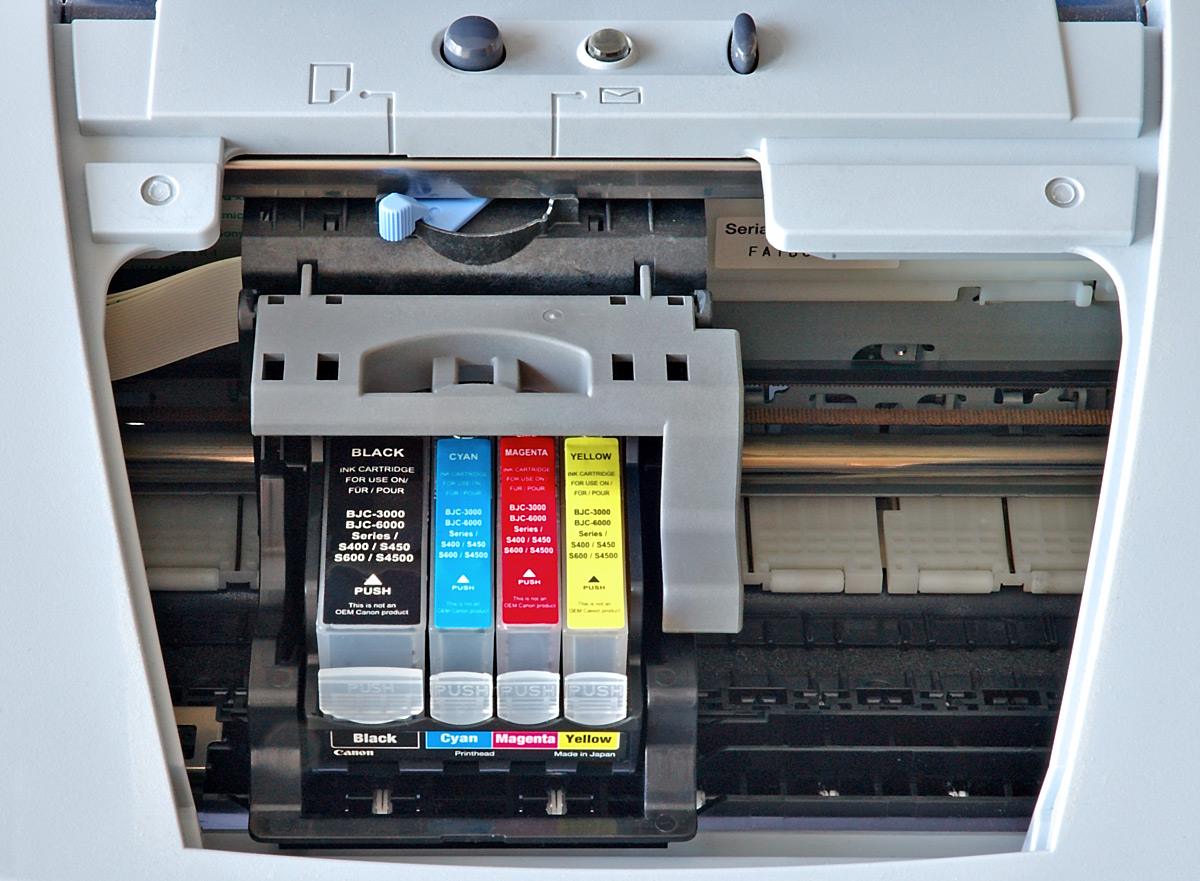
He didn’t stumble into the answer. He was actively hunting for a way to fire ink fast and precisely when, watching an ordinary coffee percolator on his desk heat and push water through its tube in neat little bursts, he realized the same principle — flash-heating a liquid to force it through a narrow channel — could fire ink instead of water. Working independently of Canon, with no knowledge of what Endo had found in Japan, Vaught’s team arrived at the same underlying physics: a tiny heater flash-boiling ink to eject a droplet. HP’s version became the ThinkJet, short for ‘thermal inkjet,’ launching in 1984 — a year ahead of Canon’s commercial Bubble Jet.
The part most people miss
The twist isn’t that thermal inkjet was invented by accident — it’s that it was invented twice, by two engineers who got there by opposite routes, and the industry eventually had to credit both. Canon’s breakthrough really was a fluke: nobody in Endo’s lab set out that day to reinvent the print head. HP’s was the opposite of a fluke — Vaught’s team had deliberately launched a project to build a whole new printer, and his coffee-percolator moment was the specific technical insight he found while actively searching for a solution, not a lucky accident that happened to him. Canon and HP spent years afterward as patent rivals selling competing ‘bubble jet’ and ‘thermal inkjet’ printers built on the same core trick: boiling ink in a microscopic chamber. It wasn’t until 1995 that the Optical Society (now Optica) awarded Ichiro Endo and John Vaught its Edwin H. Land Medal jointly, crediting them as independent co-inventors of a technology that, in the award’s own language, ‘created a new three-billion-dollar printer industry’ and put affordable color printing on desks everywhere. Endo, who died in 2016, spent his career at Canon; Vaught’s deliberate hunt for a better print head helped build the printer division that became HP’s biggest consumer business for decades.
Sources
Optica (formerly the Optical Society), biographical profiles of Ichiro Endo and John Vaught, including details of the 1995 Edwin H. Land Medal citation and the 1978 HP printer project.
Canon Inc., official corporate intellectual-property history of its Bubble Jet printing technology, including the 1977 patent filing and the 1994 Imperial Invention Prize.
MIT Technology Review, ‘Tiny Bubbles’ (2001), on the parallel discovery of thermal inkjet technology at Canon and Hewlett-Packard.
Explore more: More accidental inventions.
Frequently Asked Questions
Who really invented the inkjet printer?
No single person did. Canon engineer Ichiro Endo discovered the thermal-inkjet principle by accident in Japan in 1977, while HP engineer John Vaught independently developed the same underlying physics starting in late 1978, as part of a deliberate project to build a new kind of printer. Both are credited as co-inventors.
What exactly happened with the soldering iron?
A hot soldering iron accidentally touched the needle of a syringe filled with ink in a Canon lab. The heat made the ink boil, and the expanding vapor shot a jet of ink out of the needle — revealing that heat could fire controlled droplets of ink.
Was HP’s coffee percolator story an accident too?
No. HP’s John Vaught wasn’t involved in a lab mishap — he was deliberately trying to design a new print head when watching an ordinary coffee percolator gave him the specific idea of flash-heating liquid to fire it. Canon’s discovery was the true accident; HP’s was a planned search that found its answer in an everyday object.
Tales You Can Hold
Fun-facts books for curious kids, personalized books that star your child, and more from the FYI Tales Bookstore. Visit the Bookstore.
Photo: Paowee / CC BY-SA 4.0, via Wikimedia Commons.