
Starting in the early 1940s, an internist named William Bean began scoring a small mark into his left thumbnail every few weeks and measuring how far it traveled before it grew out. He kept doing this for 35 years, publishing his results in 1953, 1974, and again in 1980, by which point he was 67 years old and still filing reports on a single fingernail like it was a longitudinal clinical trial.
Table of Contents
Bean never set out to settle the fingernail-versus-toenail question directly, but his decades of obsessive note-taking became the backbone of what we now know about nail growth in general. And the short version is: your fingernails are winning a race your toenails don’t even know they’re running.
Quick answer
Fingernails grow roughly two to three times faster than toenails — about 3.5 millimeters a month for fingernails versus about 1.6 millimeters a month for toenails, according to a 2010 measurement study of healthy young adults. Nobody has proven exactly why, but the leading theories point to blood flow and everyday wear and tear on the hands.
The doctor who turned his thumbnail into a lab notebook
William B. Bean spent most of his career as a professor of internal medicine at the University of Iowa, with a stint running the Institute for Medical Humanities at the University of Texas Medical Branch in Galveston. But his most famous contribution to science had nothing to do with a hospital ward. Starting at age 32, he began tracking the growth of his own left thumbnail, filing his findings the way other scientists track sunspots or tide charts.
The pattern he found was striking: growth slowed steadily with age. His thumbnail grew about 0.123 millimeters a day when he was 32, and by the time he was 67 that had dropped to 0.095 millimeters a day. He also noticed that his fingernails, overall, grew noticeably faster than his toenails — an observation that later, more formal studies would confirm with actual control groups instead of one very patient man.
Blood, trauma, and why the gap is real
In 2010, researchers led by Sopa Yaemsiri measured nail growth in 22 healthy young American adults using a standardized filing-and-marking protocol, the same basic idea Bean had pioneered decades earlier. Their numbers: fingernails grew an average of 3.47 millimeters a month, toenails just 1.62 millimeters a month. Within each hand and foot there were quirks too — the little fingernail was the slowest grower on the hand, while the big toenail was the fastest on the foot.
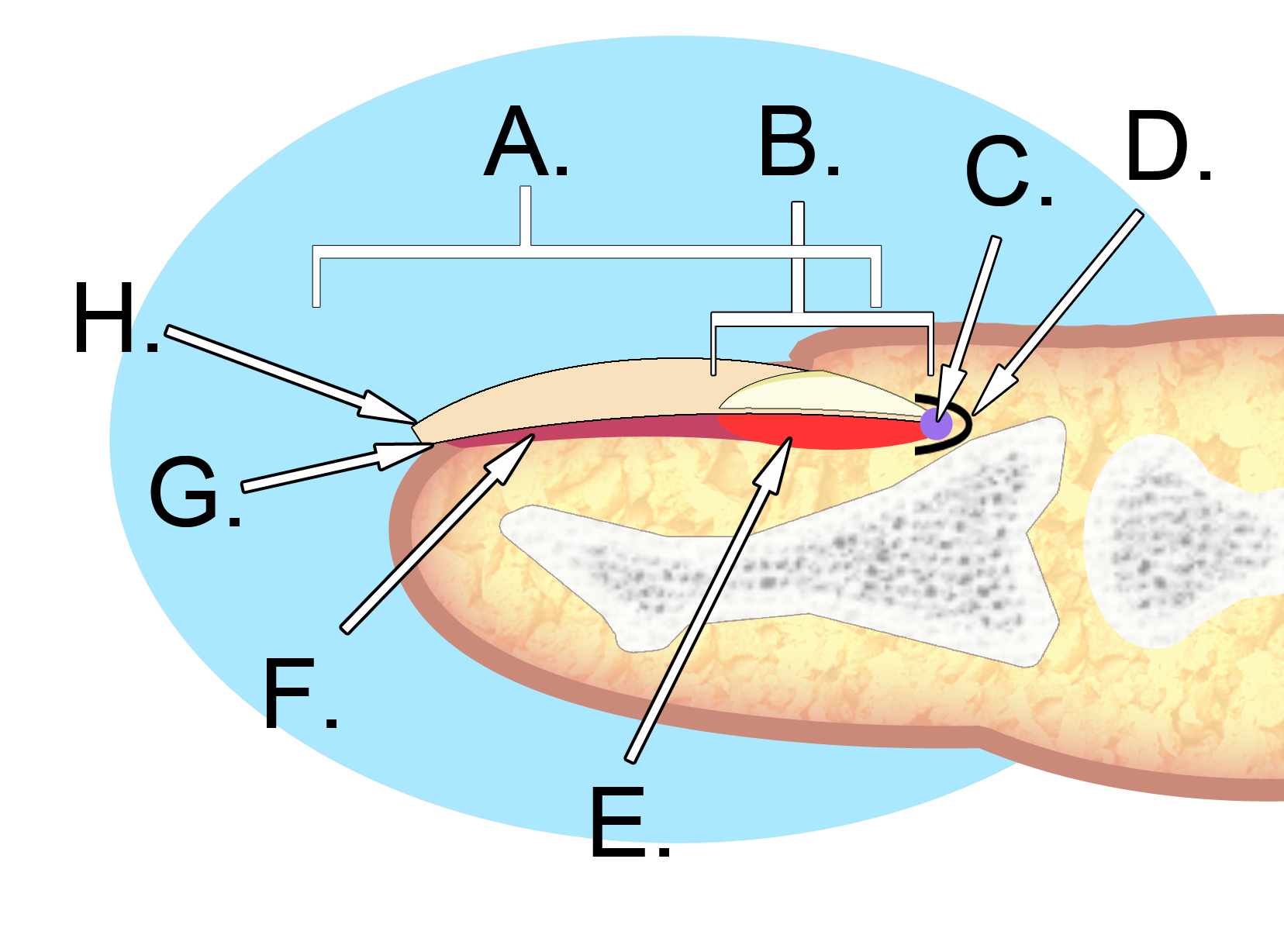
Nobody has nailed down (sorry) the single cause of the fingernail-toenail gap, but two explanations keep coming up. One is circulation: hands sit closer to the heart than feet do, and nail growth tracks pretty closely with blood flow to the digit — which is also why nails grow slower in cold weather, when blood vessels constrict. The other is wear and tear, sometimes called the terminal trauma theory: fingers get bumped, typed on, and used constantly, and the body may respond to that repeated low-grade stress by sending more blood and nutrients to the nail matrix, the living tissue under the skin where new nail is actually made.

The part most people miss
Bean’s fingernail obsession outlived him by decades, and in a strange twist it eventually paid off in the most Bean-appropriate way possible. In September 2025, the Ig Nobel Prize in Literature — the annual award for research that first makes people laugh, then makes them think — was given posthumously to William B. Bean for his 35-year single-nail study, with his son Bennett Bean accepting on his behalf at the ceremony at Boston University. The judges singled out Bean’s actual write-ups, which apparently wandered into references to Moby-Dick and medieval astrology while reporting keratin growth rates. It’s a reminder that Bean wasn’t just running an experiment; he was having fun with it, one thumbnail scratch at a time.
Sources
William B. Bean, “A Note on Fingernail Growth,” Journal of Investigative Dermatology, 1953, volume 20, pages 27-31, documenting his first 10 years of self-observation.
William B. Bean, “Nail Growth: 30 Years of Observation,” Archives of Internal Medicine, 1974, volume 134, pages 497-502, and “Nail Growth. Thirty-Five Years of Observation,” Archives of Internal Medicine, 1980, volume 140, pages 73-76.
Sopa Yaemsiri et al., “Growth rate of human fingernails and toenails in healthy American young adults,” Journal of the European Academy of Dermatology and Venereology, 2010.
Coverage of the 2025 Ig Nobel Prize in Literature awarded to William B. Bean, reported by Improbable Research (organizer of the Ig Nobel Prizes) and Science Friday.
Explore more: more amazing body facts.
nail growth rate FAQs
How much faster do fingernails grow than toenails?
About two to three times faster. Fingernails grow roughly 3.5 millimeters a month on average, compared to about 1.6 millimeters a month for toenails.
Why do fingernails grow faster than toenails?
There’s no single proven answer, but the leading theories are better blood circulation in the hands (which are closer to the heart) and constant minor bumps and use of the fingers, which may stimulate the nail matrix to grow faster.
Who discovered that fingernails grow faster than toenails?
Formal measurement studies confirmed it, but physician William B. Bean’s 35-year self-study of his own thumbnail, published between 1953 and 1980, was an early and influential source of data on human nail growth rates, including the fingernail-toenail difference.
Tales You Can Hold
Fun-facts books for curious kids, personalized books that star your child, and more from the FYI Tales Bookstore. Visit the Bookstore.
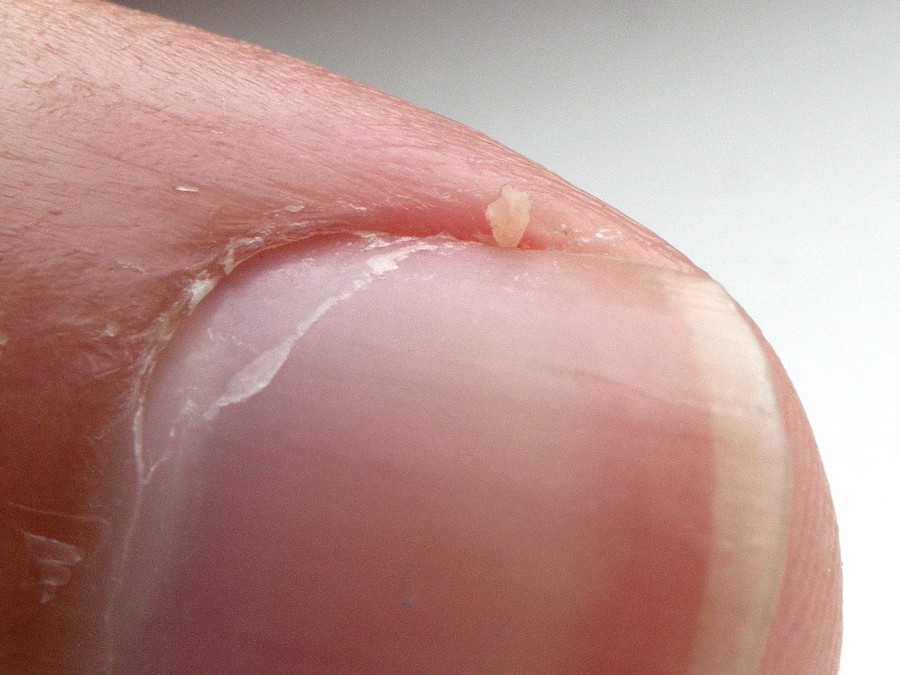
Photo: KDS444 / CC BY-SA 3.0, via Wikimedia Commons.