
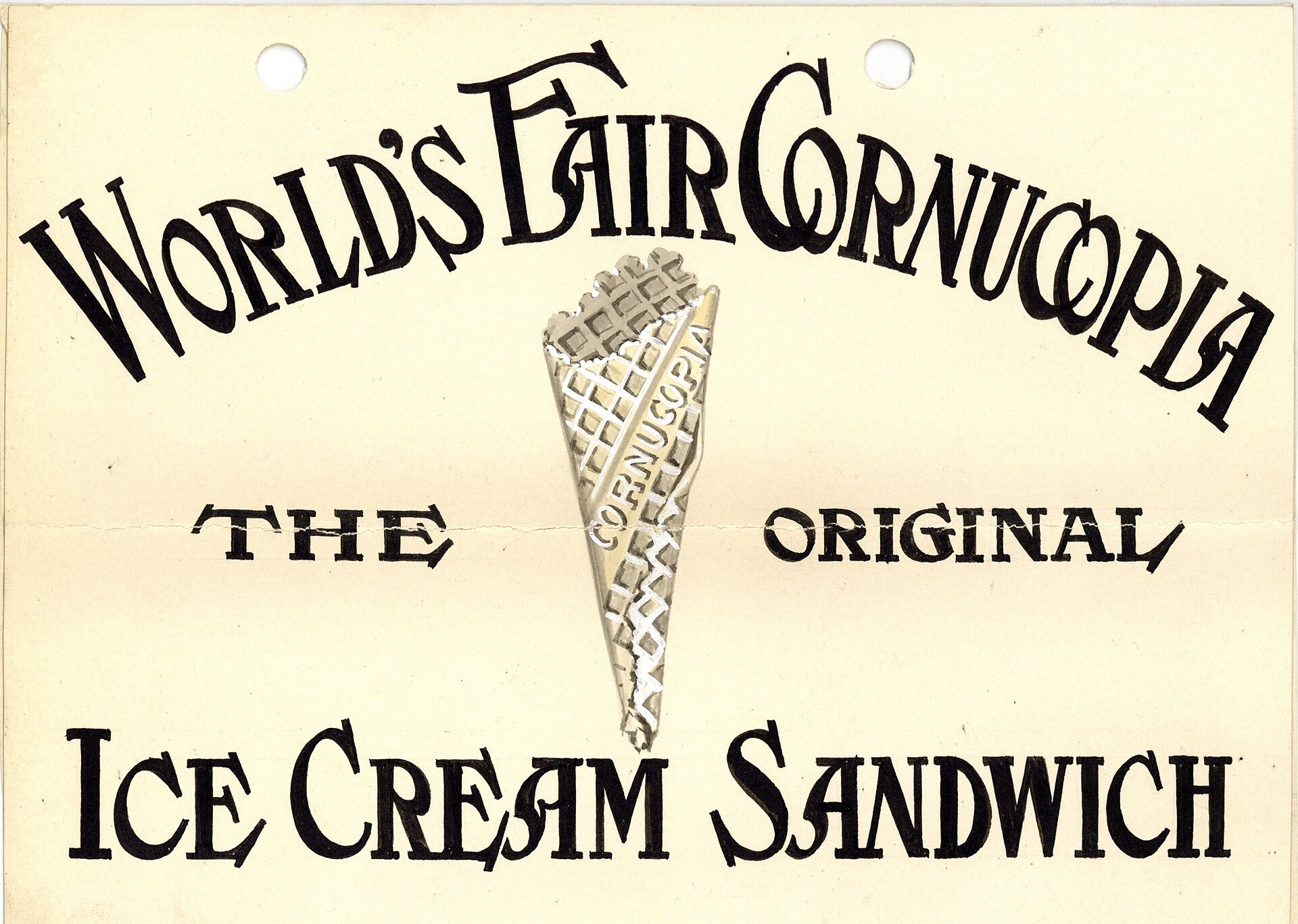
St. Louis, summer of 1904. The World’s Fair is packed, the heat is brutal, and somewhere on the midway called the Pike, an ice cream vendor is in trouble — he’s out of the small paper or glass dishes he needs to serve his product, and customers are lined up. Next door, a Syrian immigrant named Ernest Hamwi is selling a crisp, waffle-like pastry called zalabia. He grabs one while it’s still warm, rolls it into a cone, and hands it over. Problem solved, and supposedly, the ice cream cone is born.
Table of Contents
It’s a fantastic story — tidy, funny, and very on-brand for a World’s Fair that also gave America the hamburger and iced tea, or so the legends say. The trouble is that at least five other people at that same fair claimed they did the exact same thing, and a patent for an edible ice cream cup had already been filed in New York nearly a year earlier. The ice cream cone’s real origin is less a single eureka moment than a pile-up of vendors who all had the same idea at the same hot, ice-cream-hungry moment.
Quick answer
The popular story credits Ernest A. Hamwi, a Syrian immigrant selling a waffle pastry called zalabia, with inventing the edible ice cream cone at the 1904 St. Louis World’s Fair after a neighboring ice cream vendor ran out of serving dishes. That version is real enough that an industry trade group once endorsed it — but it’s disputed, since Italian immigrant Italo Marchiony had already patented a mold for mass-producing edible ice cream cups in December 1903, and several other fair vendors made nearly identical claims.
A heat wave on the Pike
The 1904 World’s Fair — officially the Louisiana Purchase Exposition — ran for seven months and drew around 20 million visitors to St. Louis. Food vendors packed its midway, the Pike, and that summer was scorching, which meant ice cream sold fast and dishes ran out faster. Hamwi, a teenage immigrant from Damascus, was working a waffle stand nearby, selling a thin, crisp pastry called zalabia (sometimes spelled zalabis) that was popular in Ottoman Syria.
According to Hamwi’s own account, given decades later in a 1928 letter published in the Ice Cream Trade Journal, he was set up next to an ice cream booth at the fair and rolled one of his warm waffles into a cone shape to help the dish-strapped vendor out. The idea caught on fast — other concessionaires across the fairgrounds started buying his waffles to wrap around their ice cream, calling the result ‘cornucopias.’ Hamwi later built on it, founding the Cornucopia Waffle Company and then, in 1910, the Missouri Cone Company in St. Louis — a real, lasting business built on a fairground improvisation.
The cone that wasn’t really first
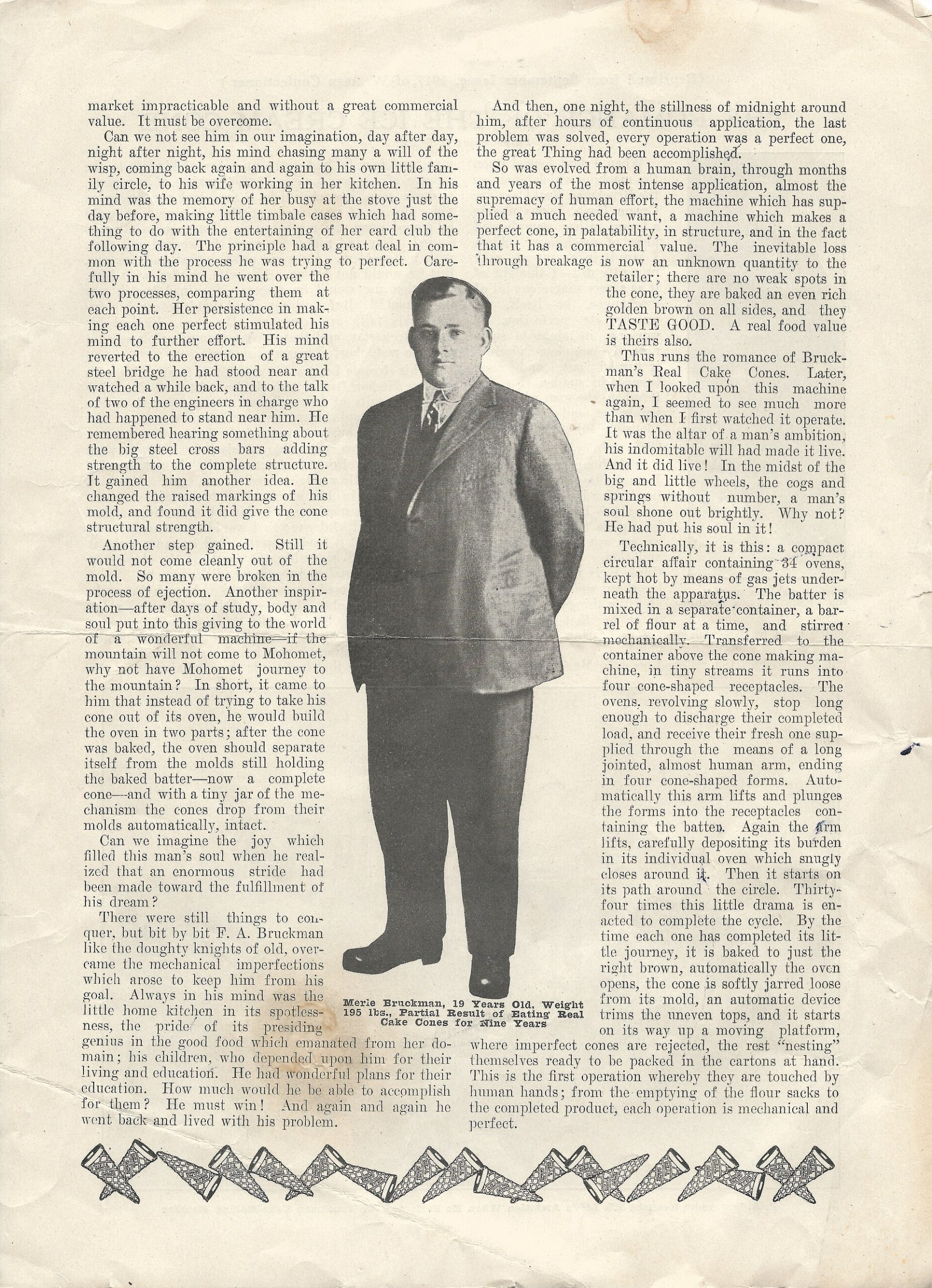
Here’s the complication: Italo Marchiony, an Italian immigrant selling lemon ices from a pushcart on Wall Street, filed for a patent on September 22, 1903, and was granted it on December 15, 1903 — nearly a year before the St. Louis fair. The patent, simply titled ‘Mold,’ didn’t cover a cup with a removable bottom. It described a hinged, multi-block molding apparatus that baked about ten edible, cone-shaped cups at once out of batter, so a vendor could hand out disposable, eatable containers instead of constantly washing (or losing) glass dishes. Marchiony claimed he’d been making and selling ice cream in edible cups since 1896, which, if true, puts him ahead of the fair by close to a decade.
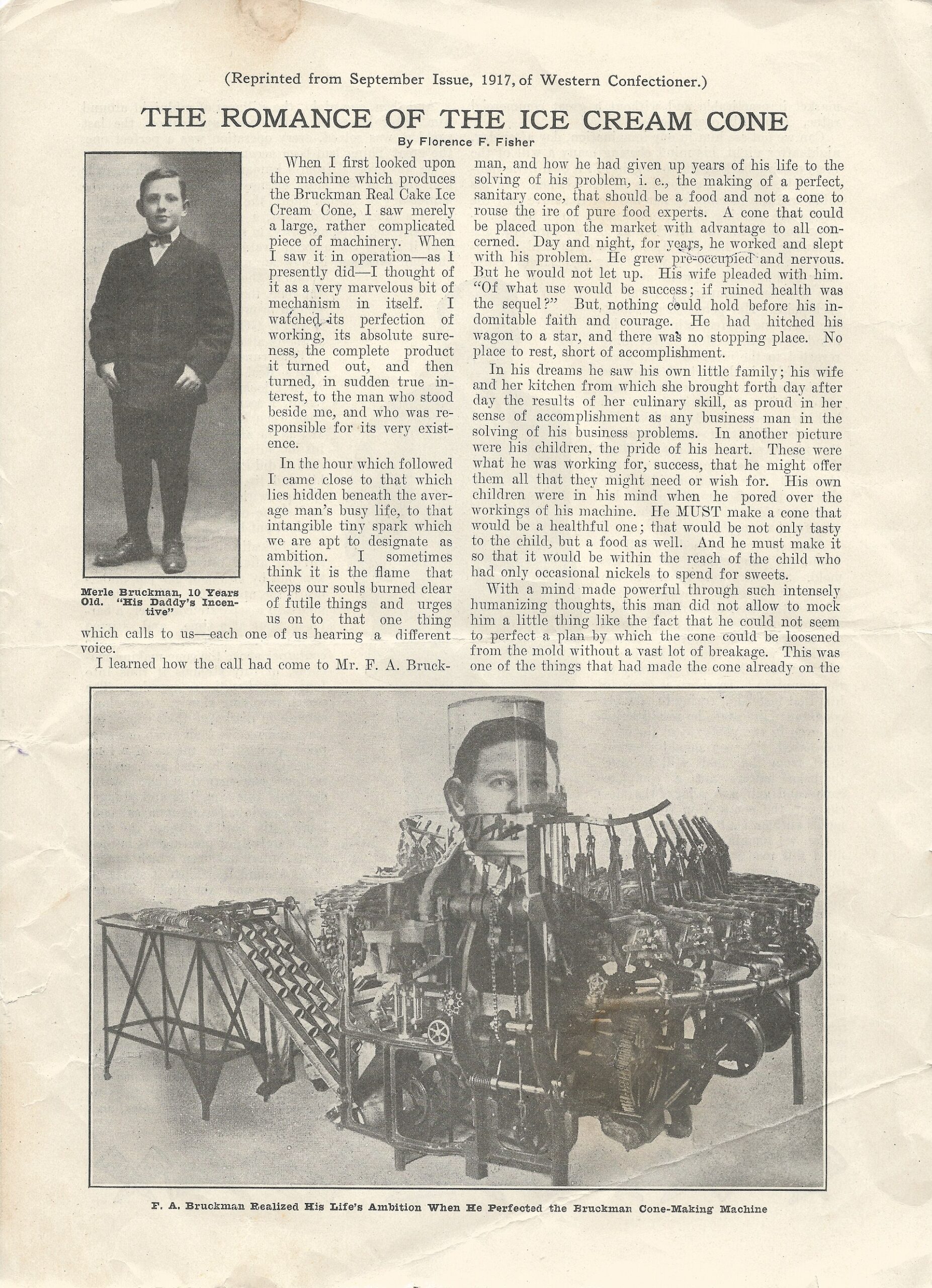
Marchiony wasn’t the only complication, either. Abe Doumar, another young Syrian immigrant at the fair, told a strikingly similar story about rolling a waffle into a cone there — his family went on to found Doumar’s, a drive-in in Norfolk, Virginia, still serving cones today on the same cast-iron cone-making machine. Brothers Charles and Frank Menches said they wrapped a warm waffle around a cone-shaped tent-rope tool called a fid. Decades later, the trade group now known as the International Dairy Foods Association muddied things further: in the 1950s its predecessor, the International Association of Ice Cream Manufacturers, officially recognized Hamwi as the cone’s inventor — yet that same organization’s history page today credits Marchiony’s earlier patent while still repeating Hamwi’s fairground story as an independent, simultaneous creation. Depending on which year — or which page — you check, the ‘official’ answer changes. Most food historians treat the fair as the moment the cone went mainstream rather than the moment it was invented.
The part most people miss
The cone itself is even older than any of these men. English chef Agnes B. Marshall published a recipe for ‘Cornets with Cream’ — a baked, almond-flour pastry cone meant to hold ice cream or sorbet — in her 1888 cookbook, sixteen years before the World’s Fair. So the real invention wasn’t the cone shape; it was the idea of selling ice cream in one, fast, on the street, to a crowd of thousands who’d never seen it done before. That’s a marketing and mass-production breakthrough dressed up as a kitchen accident. Hamwi, Doumar, and the Menches brothers didn’t invent the cone — they turned it into an industry, which is arguably the more interesting story anyway.
Sources
International Dairy Foods Association, ‘The History of the Ice Cream Cone’ — the trade group’s own account, which credits Marchiony’s patent while also repeating Hamwi’s 1904 fairground story.
U.S. Patent No. 746,971, ‘Mold,’ granted to Italo Marchiony on December 15, 1903 — the original patent document describing the hinged molding apparatus for edible ice cream cups.
Wikipedia, ‘Ice cream cone’ — summary of the competing claims, Agnes Marshall’s 1888 cookbook recipe, and Marchiony’s patent.
What’s Cooking America, ‘History of Ice Cream Cones’ — detail on the rival claimants at the 1904 fair, including Abe Doumar and the Menches brothers.
Explore more: more accidental inventions.
ice cream cone FAQs
Who really invented the ice cream cone?
No single person can be proven first. A trade association once credited Ernest Hamwi for rolling a waffle into a cone at the 1904 St. Louis World’s Fair, but Italo Marchiony had already patented a mold for mass-producing edible ice cream cups in late 1903, and several other fair vendors made near-identical claims.
Did an ice cream vendor really run out of dishes in 1904?
That’s the popular version of the story, and it comes from Hamwi’s own later account, but it can’t be independently verified. It may be true, exaggerated, or a tidy explanation added after the fact — historians treat it as plausible folklore, not a documented fact.
Is the ice cream cone story from the 1904 World’s Fair true?
Partly. The 1904 St. Louis World’s Fair is well documented as the moment cones became widely popular, thanks to several vendors selling them side by side. Whether any single vendor ‘invented’ them there, versus simply popularizing an idea Italo Marchiony had already patented, is genuinely disputed among food historians.
Tales You Can Hold
Fun-facts books for curious kids, personalized books that star your child, and more from the FYI Tales Bookstore. Visit the Bookstore.
Photo: MissouriStateArchives / No restrictions, via Wikimedia Commons.