
Tucked into the clutter of tools scattered around the seated figure in Albrecht Dürer’s 1514 engraving “Melencolia I” — among the saw, the plane, the pincers, and the bent nails — sits a hammer with a split, curling claw, the same basic shape sitting in a toolbox five centuries later. Whoever forged that hammer wasn’t guessing. The curve was already doing a very specific job.
Table of Contents
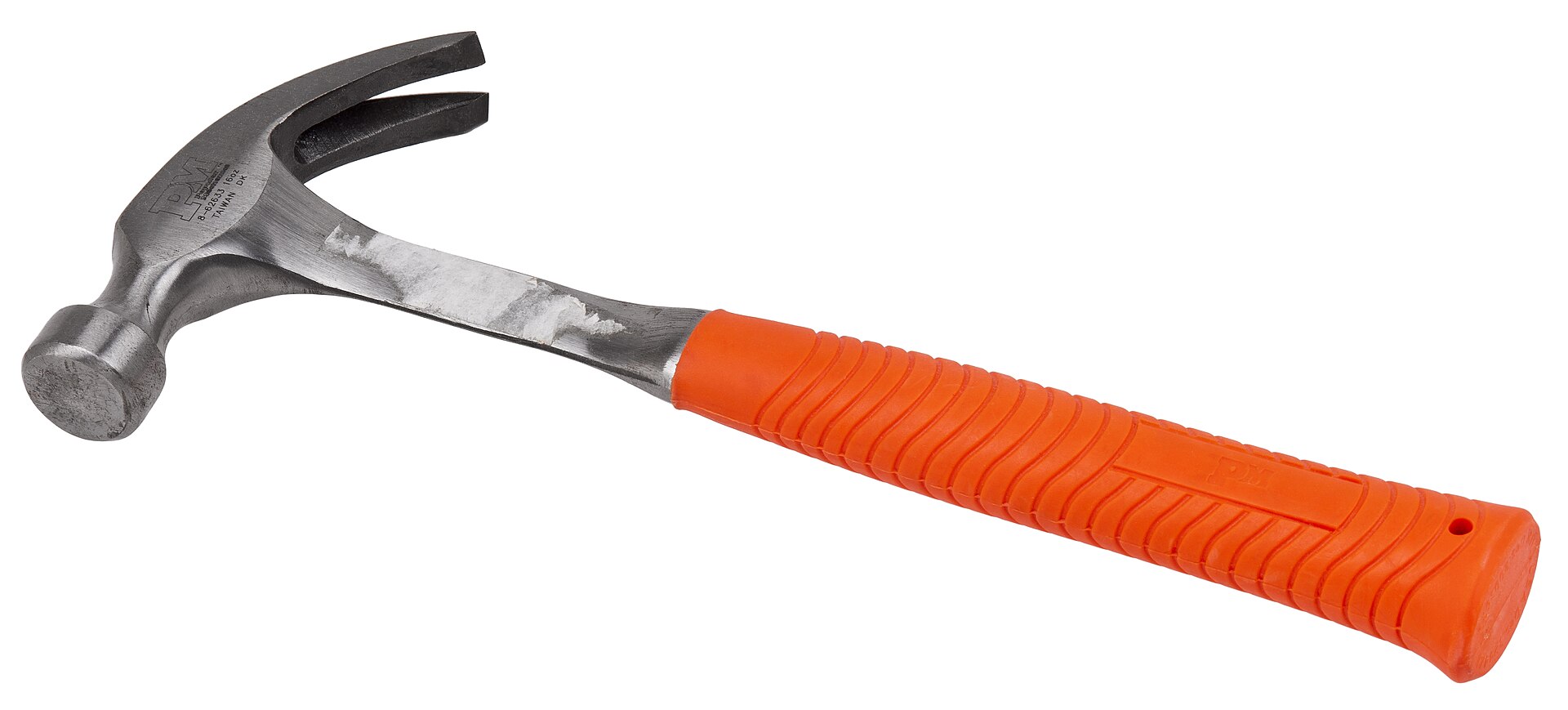
Most people assume the hook is just there to grab a nail. It is, but the curve itself is the clever part: it’s a lever path, engineered (first by instinct, later by actual calculus) to keep you pulling with maximum force for as long as possible. Straighten that claw out and you don’t just get a different look — you get a different tool, built for a different fight.
Quick answer
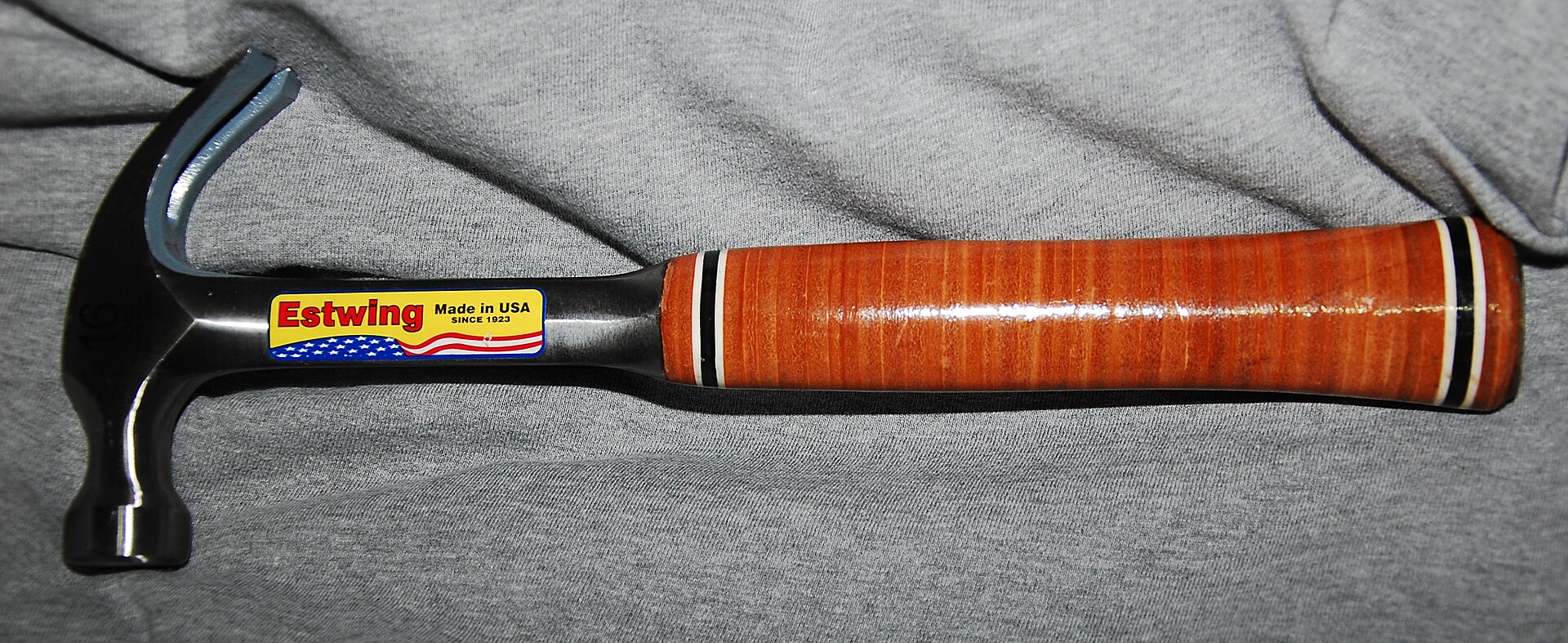
A curved claw keeps the nail close to the hammer’s pivot point throughout the entire pulling motion, so your leverage stays strong from the first tug to the last. A straight claw loses that advantage as you rock the handle back, which is exactly why it’s built for prying boards apart instead.
A 1514 engraving already had the answer
The claw hammer is old enough to have a cameo in Renaissance art. Dürer’s “Melencolia I” depicts a cluttered workshop of symbolic tools — a plane, a saw, scattered nails, pincers — and among them, a hammer with a downward-curving, V-shaped claw, the same silhouette you’d recognize on a hardware store shelf today. The English term “claw hammer” itself doesn’t show up in writing until 1769, according to etymological records, which tells you the tool outran its own name by centuries.
Search around online and you’ll bump into tool-blog claims naming a specific 19th-century American as “the inventor of the claw hammer,” complete with a tidy patent date. It doesn’t hold up — the design was already circulating in European workshops more than 250 years before any of those patents were filed. What actually happened is less dramatic and more honest: blacksmiths across centuries kept bending that claw into roughly the same curve, independently arriving at the same shape because it simply worked better than a straight hook for the job most carpenters needed done.
The lever that doesn’t lose its grip
Here’s the mechanism blacksmiths stumbled into without writing a single equation: a claw hammer pulling a nail is a lever, with the hammer head resting on the wood as the fulcrum. As you pull the handle back, that fulcrum point and the angle of contact are constantly changing. A curved claw is shaped so the nail stays tucked close to the pivot through that whole arc, which keeps your mechanical advantage high from start to finish.
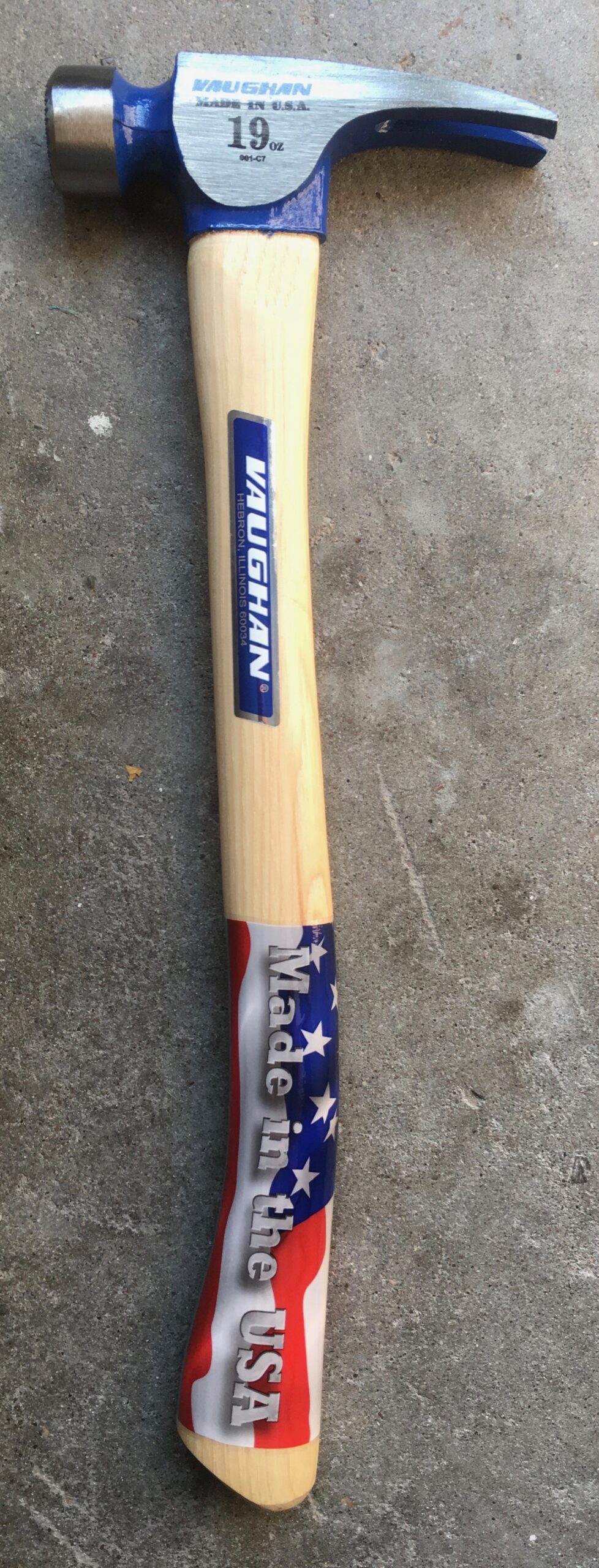
A straight claw can’t do that trick — as you rock it back, the geometry works against you and the pull gets harder, not easier. That’s a real downside for pulling nails, but it’s a feature for a different job: straight claws (the ones you’ll see on framing or “rip” hammers) slide more easily between stacked boards and resist twisting, which makes them better for tearing apart lumber or wrecking plaster than for a clean, controlled nail extraction. Pros don’t pick one over the other by accident — framers often carry a rip-claw hammer for demolition and a curved claw for finish work, because the two shapes are optimized for opposite tasks.
The part most people miss
The curve wasn’t just left to folk wisdom forever. In 1997, inventors Talmadge Wayne Powell and Evangelos C. Eleftheriou were granted a U.S. patent, “Hammers with optimal claw shape and method for development of optimally designed hammers, crowbars, and levers,” that put actual mathematical optimization behind the shape blacksmiths had been eyeballing for 500 years. Their method calculated claw contours two different ways — one to minimize the total energy spent pulling a nail, another to minimize the peak force at any single point in the pull, which matters most for anyone without a lot of upper-body strength. Either way, the conclusion confirmed the folk design: the curve isn’t decoration, it’s a solved leverage problem, and the specific radius of that curve changes how easy the tool is to use. Centuries of trial and error by anonymous smiths and a late-20th-century calculus patent landed on the same answer.
Sources
Wikipedia’s entry on the claw hammer, which documents the Dürer engraving and the design split between curved and straight (“rip”) claws.
Wikipedia’s entry on Dürer’s “Melencolia I” (1514), describing the claw hammer and other craft tools depicted in the engraving.
U.S. Patent US5674002A, “Hammers with optimal claw shape and method for development of optimally designed hammers, crowbars, and levers,” granted October 7, 1997, to Talmadge Wayne Powell and Evangelos C. Eleftheriou, via Google Patents.
Explore more: more true stories behind everyday objects.
claw hammer FAQs
Why do some hammers have a straight claw instead of a curved one?
Straight claws (found on framing or “rip” hammers) are built for prying boards apart and demolition work, not nail pulling — the straighter shape slides between stacked lumber and resists twisting, trading nail-pulling leverage for better prying strength.
Does the curve really make a difference when pulling a nail?
Yes. The curve keeps the nail close to the hammer’s pivot point as you rock the handle back, which keeps your leverage strong through the whole motion. A straight claw loses that advantage partway through the pull.
How old is the claw hammer design?
At least 500 years. A hammer with a curved, split claw appears in Albrecht Dürer’s 1514 engraving “Melencolia I,” though the English term “claw hammer” isn’t recorded in writing until 1769.
Tales You Can Hold
Fun-facts books for curious kids, personalized books that star your child, and more from the FYI Tales Bookstore. Visit the Bookstore.
Photo: Evan-Amos / Public domain, via Wikimedia Commons.