
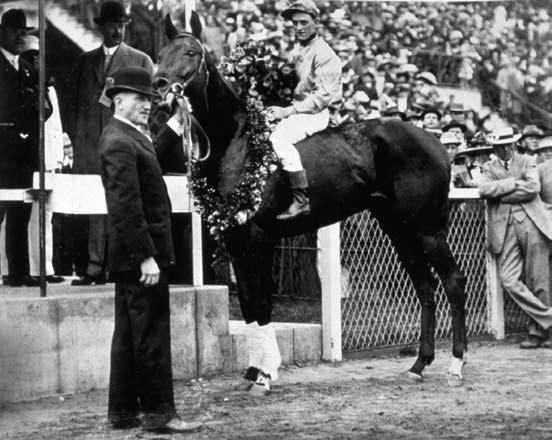
On May 10, 1913, a horse named Donerail crossed the finish line at Churchill Downs half a length ahead of the favorite. His own owner, Thomas P. Hayes, had been reluctant to even enter him. The odds were 91 to 1 — still, more than a century later, the longest odds ever to win the Kentucky Derby. A $2 bet on Donerail paid $184.90. He was, in every sense of the phrase, a long shot.
Table of Contents
It’s tempting to assume the phrase was born at a racetrack like that one. It wasn’t — the words started life three centuries earlier, describing a soldier’s gun. But here’s the twist most retellings get wrong: the betting sense isn’t a Gilded Age add-on borrowed decades after the fact. The dictionary’s own paper trail puts a horse-racing wager in the phrase’s figurative origin story almost as early as the phrase itself existed.
Quick answer
“Long shot” began in the 1590s as a term for long-range gunfire and the soldiers who fired it — an attempt unlikely to hit its mark. The leap to “an unlikely bet” happened much earlier than many word-history sites claim: the Oxford English Dictionary’s earliest citation for that figurative sense is from 1796, and it’s a line about a wager on a horse race.
A soldier, then a gun, then a gamble
The Oxford English Dictionary’s earliest known use of “long shot” in English dates to 1595, in Abraham Hartwell’s translation of Giovanni Tommaso Minadoi’s History of the Warres betweene the Turkes and the Persians. There it names a unit of long-barreled guns — “the Long-shot” — not the idea of unlikely odds at all.
Over the following two centuries, the meaning drifted from the weapon to what the weapon usually failed to do. Early muskets were smoothbore, with no rifling to stabilize a ball in flight, which made them wildly inaccurate past 50 to 100 yards against a human target, even though the ball itself could carry much farther. Firing at the outer edge of a gun’s range, and actually hitting anything, came down mostly to luck. That near-hopeless attempt is what “a long shot” came to mean figuratively: a bet against the odds.
The racetrack was there from the start
Here’s the part that upends the tidy “gunnery term, later borrowed by racetracks” version of the story: the OED’s earliest citation for “long shot” used to mean an unlikely wager isn’t a gambling manual or a soldier’s memoir. It’s a line from 1796 — ‘Robin thought half a noble a long shot’ — cited by the dictionary specifically for its horse-racing sense. A noble was an old English gold coin; “half a noble” was simply the stake someone judged too rich a bet to expect to win.
That’s more than a century earlier than some etymology sites suggest. The Online Etymology Dictionary, for instance, currently dates the general figurative sense of “long shot” (something unlikely, full stop) to 1867. The OED’s own citation file tells a different story — the wagering sense already existed, tied specifically to a horse race, in the late 18th century. Word histories aren’t always tidy, and this is a case where two respected sources genuinely disagree on the timeline.
What both agree on is that the phrase was well embedded in American speech by the mid-1800s. “By a long shot,” meaning “by a considerable margin,” shows up in Mary Boykin Chesnut’s Civil War diary in 1861, when a soldier is asked whether troops get paid every week and answers, “Not by a long shot.” By then the gunnery image was already fading into pure idiom — nobody in that exchange was talking about rifles, let alone racehorses.
The part most people miss
Long shots are bad bets almost by design, and bettors keep making them anyway. In 1949, researcher R. M. Griffith published one of the first studies of American racetrack wagering and found that bettors as a group consistently overvalue long shots and undervalue favorites — a pattern now known as the favourite-longshot bias. Betting favorites loses money at a fairly steady, modest rate over time; betting long shots loses money much faster. The math has favored the favorite for at least 75 years of recorded data. People keep taking the long shot anyway, for roughly the same reason the phrase has survived: a story where the underdog wins is simply more satisfying than one where the sure thing does — which is exactly why Donerail’s name still gets repeated over a century later, while that Derby’s favorite is largely forgotten.
Sources
Phrases.org.uk, “Not By a Long Shot,” citing the Oxford English Dictionary’s 1595 attestation (Abraham Hartwell’s translation of Minadoi) and Mary Boykin Chesnut’s 1861 Civil War diary.
Suzanne Arnold, “Origin stories: long shot,” summarizing the Oxford English Dictionary’s 1796 citation for the horse-racing/wagering sense of the phrase.
Etymonline (Online Etymology Dictionary), entry for “long shot,” for the competing 1867 dating of the general figurative sense and the 1830 dating of “by a long shot.”
Wikipedia, “1913 Kentucky Derby,” for details on Donerail’s 91-1 win, jockey Roscoe Goose, and owner-trainer Thomas P. Hayes; and Wikipedia, “Favourite-longshot bias,” for the betting research originating with R. M. Griffith’s 1949 study.
Explore more: more word and phrase origins.
long shot FAQs
What does “long shot” originally mean?
It originally referred to a long-barreled gun and, by extension, soldiers who used one — the Oxford English Dictionary’s earliest citation is from 1595. The meaning later shifted to describe the low odds of actually hitting a target from that range with an inaccurate early firearm.
Does “long shot” come from horse racing?
Horse racing is tied to the phrase earlier than many people assume. The Oxford English Dictionary’s earliest citation for the figurative “unlikely bet” sense, from 1796, is specifically about a wager on a horse race — though other dictionaries date the general figurative sense later, so the exact timeline is genuinely disputed among sources.
What’s the biggest long-shot win in Kentucky Derby history?
Donerail, at 91-1 odds in 1913, remains the longest-odds winner in Kentucky Derby history — a record that has stood for over a century.
Is betting on long shots actually a good strategy?
Statistically, no. Research on the favourite-longshot bias, dating back to R. M. Griffith’s 1949 study, shows bettors as a group overpay for long shots relative to their real chances, so favorites lose money at a slower average rate than long shots do.
Tales You Can Hold
Fun-facts books for curious kids, personalized books that star your child, and more from the FYI Tales Bookstore. Visit the Bookstore.
Photo: Public Domain, c. 1913 / Public domain, via Wikimedia Commons.