If you’ve ever stood at a busy intersection and noticed the crosswalk signal on your corner ticking one way while the one across the street chirps another, you’ve probably assumed it’s on purpose — a little sonic code so blind pedestrians can tell which crossing is which. It’s a tidy theory. It’s also, according to the researchers who actually tested it, mostly backwards.
Table of Contents
For decades, American and Japanese engineers built accessible pedestrian signals around exactly that idea: give each direction its own distinct sound. Then, in the 2000s, a federally funded study sent researchers out to watch real blind pedestrians use real intersections — and found that different sounds on the same corner didn’t help people cross safely. They made it harder.
Quick answer
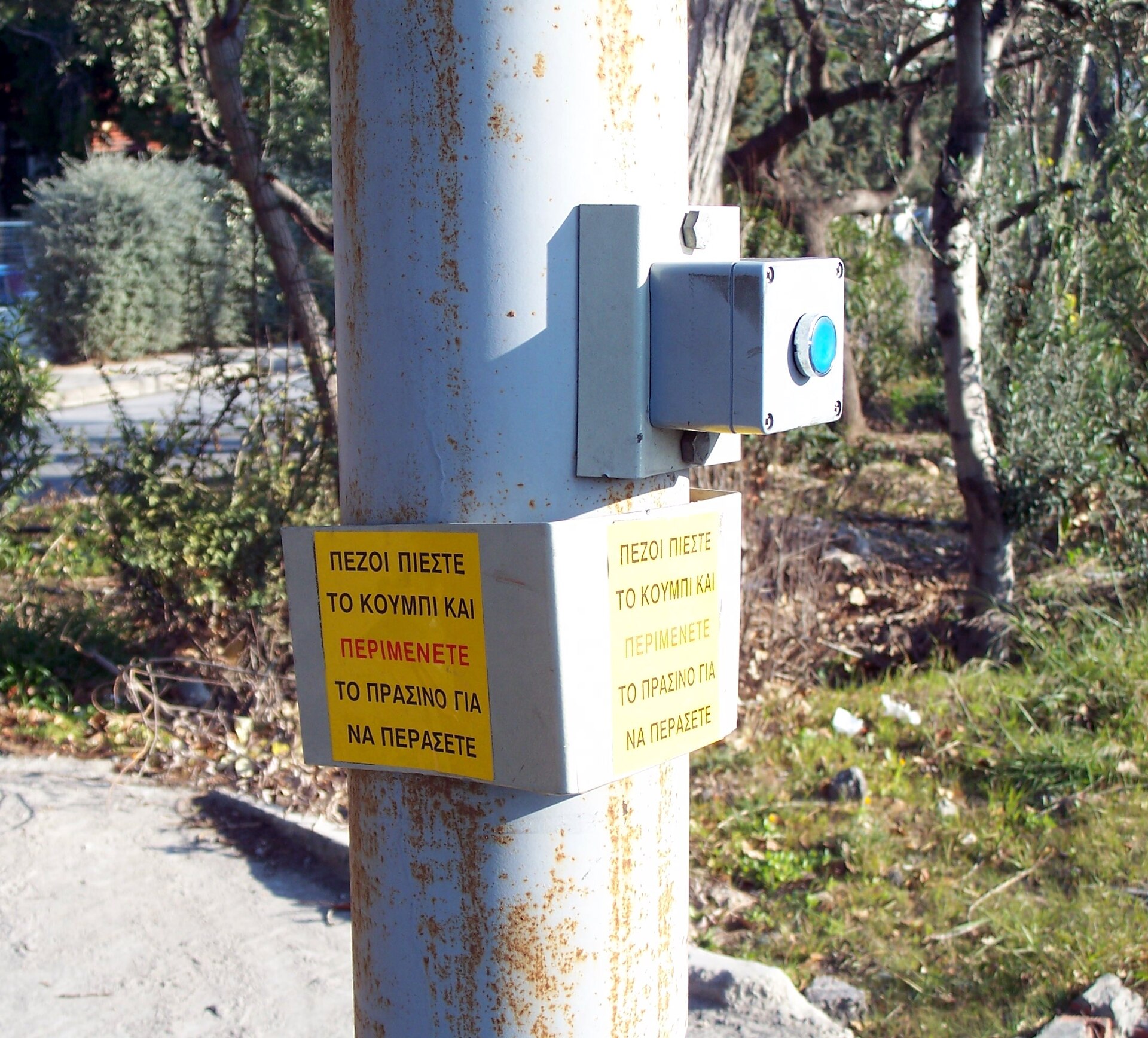
Crosswalk buttons that seem to beep in different patterns aren’t running an intentional “code” for each direction — current U.S. traffic engineering guidance actually recommends the opposite, that same-corner signals use the *same* rapid tone, with location (separate poles, at least 10 feet apart) and a tactile arrow doing the job of telling pedestrians which crossing is which.
The bird sounds that started it all
The idea of giving pedestrian signals distinct sounds goes back to Japan, where Nagoya Electric Works developed the country’s now-iconic “cuckoo and chirp” crossing sounds in the 1970s — a cuckoo call for one direction, a bird-like chirp for the other. American manufacturers picked up the same logic around the same period, reasoning that if two nearby crossings sounded different, a blind pedestrian could tell them apart by ear.
It made sense in theory, and it earned a permanent place in the culture — anyone who’s walked through Tokyo remembers the birdsong at every intersection. After the Americans with Disabilities Act passed in 1990, audible pedestrian signals became a bigger deal in U.S. cities too, and the two-sound approach came along with them.
Then someone actually tested it
The turn came when the Transportation Research Board’s National Cooperative Highway Research Program funded a real study — NCHRP Project 3-62 — led by orientation-and-mobility researcher Janet Barlow, with a companion 2007 NCHRP report co-authored by David Harkey (who later became president of the Insurance Institute for Highway Safety). They put blind and low-vision volunteers in front of real intersections rigged with different signal configurations and simply measured how fast and how accurately people identified which crosswalk had the walk signal.
The result surprised the people who’d been designing these systems for years: when two signals on the same corner played different tones, pedestrians were slower and less accurate at figuring out which crossing was live. When both signals played the identical rapid tick, and were mounted on separate poles near their own crosswalk at least 10 feet apart, people did dramatically better. Distinct sounds, it turned out, added confusion instead of removing it — especially for pedestrians with cognitive as well as visual impairments.
There was a second problem with the bird sounds specifically: about one in ten visually impaired pedestrians in related research mistook the recorded chirps for actual birds, and vice versa. Mockingbirds and European starlings, both accomplished mimics, occasionally picked up the cuckoo calls themselves, adding real birdsong to the confusion. The Federal Highway Administration folded these findings into the 2009 Manual on Uniform Traffic Control Devices, which steered new installations away from bird sounds and toward a standardized rapid tick — engineers settled on a tone built around 880 Hz, repeating eight to ten times a second during the walk interval.
The part most people miss
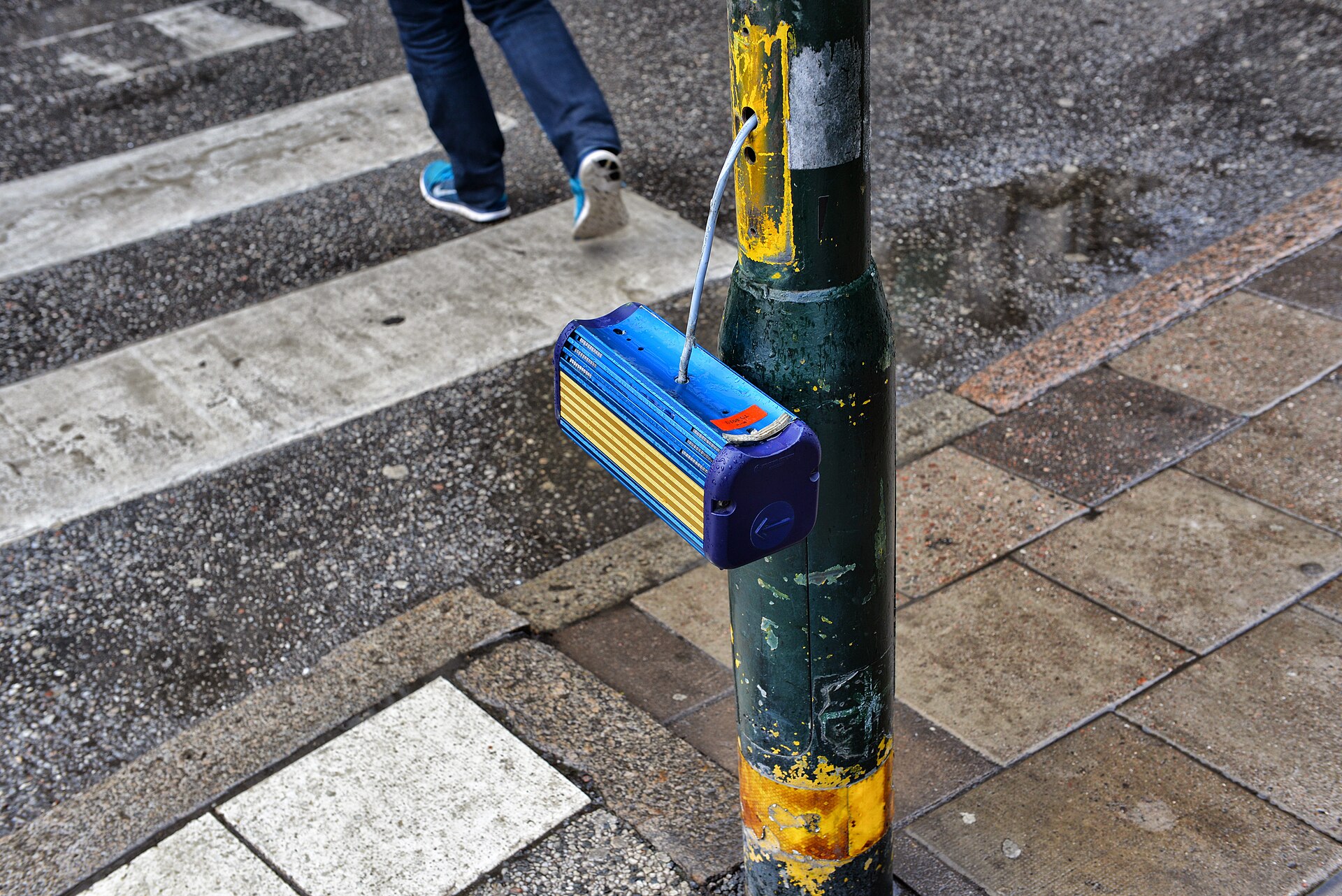
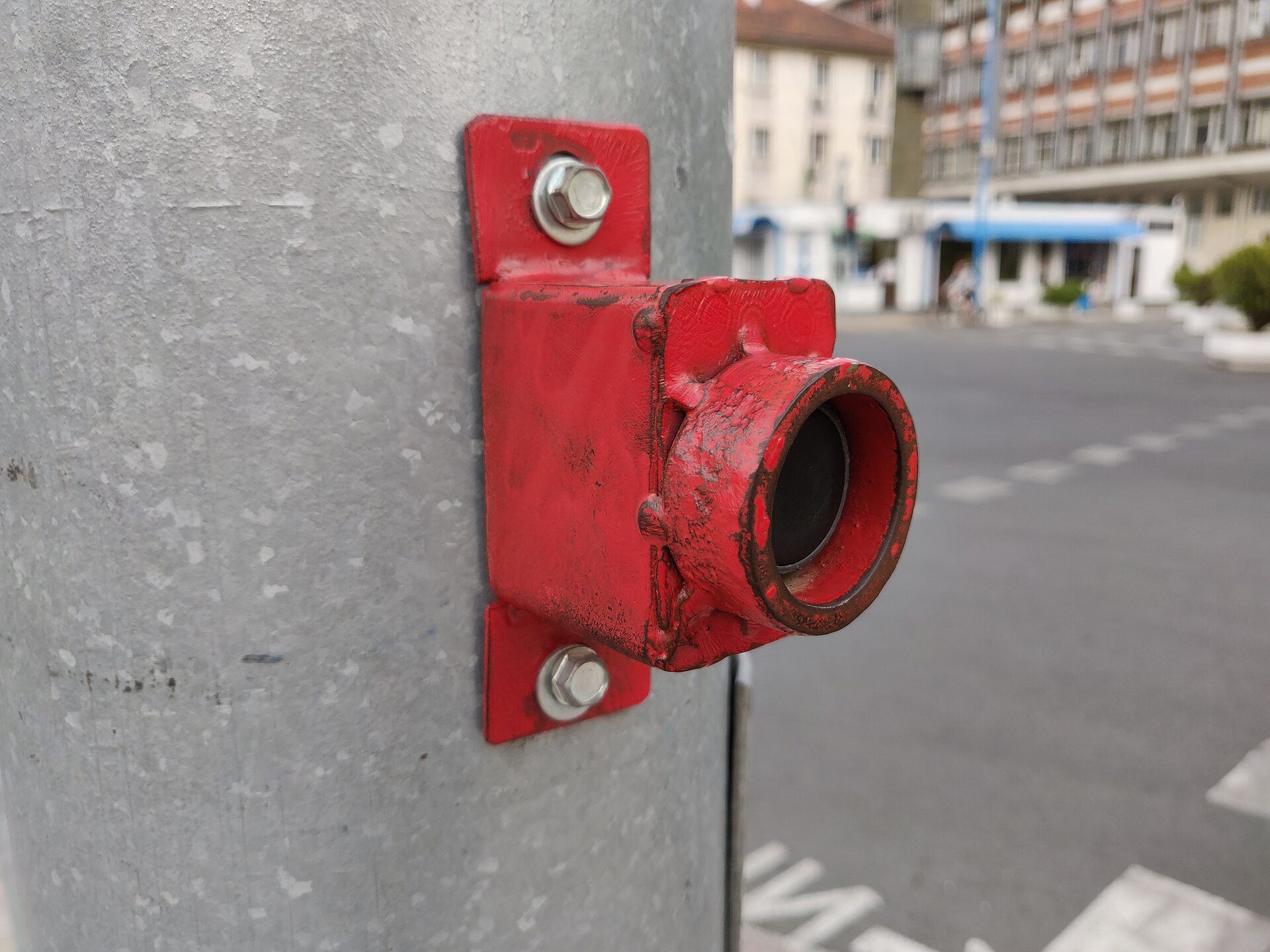
Here’s the twist: if you stand at an intersection today and still hear what sounds like two different beep patterns on the same corner, it’s very likely not a design feature at all — it’s two nearly identical devices simply running out of sync with each other. The locator tone that tells you where the pushbutton itself is sits at a fixed one tick per second, but nothing forces two separate poles to tick in unison, so they drift in and out of phase and can sound almost rhythmic, almost coded, purely by coincidence. The actual, deliberate way modern signals tell you which crossing is which isn’t sound design at all — it’s the raised tactile arrow molded into the pushbutton housing, aligned with the direction of travel, which a pedestrian can feel with a finger to confirm they’ve got the right crosswalk before stepping off the curb.
Sources
Audubon, “Bird-Like Crosswalk Sounds for the Visually Impaired Are Being Phased Out,” reporting on the 2007 NCHRP research and the 2009 MUTCD update.
The APS Guide (apsguide.org), maintained around Janet Barlow’s research on pushbutton locator tones, walk-interval tone specifications, and pole placement guidance.
Access for Blind, “Locator Tones for Pedestrian Signals,” summarizing NCHRP Project 3-62 findings on same-tone versus different-tone corner configurations.
Explore more: More everyday objects with surprising true stories.
crosswalk button beeping FAQs
Do crosswalk buttons really beep differently on purpose?
Sometimes what you hear is just two unsynchronized identical devices drifting in and out of phase, not an intentional code. Current traffic engineering guidance actually recommends matching tones on the same corner, because research found different tones made it harder, not easier, for blind pedestrians to tell crossings apart.
Why did Japan use bird sounds at crosswalks?
Nagoya Electric Works introduced cuckoo and chirp sounds in the 1970s to mark different crossing directions audibly. The convention spread but has since been reconsidered because pedestrians sometimes confused the recordings with real birds — and real mockingbirds occasionally mimicked the cuckoo calls right back.
How do blind pedestrians actually know which crosswalk is which today?
Mainly through a tactile arrow built into the pushbutton that’s aligned with the direction of travel, combined with signals mounted on separate poles close to their own crosswalk — a placement and touch-based solution rather than a sound-based one.
Tales You Can Hold
Fun-facts books for curious kids, personalized books that star your child, and more from the FYI Tales Bookstore. Visit the Bookstore.
Photo: Jonatan Svensson Glad / CC BY-SA 4.0, via Wikimedia Commons.