
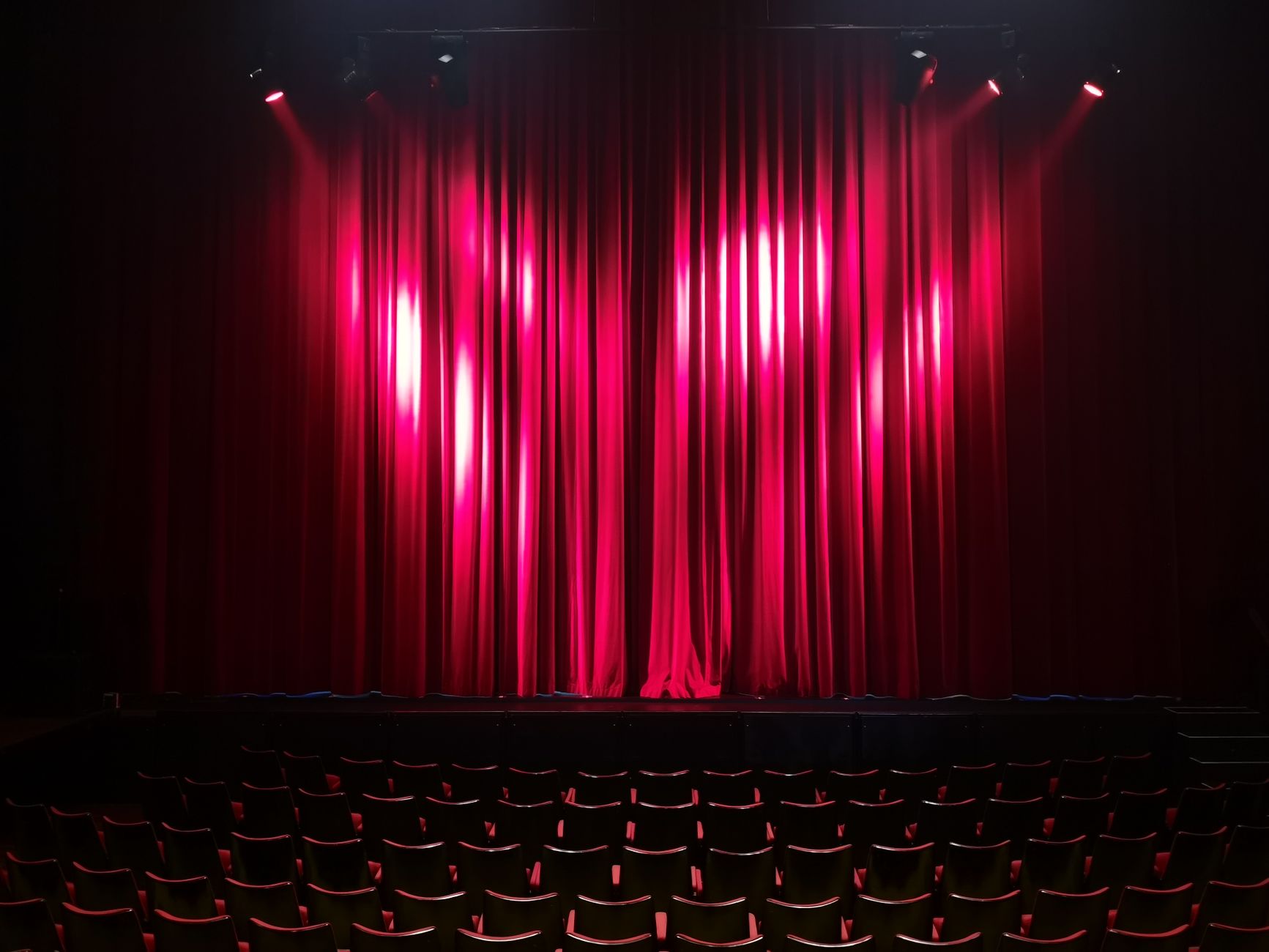
Right before the curtain goes up, someone backstage will lean in and whisper the strangest thing you can say to a nervous performer: I hope you break your leg. Not ‘you’ll be great.’ Not ‘good luck.’ A wish for a broken bone, delivered with a straight face, and taken as a genuine kindness.
Table of Contents
The tidy explanation you’ve probably heard — something about Vaudeville performers only getting paid if they made it onstage past the ‘leg line’ of curtains — sounds great at a dinner party. It’s also almost certainly false. The real trail is messier, involves a 1921 magazine essay about horse racing and a novelist’s memoir from the eve of World War II, and quite possibly a squadron of German fighter pilots. Nobody has ever nailed it down completely, and that unsolved gap is the actual story.
Quick answer
Actors say ‘break a leg’ because of an old superstition that wishing someone ‘good luck’ out loud would jinx them, so performers began saying the opposite instead. The earliest documented theatrical use is from novelist Edna Ferber’s 1939 autobiography, though the underlying superstition — and possibly the phrase itself — likely arrived from German or Yiddish-speaking performers even earlier. The popular ‘Vaudeville leg-line payment’ story is a myth with no supporting evidence.
A jinx, a racetrack, and a very old fear of good luck
The earliest documented cousin of the phrase shows up nowhere near a stage. In October 1921, writer Robert Wilson Lynd published an essay called ‘A Defence of Superstition’ in the British magazine The New Statesman. Describing the superstitions of gamblers, Lynd wrote that instead of saying ‘Good luck’ to someone, you should say something insulting — like ‘May you break your leg!’ He was talking about horse racing, not theatre.
That’s the pattern behind the phrase: performers, gamblers, and pilots have long shared a belief that saying good fortune out loud invites bad fortune to come listen. Wishing someone harm, ironically, was safer — it tricked whatever forces were eavesdropping. Theatre folklore is full of these inversions: never say the actual name of ‘the Scottish play’ inside a theatre, never whistle in the wings, never wish an actor ‘good luck’ to their face.
From a novelist’s memoir to Broadway dressing rooms
The earliest confirmed sighting of the phrase actually inside a theatre comes from an unexpected source: Pulitzer-winning novelist Edna Ferber. In her 1939 autobiography A Peculiar Treasure, Ferber describes watching understudies sitting in the back row, ‘politely wishing the various principals would break a leg’ — a sly, double-edged joke, since an understudy secretly wants the lead to get hurt so they can go on instead. It’s the earliest print evidence anyone has found of the phrase living inside a real theatre.
The phrase most researchers now point to as theatre’s likely deeper source isn’t English at all. German has a long-standing expression, Hals- und Beinbruch — literally ‘neck and leg break’ — used as a good-luck send-off, notably among German aviators. Some etymologists trace that phrase further back to the Yiddish hatslokhe un brokhe (‘success and blessing’), itself rooted in Hebrew, garbled through translation into something that sounds like a wish for broken bones.
American theatre in the early 20th century had heavy overlap with German- and Yiddish-speaking immigrant performers, which is the most plausible bridge for how a European ‘opposite luck’ idiom crossed over into English-language greenrooms. It’s a theory, not a proven chain of custody — but it fits the timeline better than the story most people repeat. That more famous story — that actors got paid only if they performed and ‘broke’ past the legs (side curtains) of the stage — has been thoroughly debunked by theatre historians, including prop researcher Eric Hart, who notes the phrase is absent from American writing during Vaudeville’s actual heyday, and that ‘wings’ rather than ‘legs’ was the standard term for those curtains well into the 1950s. By 1948, the phrase was common enough that theatre historian Bernard Sobel spelled it out plainly in his Theatre Handbook and Digest of Plays: actors, he wrote, never say ‘good luck’ — only ‘I hope you break a leg.’
The part most people miss
The two biggest theories you’ll hear tying the phrase to specific famous events — that it references John Wilkes Booth breaking his leg jumping to the stage after shooting Lincoln in 1865, or that it traces back to actress Sarah Bernhardt’s amputated leg — are both almost certainly false, and for the same simple reason: neither theory can explain why, if either event were the origin, nobody wrote the phrase down for decades afterward. Language doesn’t usually sit silent that long before catching on. Historians treat both as the kind of story that gets attached to a phrase after the fact because it’s more vivid than ‘nobody’s entirely sure.’ What’s actually notable is that etymologists openly call ‘break a leg’ a ‘dead metaphor’ — a phrase so worn smooth by use that its literal meaning and origin have essentially detached from how people use it today. Most idioms we use daily have a similarly untraceable childhood; ‘break a leg’ just happens to be one where the folklore got louder than the facts — and even the ‘earliest citation’ keeps moving as researchers dig up older sources like Ferber’s memoir.
Sources
Wikipedia’s entry on ‘Break a leg,’ which compiles the citation history, including Edna Ferber’s 1939 autobiography A Peculiar Treasure, the Lynd 1921 New Statesman reference, and the competing etymological theories.
Eric Hart, theatrical prop researcher, ‘Why Do Theater People Say Break a Leg?’ (Prop Agenda), which traces and debunks the Vaudeville ‘leg line’ payment myth using period theatre terminology.
The Phrase Finder (phrases.org.uk), ‘Break a Leg — Meaning and Origin,’ which documents the 1948 Bernard Sobel Theatre Handbook citation and the German Hals- und Beinbruch connection.
Explore more: More word and phrase origins.
break a leg FAQs
Where does ‘break a leg’ actually come from?
Nobody knows for certain. The strongest evidence points to an old superstition that wishing someone luck out loud would jinx them, possibly reinforced by the German phrase Hals- und Beinbruch carried into American theatre by German- or Yiddish-speaking performers in the early 1900s.
Is the Vaudeville ‘leg line’ story true?
No. Theatre historians have found no evidence for it — the phrase doesn’t appear in American writing during Vaudeville’s peak, and the curtains it supposedly refers to were called ‘wings,’ not ‘legs,’ until decades later.
What’s the earliest confirmed theatrical use of the phrase?
The earliest documented use inside a theatre appears in novelist Edna Ferber’s 1939 autobiography A Peculiar Treasure, describing understudies wishing the leads would ‘break a leg.’ By 1948, theatre historian Bernard Sobel was explaining the custom outright in his Theatre Handbook.
Does ‘break a leg’ have anything to do with John Wilkes Booth or Sarah Bernhardt?
Almost certainly not. Both theories require the phrase to have gone unrecorded for decades before appearing in print, which historians consider highly unlikely.
Tales You Can Hold
Fun-facts books for curious kids, personalized books that star your child, and more from the FYI Tales Bookstore. Visit the Bookstore.