
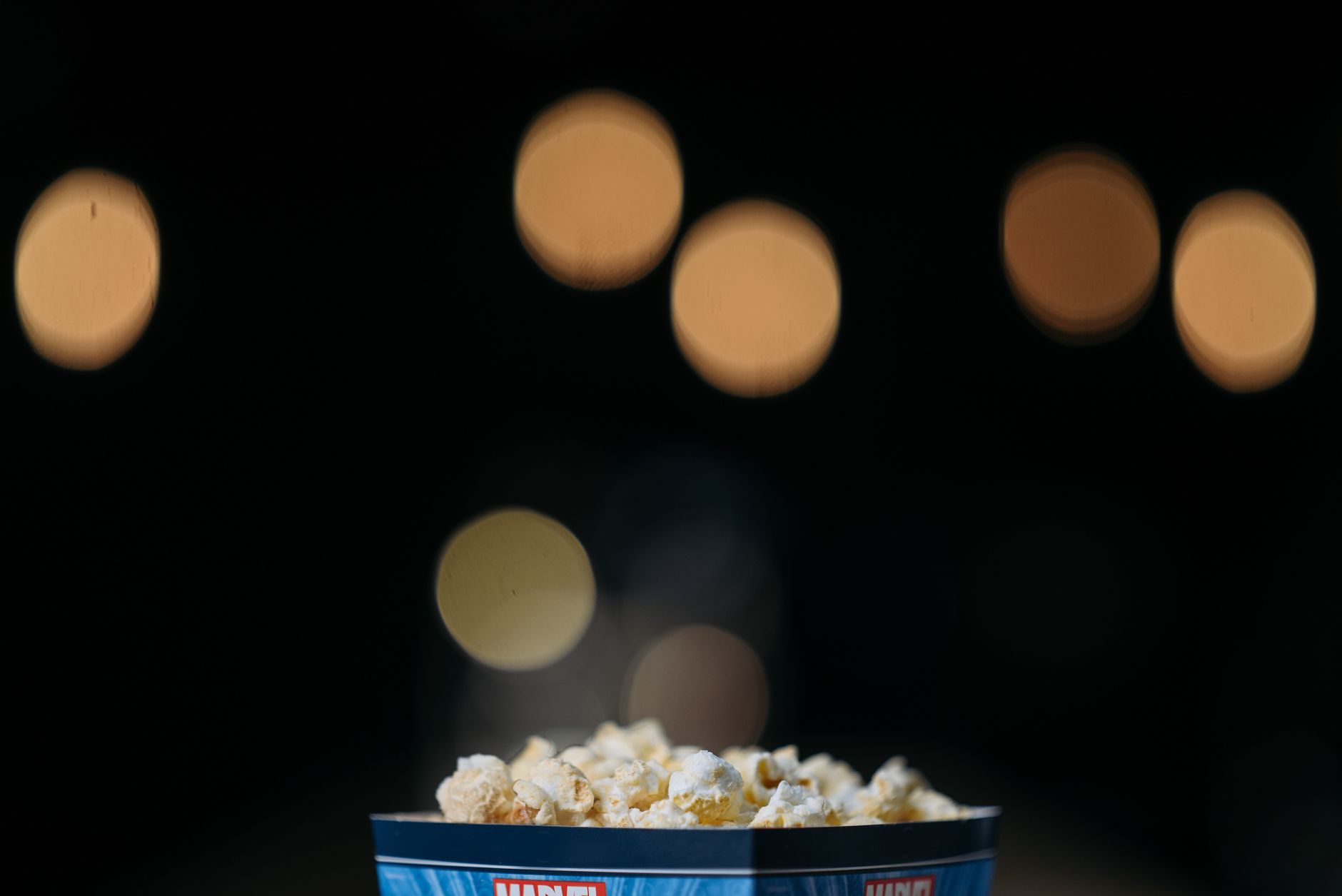
Why do we eat popcorn at the movies? Not because theaters wanted us to — for years they actively fought it. The grand movie palaces of the 1910s and 20s modeled themselves on opera houses: chandeliers, carpets, ushers in uniform. Popcorn was street food, sold from carnival carts, greasy and loud and low-class. Many theaters hung signs asking patrons to check their popcorn with their coats.
Table of Contents
Two things broke the resistance: sound, and poverty.
Talkies open the doors, the Depression empties wallets
Silent films demanded a literate audience reading title cards; the talkies that arrived in 1927 made movies for everyone, and attendance exploded just as the Great Depression hit. Movies became the cheap escape — and a nickel or dime bag of popcorn was the affordable luxury that made a night out feel complete. Street vendors parked outside theaters, selling to ticket-holders on their way in.
Theater owners did the math. First they leased lobby space to vendors for a fee. Then they cut out the middleman and installed their own poppers. Historians of the era record that theaters which embraced concessions survived the Depression, and many that refused went under. Popcorn — cheap to make, smelling irresistible, marked up enormously — became the business model.
The business secret hiding in your bucket
That model never left. Movie theaters routinely give most of the ticket price back to studios, especially on opening weeks; the concession stand is where the theater actually earns. Industry analyses have put concession margins around 85 percent. You’re not buying popcorn at a movie; you’re buying the theater’s survival, with a film attached.
The part most people miss
Popcorn also got a wartime lock-in: when WWII sugar rationing gutted candy production, popcorn — all-American corn, no sugar needed — had the snack counter almost to itself. By 1945, the pairing was cultural law, and the smell of hot popcorn had become, functionally, part of the movies themselves. Theaters engineer for it: many pop continuously not because demand requires it, but because the aroma sells.
More flipped fortunes: when chocolate was literal money.
Sources
- Andrew F. Smith, Popped Culture: A Social History of Popcorn in America
- Smithsonian Magazine — “Why Do We Eat Popcorn at the Movies?”
- Film-industry concession economics coverage (trade press)

1 thought on “Why Do We Eat Popcorn at the Movies? Theaters Banned It First”