
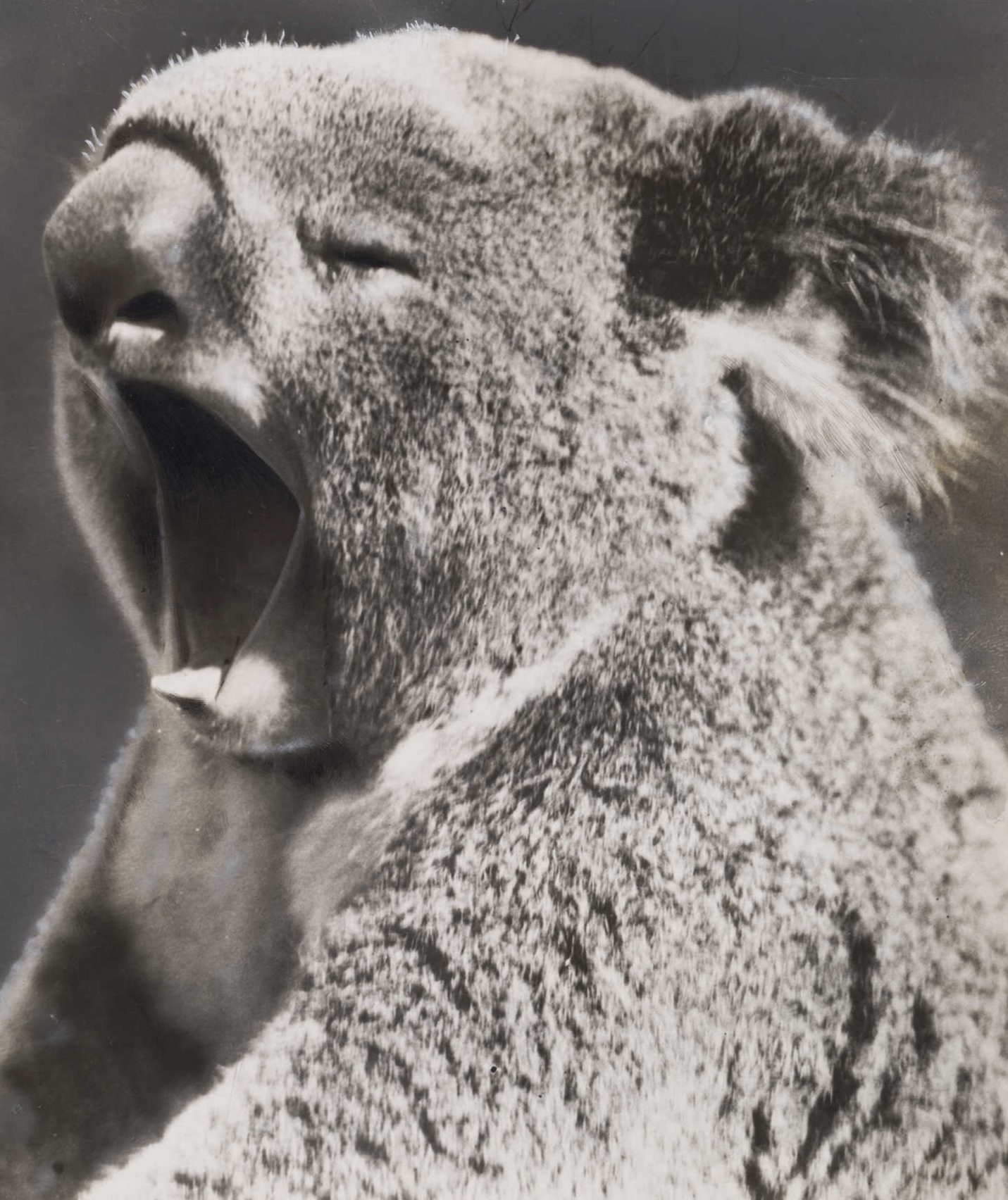
In 1987, a psychologist named Robert Provine strapped volunteers into a lab at the University of Maryland, Baltimore County, and fed them gas through a mask. First a mix enriched with carbon dioxide. Then pure oxygen. He was testing the oldest, most intuitive theory of yawning: that we do it to flush stale air out of our lungs and pull in more oxygen. If that were true, breathing pure O2 should have all but shut off the yawning. It changed nothing.
Table of Contents
That failed experiment did something more useful than confirming a theory ever could — it killed one. Nearly four decades later, researchers still haven’t agreed on a single explanation for the most ordinary thing a human body does. What they’ve found instead is stranger, and more interesting, than “you’re just tired.”

Quick answer
The best-supported theory is that yawning helps cool an overheated brain: the deep breath and jaw stretch boost blood flow and pull in cooler air. It’s not proven beyond doubt, and it doesn’t explain everything — contagious yawning, the kind you catch from someone else, seems to run on a separate social circuit that scientists still can’t fully map.
The professor who tried to gas a yawn out of people
Robert Provine spent decades treating yawns like a naturalist tracking an elusive animal — cataloguing when people did it, how long it lasted (about six seconds, remarkably consistent from person to person), and what triggered it. His 1987 study, published in Behavioral and Neural Biology, was designed to finally test the oxygen-deficit idea that had been the default explanation for centuries. Volunteers breathed air spiked with carbon dioxide, then pure oxygen, then were run hard enough on exercise to double their breathing rate. None of it moved yawn frequency at all.
The conclusion was almost anticlimactic: yawning has nothing to do with gas exchange. It runs on its own clock in the brain, tied to something else entirely — and that opened the door for a very different theory to take over.
A cold pack solves half the puzzle
Psychologists Andrew Gallup and Gordon Gallup picked up where Provine left off, proposing that yawning isn’t about oxygen but temperature — specifically, cooling an overheated brain. In a 2007 study, they had people watch videos of others yawning while either holding a cold pack to their forehead or breathing only through their nose. Both groups caught far fewer yawns than people breathing normally through the mouth. Gallup later tracked yawning across seasons in Tucson, Arizona, and found people yawned less in summer, when outdoor air was as hot as body temperature or hotter — cooling air wouldn’t help, so the body apparently didn’t bother.
That explains the yawn itself. It doesn’t explain why yawns spread through a room like gossip. A 2008 study by Ramiro Joly-Mascheroni and colleagues found that dogs catch yawns too: 21 of 29 dogs tested yawned after watching a stranger yawn at them — the first evidence that contagious yawning crosses the species line, though the study didn’t test whether an owner’s yawn worked any better than a stranger’s. A 2013 follow-up by Teresa Romero, Akitsugu Konno, and Toshikazu Hasegawa answered that question, finding dogs yawned significantly more often for their own owners than for an unfamiliar person — hinting that contagion runs on social bonding, not just heat. For years, that fed a popular idea: catching yawns is a sign of empathy. Then in 2014, Duke University geneticist Elizabeth Cirulli tested 328 volunteers and found the opposite — empathy barely mattered. The only real predictor was age; older adults simply caught fewer yawns, and even that explained just 8% of the variation. Most of why yawning spreads from person to person is, officially, still unexplained.

The part most people miss
If yawning were really about being tired or bored, it would be strange that fetuses do it. Durham University researcher Nadja Reissland used 4D ultrasound to scan fifteen healthy fetuses repeatedly between 24 and 36 weeks of gestation and found them yawning as often as six times an hour early on, tapering off as birth approached — long before anything resembling boredom or sleep deprivation could apply. More recent work has pushed the mystery further: a February 2026 study led by Damiano Menin at the University of Ferrara, published in PLOS ONE, tracked 32 fetuses and found that the ones who yawned more often tended to be born at slightly lower weight, a possible marker of mild prenatal stress rather than sleepiness. If that holds up, the very first yawns of our lives may have nothing to do with being tired at all — they might be an early stress or brain-development signal, decades before anyone thinks to stifle one in a meeting.
Sources
Robert Provine’s 1987 gas-exchange experiment, published in Behavioral and Neural Biology.
Andrew C. Gallup and Gordon G. Gallup’s thermoregulatory yawning research, Evolutionary Psychology (2007), and Gallup’s seasonal yawning study conducted in Tucson, Arizona.
Ramiro Joly-Mascheroni and colleagues’ 2008 study on contagious yawning in dogs, published in Biology Letters, and Teresa Romero, Akitsugu Konno, and Toshikazu Hasegawa’s 2013 follow-up on familiarity bias in contagious yawning by dogs, published in PLOS ONE.
Elizabeth Cirulli’s 2014 contagious-yawning and empathy study, Duke University School of Medicine, published in PLOS ONE.
Nadja Reissland’s fetal yawning research, Durham University, published in PLOS ONE (2012), and Damiano Menin’s fetal yawning and birth weight study, University of Ferrara, published in PLOS ONE (February 2026).
Explore more: More true stories about the human body.
yawning FAQs
Why do we yawn when we’re tired?
Nobody has proven the exact link, but the leading idea is that yawning helps regulate brain temperature and alertness during shifts in arousal state — not that it pulls in extra oxygen, which researchers ruled out in the 1980s.
Is yawning contagious to animals, not just humans?
Yes. A 2008 study found 21 of 29 dogs yawned after watching a stranger yawn at them, and a 2013 follow-up found dogs yawn even more often for their own owners than for strangers. Contagious yawning has also been documented in chimpanzees and other primates.
Does catching someone else’s yawn mean you’re empathetic?
That was the popular theory for years, but a 2014 Duke University study of 328 people found empathy barely predicted contagious yawning — age was the only meaningful factor, and even that explained just a small slice of the variation.
Do babies yawn before they’re born?
Yes. Ultrasound studies show fetuses yawning starting around 20-24 weeks of gestation, tapering off as birth nears, which suggests yawning is tied to brain development rather than tiredness or boredom.
Tales You Can Hold
Fun-facts books for curious kids, personalized books that star your child, and more from the FYI Tales Bookstore. Visit the Bookstore.
Photo: National Media Museum / No restrictions, via Wikimedia Commons.